Chest Workouts That Actually Build Size and Strength
Developing strong and well-defined chest muscles is a goal many fitness enthusiasts share. Whether you're aiming for that sculpted look or simply want to enhance upper body strength, the right combination of chest builder exercises and training principles can make all the difference. The chest, primarily composed of the pectoralis major and pectoralis minor, responds best to a variety of movements and resistance angles.
Understanding Your Chest Muscles
Before diving into chest muscle workouts, it helps to understand what you're working on. The pectoralis major has both a clavicular (upper) and sternal (lower) head, each activated differently depending on the angle of your exercises. Targeting both heads is key for balanced development and increased strength. Additionally, supporting muscles such as the anterior deltoids and triceps contribute to pressing movements.
Building a Chest Workout That Works
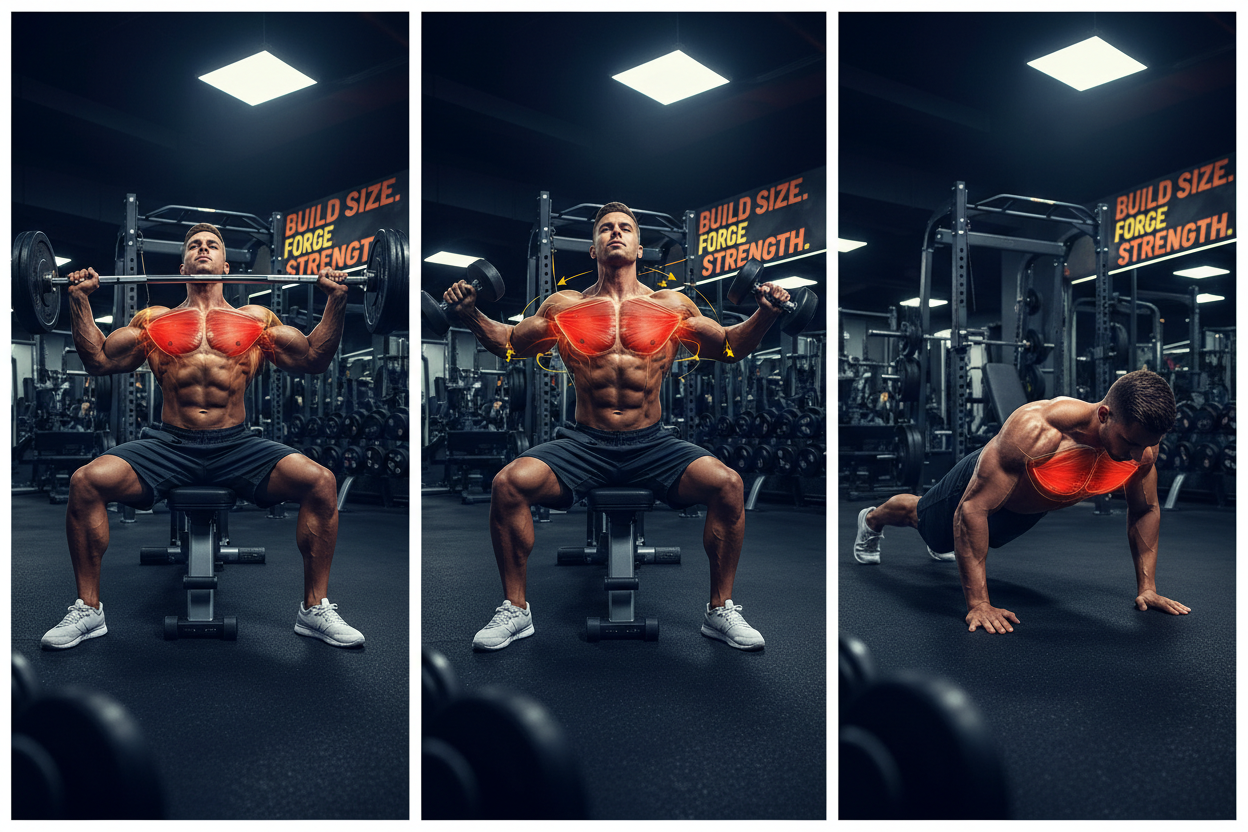
A well-structured workout to build chest should combine compound lifts with isolation exercises. Compound lifts like the bench press recruit multiple muscle groups and allow for heavier loads, while isolation exercises like chest flys focus directly on pectoral engagement.
Flat Barbell Bench Press
This is considered one of the best chest builder exercises because it allows progressive overload while emphasizing the mid-pectoral region. Keep your shoulder blades retracted and lower the bar slowly for optimal muscle stimulation.
Incline Dumbbell Press
Exercises to increase pectoral muscles should include incline variations for upper chest development. Dumbbells allow greater range of motion and balanced activation, which is especially useful for correcting strength imbalances between sides.
Chest Flys
An exercise to build chest muscle without adding strain on triceps, the chest fly can be done on a flat or inclined bench. Using controlled motion and light-to-moderate weight will maximize time under tension for the pectorals.
Push-Ups with Variations
Bodyweight exercises like push-ups are excellent for chest gain exercise routines, especially when done with variations such as diamond push-ups or wide-grip push-ups to emphasize different portions of the chest.
Best Practices for Chest Development
To achieve noticeable progress, incorporate a mix of rep ranges, adjust angles, and modify grip widths. Rest periods between sets can vary depending on your goal: shorter rests for endurance and definition, longer rests for strength and muscle gain.
Personal Experience: From Flat to Full
When I started my chest training, my progress was slow because I stuck to only one exercise—a flat bench press. After educating myself on how to chest exercise effectively, I began including incline presses and flys in my routine. Within three months, I noticed more fullness in my upper chest and improved pressing strength. The variety not only helped me break plateaus but also made workouts more engaging.
Advanced Chest Builder Techniques
For experienced lifters, adding drop sets, supersets, and pause reps can stimulate new growth and prevent adaptation. Combining heavy compound lifts with targeted isolation work ensures constant muscle challenge.
Incline Cable Flys
This movement keeps tension on the pectorals throughout the range of motion and is one of the best exercises to get pecs in definition-focused phases.
Decline Bench Press
The decline press shifts emphasis to the lower pecs and allows for heavier loading, which can boost overall chest thickness.
Optimizing Recovery and Nutrition
No chest builder exercise routine is complete without proper recovery. Muscles grow during rest periods, so ensure adequate sleep and nutrition rich in protein to repair and build muscle fibers. Incorporating mobility and stretching can also improve range of motion and protect joints.
Putting It All Together
Whether you're designing a workout to build chest or evaluating the best chest builder exercise for your needs, balance and consistency matter most. Mix push movements with fly variations, train at different angles, and progressively challenge your muscles. Over time, you'll not only see improved pectoral size but also increased upper body performance in everyday life and sports.