Chest Press Machines: Benefits, Variations, and Effectiveness
Chest press machines have long been a staple in gyms, offering a guided way to train the chest, shoulders, and triceps. Whether you are wondering 'are chest press machines good' or if they truly measure up to free weights, understanding their variations and benefits can help you make the most of your workouts.
Are Chest Press Machines Effective?
Many people ask, 'is the chest press machine effective?' The answer largely depends on your fitness level and goals. For beginners, chest press machines offer a safe and controlled introduction to pressing movements. They help reinforce proper bench press machine form by guiding your motion and reducing the risk of improper alignment.
Different Types of Chest Press Machines
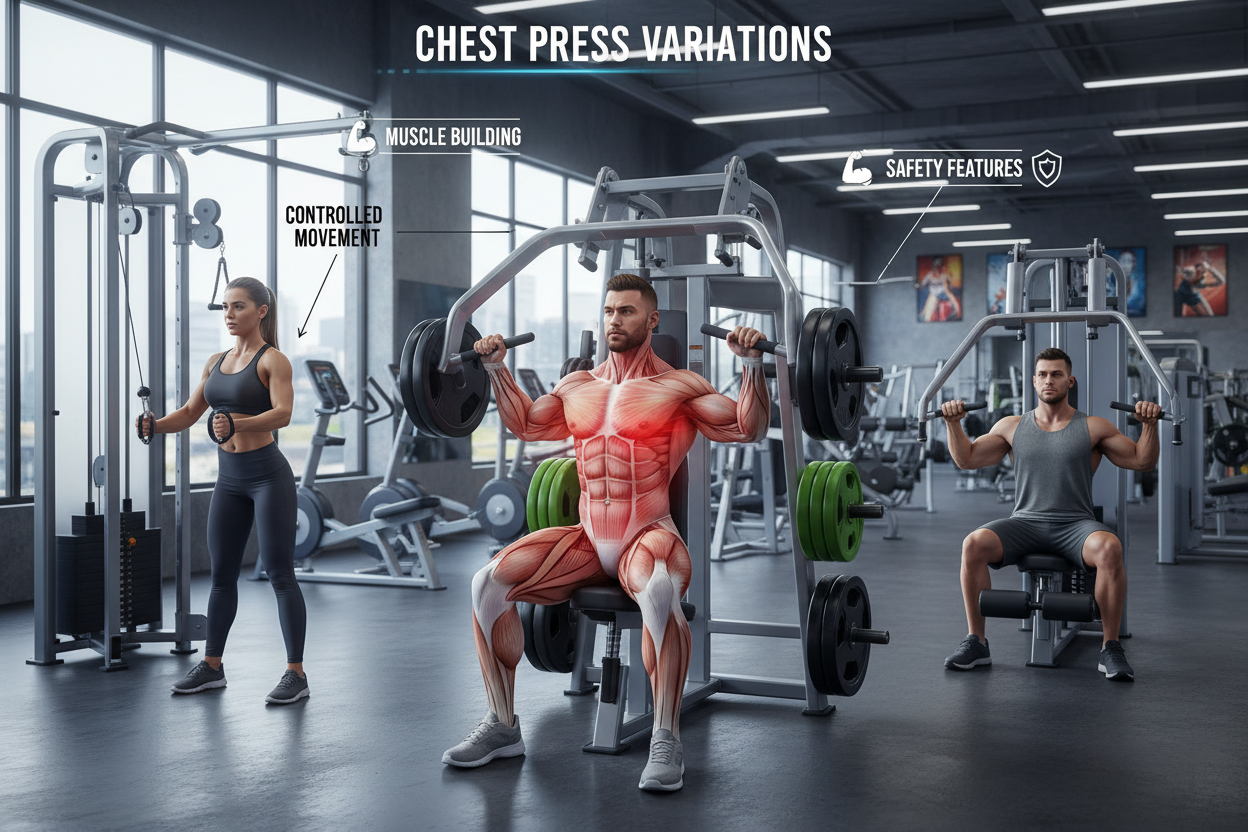
Gyms often feature more than one type of chest press equipment. Options include the seated incline chest press machine, front chest press, converging chest press, vertical chest press machine, leverage bench press, and iso-lateral chest press. Each type targets slightly different angles and muscle fibers. For example, a converging chest press benefits lifters by allowing a more natural inward motion at the top, closely mimicking free weight bench pressing.
Converging Chest Press vs Bench Press
The converging chest press vs bench press debate often centers on movement freedom and muscle activation. While bench press allows natural stabilization and recruits more supporting muscles, converging machines offer consistent resistance and reduced risk of joint strain. This can be ideal for lifters recovering from injury or seeking isolation work.
Iso-Lateral Chest Press vs Incline Press
Iso-lateral chest press machines work each side independently, preventing strength imbalances. Comparatively, the incline press shifts focus toward the upper chest. Choosing between them depends on whether your priority is balanced strength or upper chest development.
Machine vs Free Weights
The bench machine vs barbell discussion is common. While free weights allow dynamic movement and demand more core stability, machines like the seated bench press provide safety from dropping weights and fewer form mistakes for beginners. The seated bench press vs bench press choice often comes down to training stage, injury status, and personal preference.
Form and Technique
Whether performing chest press sitting or lying down, form remains essential. Key seated chest press teaching points include adjusting the seat height so the handles align with mid-chest, maintaining a neutral wrist position, and controlling the movement through the full range. Proper form ensures that the machine remains effective and prevents strain.
Why Is the Chest Press Machine So Hard?
Some lifters find the chest press machine harder than free weights, especially the seated versions. Possible reasons include fixed movement patterns that eliminate momentum, increased time under tension, and resistance curves designed for constant load.
Is Seated Chest Press Good?
Seated chest press machines excel for targeted muscle engagement. They let you isolate the pectorals without exhausting stabilizers. This is helpful on days when you want focused strength work rather than full-body stabilization drills.
Is Seated Bench Press Harder?
Compared to traditional bench pressing, a seated bench press can feel harder due to the upright torso angle, which recruits more upper chest fibers and limits assistance from lower chest muscles.
Muscle Building Potential
Does chest press machine build muscle? Yes, when progressively overloaded with proper form. While free weights often lead to greater all-around strength gains, machines are highly effective for hypertrophy, especially when combined with other pressing variations.
Vertical Chest Press Machine Benefits
The vertical chest press machine places you in a seated upright position, ideal for strengthening the upper chest and shoulders while taking stress off the lower back. This can be an excellent option for individuals with certain injuries.
Practical Considerations
Many wonder, 'how much does a chest press machine weight?' The answer depends on the type—some have heavy frames with weight stacks starting at 5-10 kg per plate, while plate-loaded leverage machines require manual loading and can handle very high resistance.
Chest Press Machine Lying Down
Some equipment replicates traditional bench press form in a lying position with guiding rails. While not as functional as free weights, it can help refine pressing motion while keeping joints safe.
Personal Experience
In my own training, I found switching to a converging chest press during a shoulder recovery period allowed me to maintain chest strength without aggravating my injury. When I returned to barbell bench pressing, my pressing power remained solid, showing that machines can be a valuable part of long-term strength maintenance.
Conclusion
Chest press machines are effective tools when used properly. They can complement free weight workouts, aid rehabilitation, and target specific chest angles. Whether choosing iso-lateral chest press vs incline press or deciding between bench machine vs barbell, understanding each option’s purpose ensures smarter training and better results over time.