Carpeted Gym Floor: Is It a Mistake for Home Gyms?
Setting up a home gym in a spare bedroom or unfinished basement usually starts with one glaring problem: the floor. Bare concrete is freezing during North American winters, and dropping a 50-pound dumbbell on pristine hardwood is a quick way to ruin your home's resale value. That is why building a carpeted gym floor has become an increasingly popular solution for fitness enthusiasts looking for a budget-friendly, comfortable foundation. But is it actually the right surface for heavy lifting and high-intensity interval training?
Whether you are trying to insulate a drafty garage or dampen the noise of your early morning workouts so you do not wake the whole house, choosing the right flooring is critical. This guide breaks down the pros, cons, and practical realities of using carpet in your training space.
Key Takeaways
- Acoustics and Insulation: Carpet is unmatched for warming up cold basement floors and dampening the echo of loud home gyms.
- Not All Carpet is Equal: High-pile residential carpet is too unstable for heavy lifting; low-pile commercial carpet is the gold standard.
- Modularity is Key: Using a gym carpet tile system allows you to replace individual stained or damaged sections without tearing up the whole room.
- Hybrid Setups Work Best: Most lifters benefit from a carpeted base with hard rubber stall mats layered over specific heavy lifting zones.
Designing Your Space: Why Carpet Works
Insulation and Noise Reduction
If your home gym is in a basement or above a living space, noise and temperature control are your top priorities. A dense carpeted setup acts as a fantastic acoustic dampener, absorbing the clanking of weight plates and the thud of treadmill footfalls. It also provides a thermal barrier against cold concrete, making floor-based exercises like stretching, yoga, or core work significantly more comfortable.
Choosing the Right Format: Rolls vs. Tiles
When planning your layout, you generally have two choices: broadloom rolls or modular tiles. For 90 percent of home gyms, gym flooring carpet tiles are the superior choice. They are easier to transport down narrow basement stairs, require zero specialized installation tools, and offer incredible durability. If you drop a chalky barbell or spill pre-workout, you can simply pull up the ruined section and replace it, rather than living with a permanent stain.
Durability, Stability, and Maintenance
The Heavy Lifting Dilemma
The biggest drawback of a traditional carpet is compression. If you place a heavy power rack on thick, plush carpet, the equipment will wobble, creating a serious safety hazard during heavy squats. Furthermore, lifting on a soft surface absorbs force, reducing your power output and destabilizing your ankles. To solve this in a carpet tiles gym setup, you must select ultra-low-pile, tightly woven commercial carpets that offer a firm, grippy surface.
Cleaning Up Sweat and Chalk
Gyms get dirty. Between sweat, liquid chalk, and dirt tracked in from your garage driveway, maintenance is a real concern. A high-quality gym carpet tile is typically engineered with closed-cell synthetic fibers that resist moisture absorption. Routine maintenance usually requires nothing more than a high-suction vacuum once a week and a basic spot-cleaner for sweat drips.
From Our Gym: Honest Take
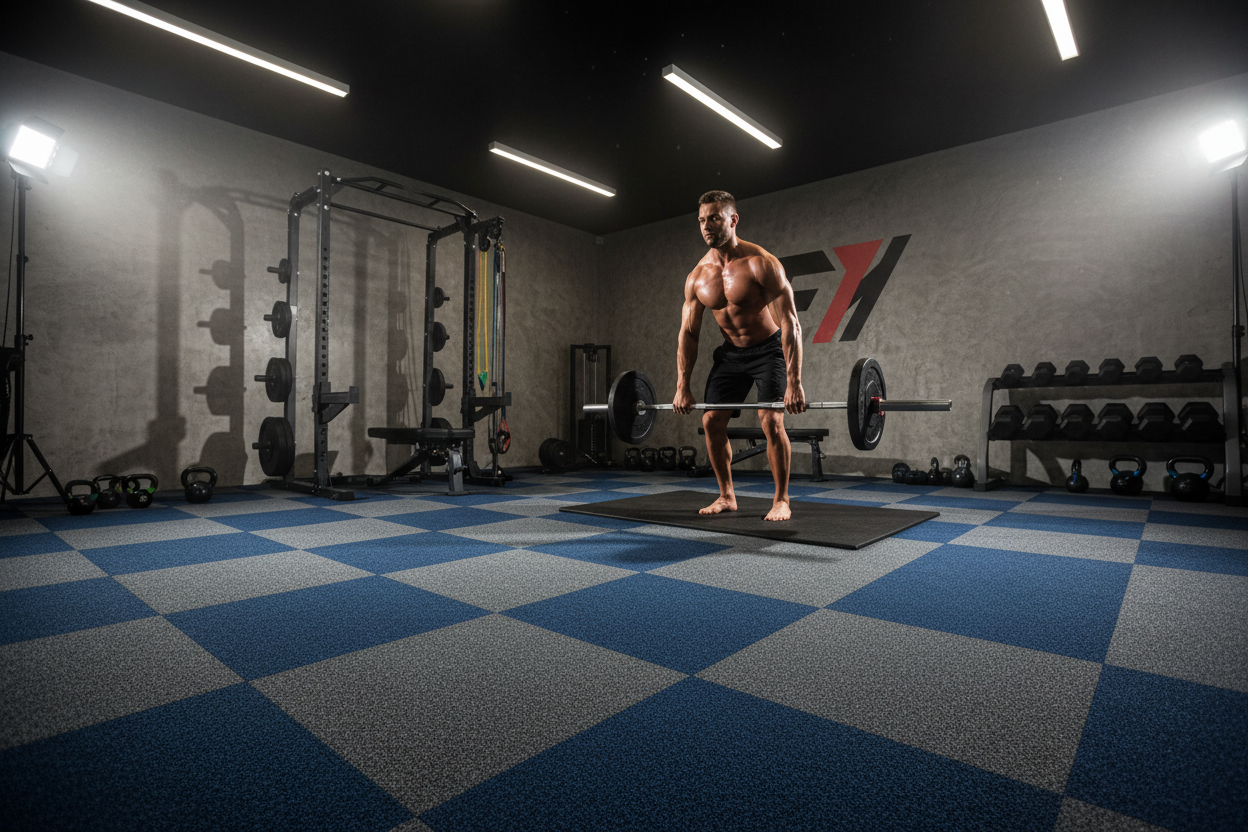
When we converted our 400-square-foot facility annex into a functional fitness room, we opted for commercial-grade gym carpet squares over bare concrete. Honestly, for dumbbell circuits, kettlebell swings, and mobility work, it is fantastic. The room feels warmer and less industrial.
However, I learned a hard lesson about heavy lifting on this surface. At 6'2 and pushing heavy deadlifts, I noticed a slight 'squish' under my lifting shoes that completely threw off my balance. The carpet fibers also trapped a massive amount of fine chalk dust that our standard vacuum struggled to pull out. Our solution? We kept the carpeted floor for 80 percent of the room but built an 8x8 foot hard plywood and rubber deadlift platform in the corner. It is the perfect hybrid setup.
Frequently Asked Questions
Can you put a squat rack directly on a carpeted gym floor?
It depends on the carpet. On low-pile commercial carpet, a heavy rack will sit relatively flush and stable. On plush residential carpet, the rack will wobble. It is always recommended to place a sheet of 3/4-inch plywood or hard rubber mats under the rack's footprint to distribute the weight evenly.
Are gym carpet squares easy to install yourself?
Yes. Most commercial carpet squares feature a peel-and-stick backing or use double-sided carpet tape. You can easily cut them to fit around drywall corners or baseboards using a standard utility knife, making them highly DIY-friendly.
Will sweat cause my gym carpet to grow mold?
If you are using standard residential carpet, excessive sweat and spilled water can soak through to the pad and cause mildew. However, purpose-built gym flooring carpet tiles are usually made from non-absorbent synthetic materials (like nylon or polypropylene) that keep moisture on the surface for easy cleanup.