Can You Really Mimic Bodybuilding in Gym Chains at Home?
I remember the exact moment I decided to quit my commercial gym. I was standing in line for a cable crossover machine—third in the queue—watching someone scroll through Instagram between sets of half-assed flyes. I realized I was paying fifty bucks a month for the privilege of waiting. You want the mass that comes with bodybuilding in gym environments, but you don't necessarily want the crowd, the commute, or the broken equipment.
Quick Takeaways
- Commercial gyms win on isolation machines, but garage gyms win on consistency and intensity.
- Stability is the secret sauce for hypertrophy; your home gear needs to be rock-solid.
- Smart accessories can turn basic dumbbells into high-end cable replacements.
- Flooring isn't just for aesthetics; it's a safety and performance requirement for heavy sets.
The Elephant in the Room: Machines Actually Matter
Let’s be honest: the training for bodybuilding actually requires machines if you want to reach peak hypertrophy. There is a specific kind of mechanical tension you get from a fixed-path leg press or a selectorized chest press that is incredibly hard to replicate with a barbell. When you aren't fighting to balance the weight, you can push the target muscle to absolute failure without your stabilizers giving out first. This is the core of the training of bodybuilding—isolating the muscle until it has no choice but to grow.
In a commercial facility, you have access to millions of dollars in engineering designed to keep tension on the muscle throughout the entire range of motion. At home, gravity is your primary boss, and gravity is a bit of a one-trick pony. If you’re serious about building a stage-ready physique in a garage, you have to acknowledge this gap. You aren't just buying weights; you are trying to recreate the stability of a 500-pound iron machine using clever setups and high-quality steel.
Where the Public Gym Completely Fails
The biggest lie in the fitness industry is that you need a 20,000-square-foot facility to get big. The friction of a public gym is a silent gains-killer. Think about the 20-minute drive, the hunt for a parking spot, and the inevitable 'out of order' sign on the one machine you actually needed for your back day. By the time you actually touch a barbell, your mental energy is half-spent.
In your own space, the squat rack is always open. There is no one filming a vlog in your way, and the music doesn't suck. Most commercial gyms also prioritize 'cardio theater' over actual iron. I’ve been to big-box chains where the dumbbells only go up to 75 pounds and the plates are those annoying polygonal shapes that make deadlifting impossible. In a home gym, you control the quality. If you want a bar with aggressive knurling that sticks to your hands like glue, you buy it.
Replicating the Commercial Pump in Your Garage
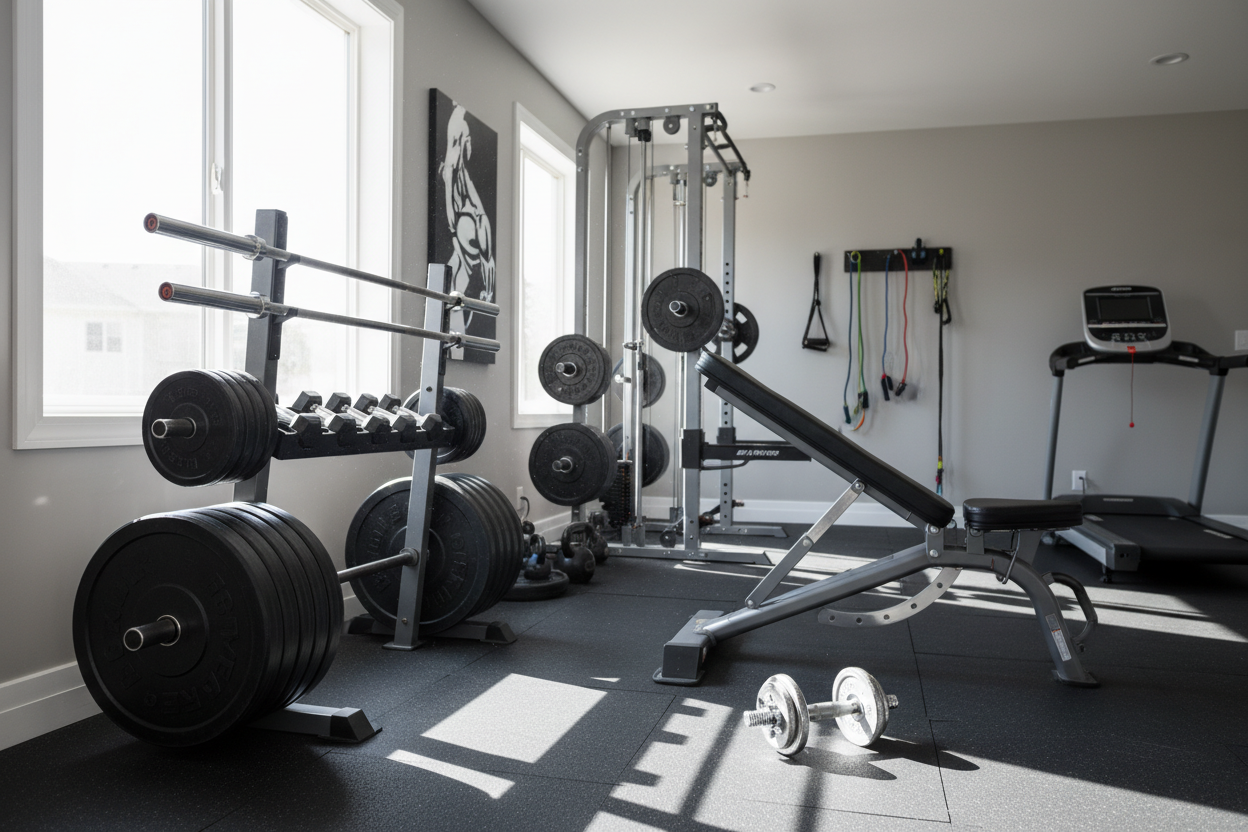
So, how do you bridge the gap? You get creative with strength training accessories. Resistance bands are the most underrated tool here. By hitching a heavy band to the bottom of your power rack and looping it over your barbell, you create a variable resistance curve that mimics an expensive plate-loaded machine. The weight gets heavier as you reach the peak contraction, which is exactly how those high-end pieces of equipment are engineered.
An adjustable bench is also non-negotiable. You need to hit those precise 15, 30, and 45-degree angles to target the upper pecs or rear delts effectively. I also recommend picking up a set of fat grips or D-handles. These small additions change the pull angle and grip demand, allowing you to turn a basic dumbbell row into something that feels much more like a specialized ISO-lateral row machine. It’s about manipulating the physics of free weights to force the muscle into that deep, skin-splitting pump.
Building Your Base: The Non-Negotiable Gear
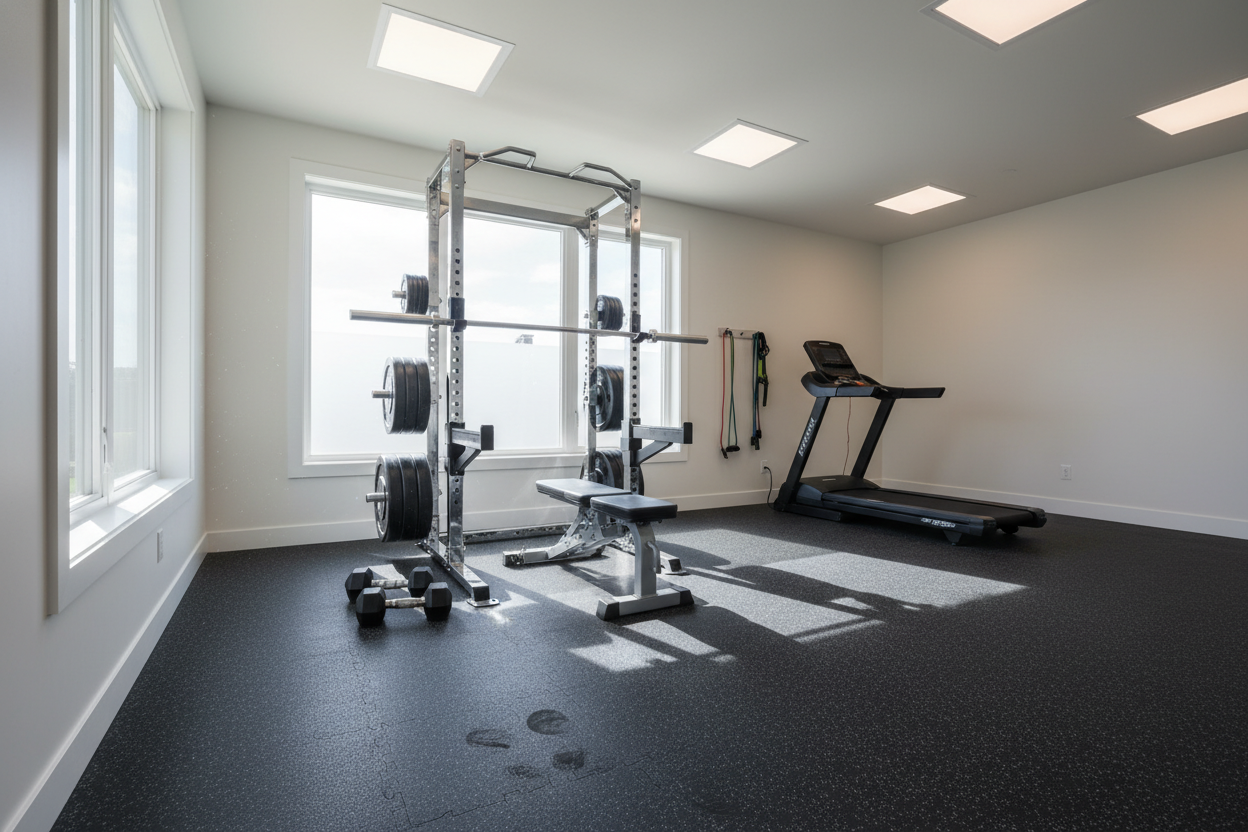
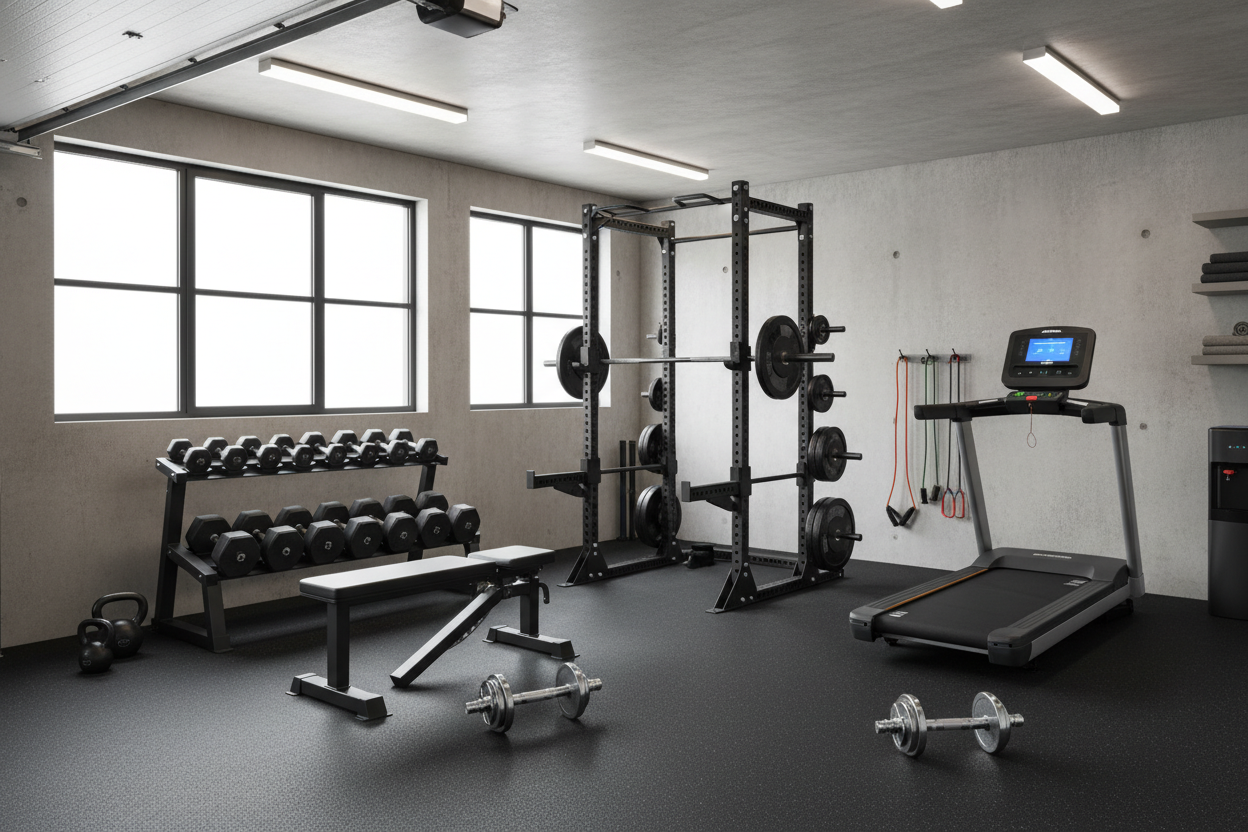
If you're starting from scratch, don't buy a 'gym in a box' kit from a big-box retailer. Those 1-inch diameter bars and plastic-coated plates are trash. You need a power rack rated for at least 700 pounds—even if you aren't squatting that yet. Stability equals safety, and safety equals the confidence to push into those deep RPE 10 sets. Scouring the top home gym equipment reviews will tell you that a 3x3-inch 11-gauge steel frame is the industry standard for a reason.
Your barbell should be your biggest investment. A cheap bar will bend, the sleeves won't spin, and the knurling will disappear after six months of sweat. Look for a zinc or stainless steel finish if you're in a humid garage. Pair that with a set of iron plates (the sound of iron clinking is better than any pre-workout) and a heavy-duty adjustable bench. This core setup covers 90% of the movements needed for serious mass. The rest is just icing on the cake.
Don't Ignore Your Foundation (Literally)
I see guys spend $3,000 on a rack and then bolt it into bare concrete. That is a massive mistake. When you’re grinding out heavy dumbbell rows or floor presses, you need a stable, non-slip surface. Dropping a 100-pound dumbbell on concrete won't just crack the floor; the vibration can actually damage the internal structure of the dumbbell over time. A high-quality 6x8ft exercise mat gym flooring setup provides the necessary density to absorb that impact.
Good flooring also saves your joints. Doing standing overhead presses or heavy squats on a hard, unforgiving surface adds unnecessary stress to your ankles and knees. You want a surface that has just enough 'give' to be comfortable but is firm enough that you aren't sinking into it like a yoga mat. It also keeps your equipment from sliding around. There is nothing scarier than a rack shifting an inch to the left while you have 315 pounds on your back.
My Honest Take: The Time I Went Cheap
I once bought a $150 'heavy duty' bench from a budget site because I thought a bench was just a bench. During a set of 90-pound dumbbell presses, the backrest adjustment pin sheared off. I ended up flat on my back with 180 pounds of iron hovering over my face. It was a terrifying reminder that in bodybuilding, your gear is your support system. I sold that bench for twenty bucks on Marketplace and bought a 11-gauge steel version the next day. Buy once, cry once. Your safety is worth the extra hundred bucks.
FAQ
Can I really build as much muscle at home as in a commercial gym?
Yes, but you have to work harder to create isolation. You’ll rely more on lunges, Bulgarian split squats, and high-volume dumbbell work because you don't have a leg press. The results will be the same, but the exercise selection requires more discipline.
What is the most important piece of gear for a home bodybuilder?
An adjustable bench. Without it, you are limited to flat movements. Bodybuilding is about hitting muscles from every angle, and a bench that goes from decline to a 90-degree incline is the only way to do that effectively.
How much space do I actually need?
A standard 8x8 foot area is enough for a rack and a bench. If you use a 6x8ft mat, you can fit most of your heavy lifting in that footprint. Just make sure you have enough ceiling height for overhead presses.