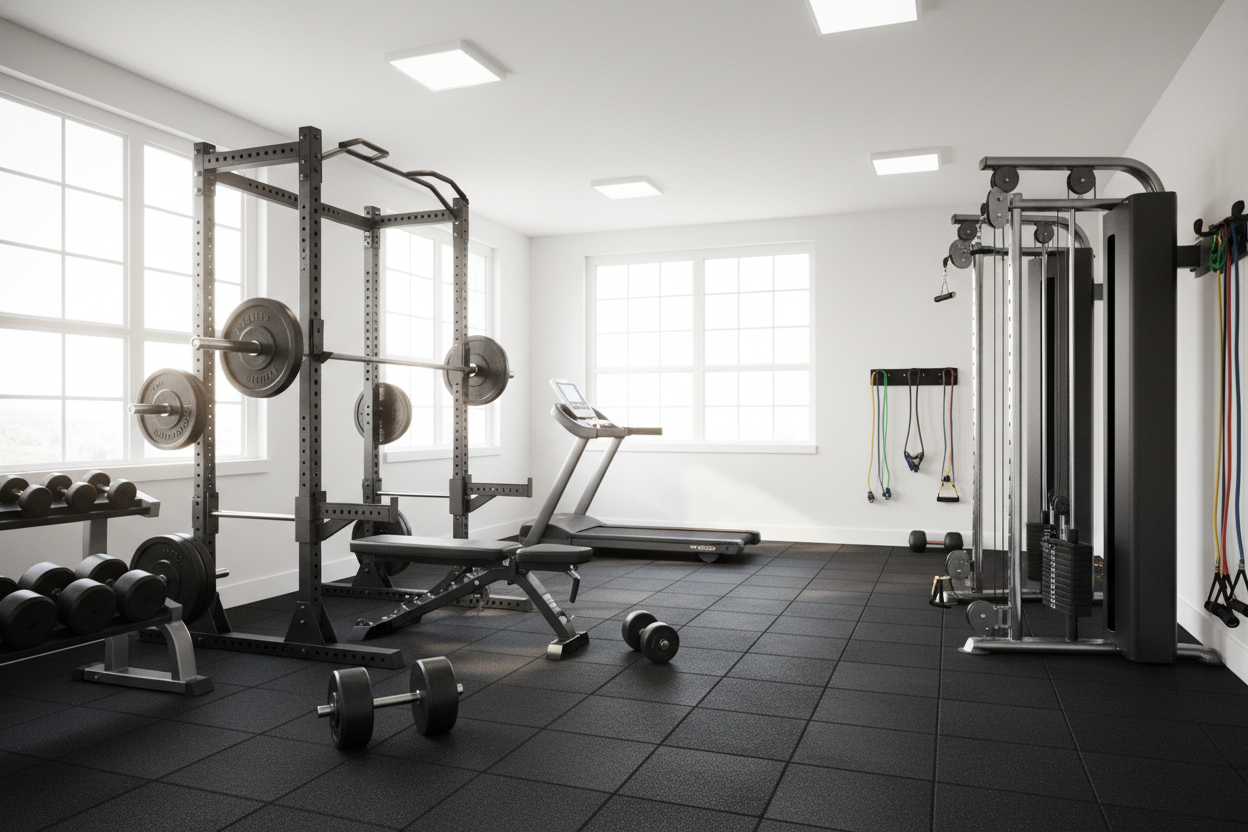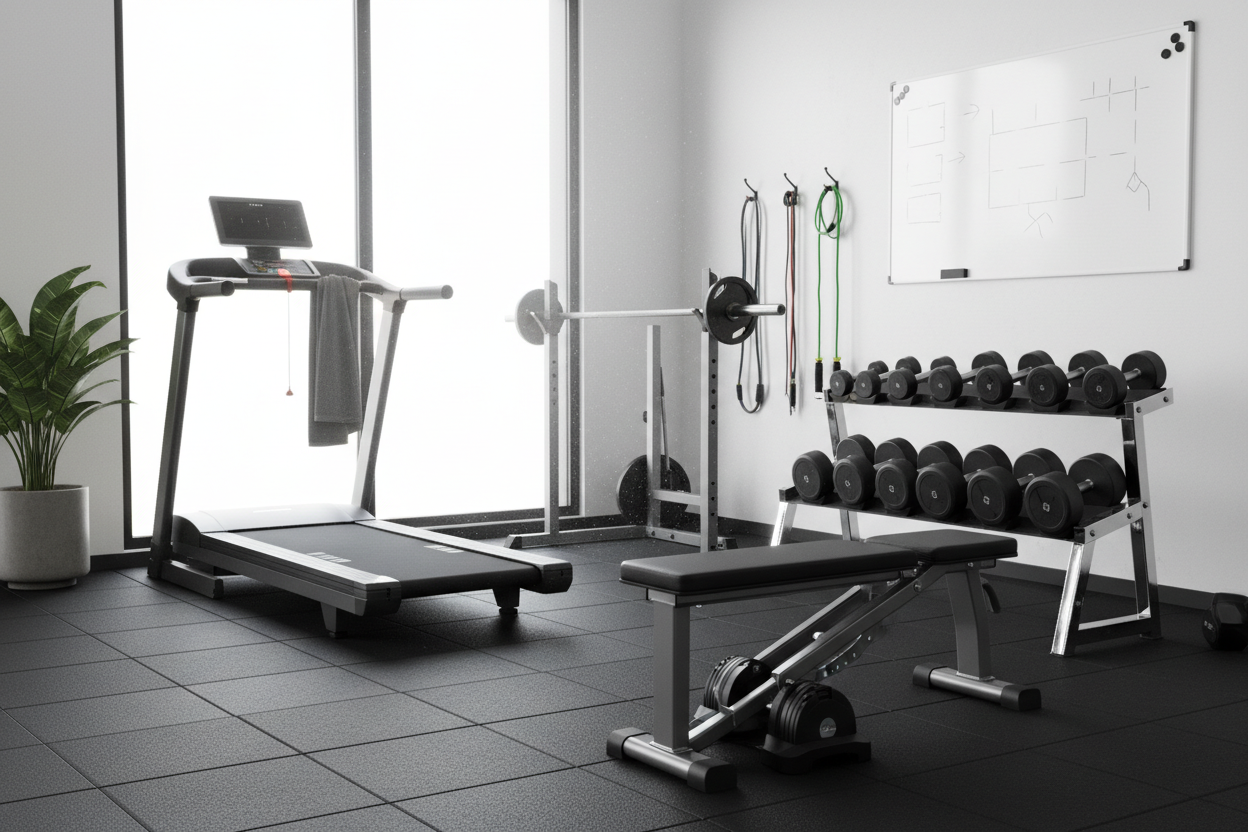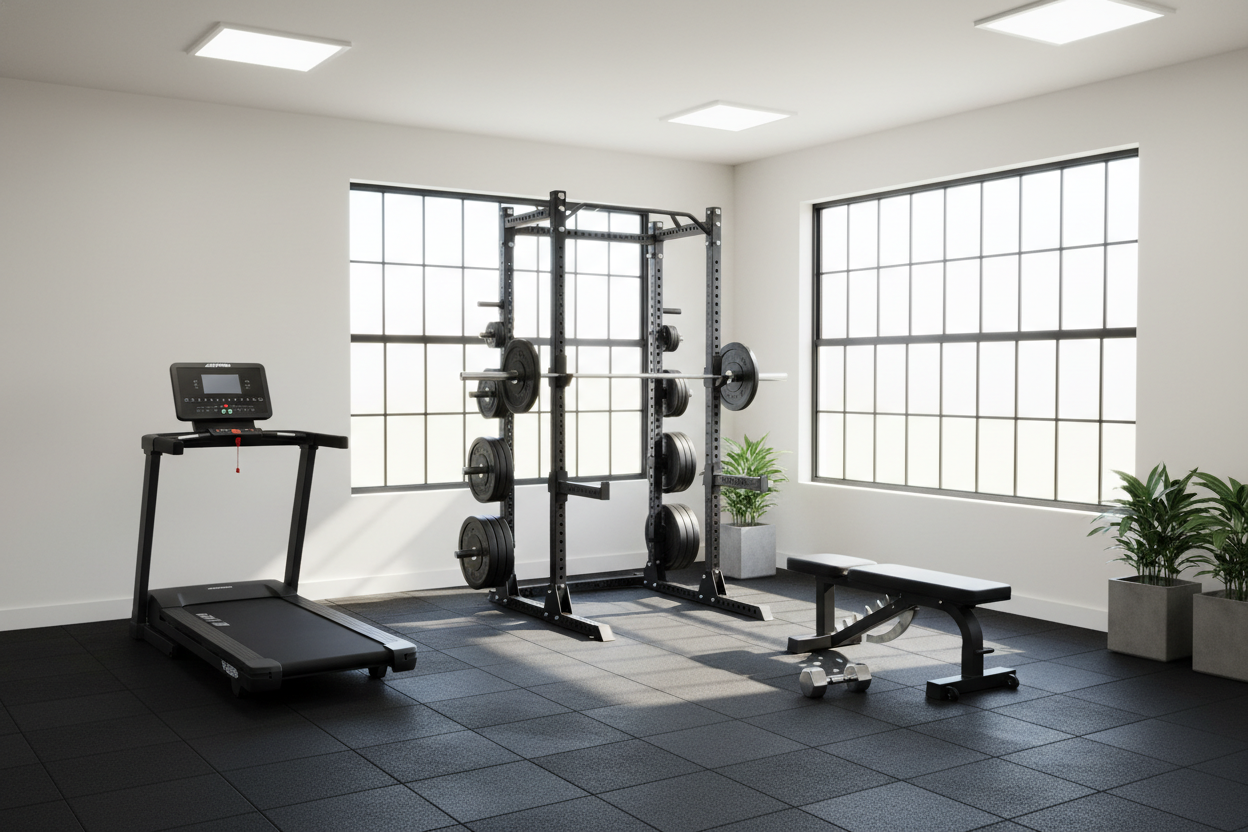
Can One Barbell Really Handle All Strength Training?
I remember sitting in my driveway three years ago, staring at a stack of boxes and wondering if I’d made a massive mistake. I’d just canceled my $80-a-month commercial gym membership to build a garage gym, but I only had enough cash for a rack, a bar, and some iron. I was convinced I’d miss the leg press, the pec deck, and that fancy cable crossover machine. I thought my progress would stall because I didn’t have a machine for every angle. I was wrong.
The truth is, all strength training can be accomplished with a single high-quality barbell if you stop thinking like a consumer and start thinking like a lifter. You don’t need a warehouse; you need a plan and a stiff piece of steel.
Quick Takeaways
- A barbell is the most versatile tool for mechanical tension and progressive overload.
- Commercial gyms use machines to justify membership fees, not because they are superior.
- Prioritize a rack with 11-gauge steel and a bar with a reliable 190k PSI tensile strength.
- Specialty bars and accessories are fun but often act as a distraction from the fundamentals.
- Consistency in your programming matters more than the number of stations in your gym.
The Myth That You Need a Machine for Every Muscle
Commercial gyms have done a phenomenal job of brainwashing us. They want you to believe that you need a seated row for your lats, a different machine for your mid-back, and a preacher curl station for your biceps. It’s a marketing tactic. It makes the gym look high-tech and valuable. But when you’re building a space at home, that mindset is a death sentence for your floor space and your budget.
I’ve seen guys wait six months to start their home gym because they couldn’t afford a functional trainer. That’s six months of missed gains. The reality is that your muscles don't have eyes. They don't know if you're using a $5,000 selectorized machine or a rusty iron bar. They only respond to tension, stretch, and load. If you can create those three things, you can achieve all strength goals you’ve set for yourself.
When you strip away the chrome and the pulleys, you realize that most machines are just trying to mimic the movement patterns you can already do with free weights. The only difference is the machine removes the need for stabilization. In a home gym, that stabilization is exactly what you want—it builds real-world power and keeps your joints honest.
How Basic Iron Supports All Strength Training
The barbell is a mechanical chameleon. By simply changing your grip, your stance, or the tempo of the lift, you can shift the stimulus from explosive power to pure muscle growth. If you want to build speed, you perform dynamic effort sets. If you want to look like a bodybuilder, you slow down the eccentric and focus on the mind-muscle connection. It’s the same 45-pound bar, but the intent changes everything.
A lot of people ask are all forms of strength training actually created equal when they start looking at minimalist setups. The answer is that while the physiological adaptations—like mitochondrial density versus myofibrillar hypertrophy—are different, the tool used to trigger them doesn't have to be. You can run a powerlifting block, a CrossFit cycle, and a bodybuilding split all using the exact same barbell.
The versatility comes down to load management. With a barbell, you can micro-load with 1.25-lb plates to ensure you're always progressing, something many machines with 10-lb jumps won't allow. Whether you are doing heavy triples or high-rep lunges, the barbell remains the gold standard for adding weight over time. It is the only tool that allows you to move the most weight through the longest range of motion.
Building the Foundation (Without Emptying Your Wallet)
If you’re ready to commit, don't buy the cheapest thing on Amazon. I’ve made that mistake. I once bought a bar that had 'bolt-on' sleeves. Within three weeks, the sleeves were wobbling, and the 'knurling' felt like a smooth PVC pipe. If you want to cover all strength training bases, you need three non-negotiables: a heavy-duty rack, a multi-purpose bar, and enough plates.
Look for a rack with 3x3-inch uprights and 11-gauge steel. This isn't just for safety; it’s for versatility. A beefy rack allows you to add dip attachments, landmines, and spotter arms later. When it comes to the bar, look for a 28.5mm diameter with a decent knurl. You want something that sticks to your hands during a heavy deadlift but won't tear your skin off during a high-rep clean. Investing in quality strength equipment upfront means you won’t be buying it twice when the cheap stuff bends under a 300-pound squat.
As for plates, iron is fine. You don't need fancy urethane-coated bumpers unless you’re dropping weights from overhead on a regular basis. Standard cast iron plates have worked for decades, and they take up less room on the sleeve, allowing you to load more weight as you get stronger.
The Trap of Buying Too Many Toys Too Soon
The 'Home Gym' subreddit is a dangerous place for your bank account. You see people with five different specialty bars, chains, bands, and niche machines. It’s easy to get 'shiny object syndrome' and think that a safety squat bar or a set of strength training accessories is the missing link to your progress. Usually, it’s not.
I spent $400 on a specialized rowing handle and a set of chains during my first year. You know how often I used them? Maybe once a month. I could have put that money toward better flooring or more plates. Most lifters haven't even begun to exhaust the potential of a standard straight bar. If you can't squat 405 or deadlift 500, you probably don't need a buffalo bar yet.
Keep your floor space clear. A cluttered gym is a gym you won't want to train in. Master the big movements—squat, bench, deadlift, overhead press, and row—before you start worrying about niche variations. The basics work because they allow for the most significant amount of progressive overload.
Making It Work: Phasing Your Focus
The secret to using a minimalist setup for everything is periodization. You can't chase every goal at once. If you try to build max strength, endurance, and size simultaneously, you’ll end up mediocre at all of them. Use your barbell to focus on one phase at a time.
Spend eight weeks on a hypertrophy block with higher reps and shorter rest periods. Then, pivot to a strength block where the weight goes up and the reps come down. The most important thing is to stop changing all your strength training variables at once. If you change your exercises, your rep ranges, and your rest times every week, you have no way to track if you're actually getting better.
Stick to a proven program for at least two months. Let the barbell do its job. If you find your grip is the weak link, get some chalk. If your back is rounding, fix your form. Don't look for a machine to solve a technique problem. The barbell is an honest teacher; it tells you exactly where you are weak and forces you to fix it.
Is a barbell enough for leg development?
Absolutely. High-bar squats, front squats, and Bulgarian split squats with a barbell will build bigger legs than almost any machine. The key is depth and consistency.
What if I want to do 'cardio' with a barbell?
Look into barbell complexes. Perform 5-6 movements (cleans, front squats, overhead press, rows) back-to-back without putting the bar down. It will crush your lungs and build work capacity faster than a treadmill.
Should I buy a 15kg or 20kg bar?
Standard all strength training programs are built around the 20kg (44lb) bar. Unless you have specific mobility issues or are training for weightlifting-specific competitions that require a 15kg bar, stick with the 20kg standard.