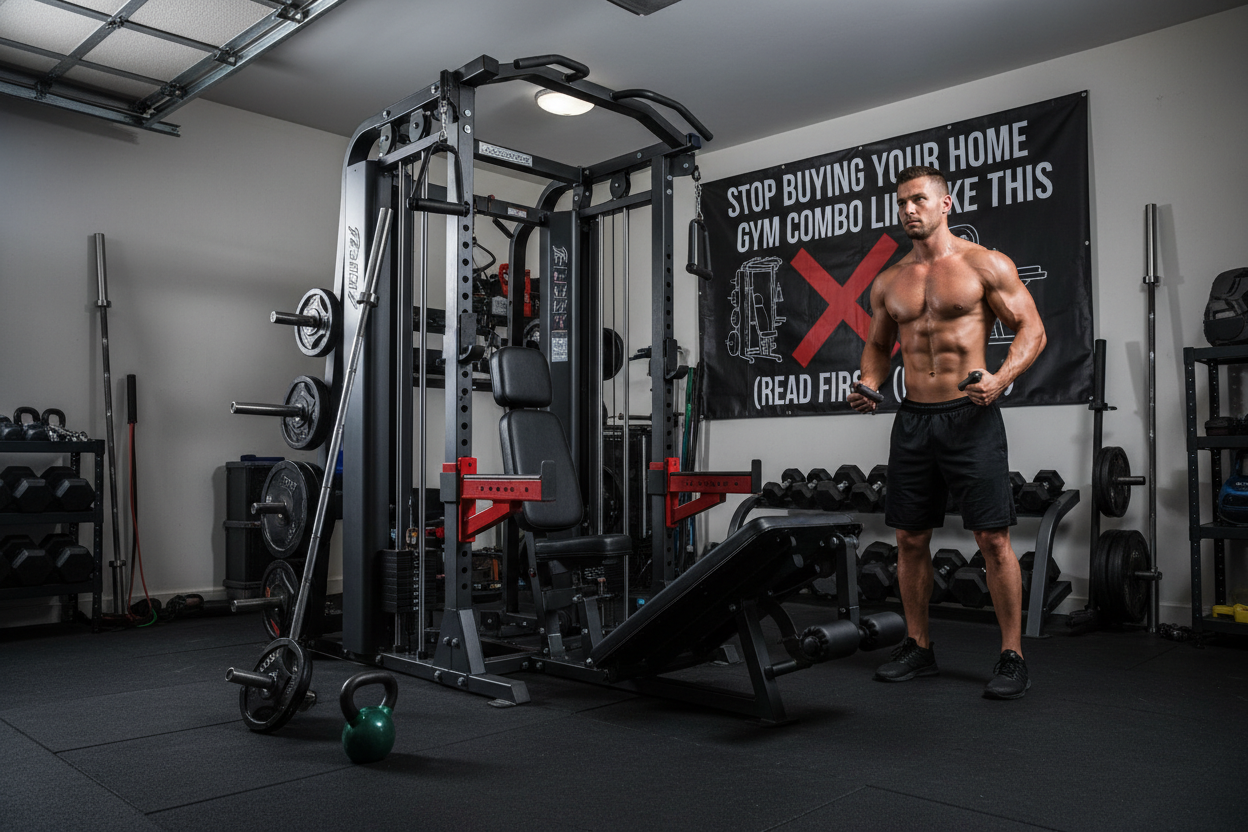
Cable Gym Pulley Explained: What to Know Before You Buy
If you have ever tried to replicate a cable crossover or a heavy tricep pushdown using only resistance bands, you know the frustration. Bands are great, but they lack the consistent, fluid tension of commercial machines. The good news? You do not need a massive, $3,000 functional trainer to get that same stimulus. A well-designed cable gym pulley can completely bridge the gap between a basic garage setup and a fully equipped commercial facility.
Whether you are working with a cramped basement corner or a spacious two-car garage, adding a pulley system is one of the highest-ROI upgrades you can make. In this guide, we will break down what to look for, how to set it up, and how to avoid the common pitfalls of budget models.
Key Takeaways
- Space Efficiency: A basic pulley system requires zero floor footprint and mounts directly to your existing power rack or ceiling joists.
- Consistent Tension: Unlike bands, a gym rope pulley provides uniform resistance through the entire range of motion, crucial for hypertrophy.
- Weight Capacity Matters: Entry-level systems often cap at 100 lbs, whereas heavy-duty models can handle up to 300+ lbs safely.
- Versatility: With a few simple attachments, you can train lats, triceps, biceps, and core without buying dedicated machines.
Choosing the Right Setup for Your Goals
Not all pulley systems are created equal. When evaluating rope and pulley exercise equipment for your home, your decision usually comes down to two main factors: resistance type and build quality.
Plate-Loaded vs. Weight Stacks
For most home gym owners, a plate-loaded system is the logical choice. It utilizes the Olympic or standard plates you already own, keeping costs low and saving space. However, if budget allows and you prefer the convenience of quick drop-sets, a dedicated weight stack is the premium upgrade. Just be prepared to sacrifice a larger footprint.
Cable Material and Sheaves
The smoothness of your workout depends entirely on the pulleys (sheaves) and the cable itself. Look for aluminum or high-density nylon pulleys with sealed ball bearings. Avoid cheap plastic wheels, as they degrade quickly and create a jarring, "sticky" feeling. The cable should be braided steel coated in durable polyurethane (PU) to prevent fraying and protect your equipment.
Fitting a Pulley System in Your Space
One of the biggest selling points of an exercise equipment rope pulley is its adaptable footprint. But height clearance is a sneaky issue in many North American homes.
Garage vs. Basement Clearances
If you are mounting a system to a power rack in a basement, measure your ceiling height carefully. A standard 84-inch rack combined with a top-mounted pulley often requires at least 90 inches of total clearance so the weight pin does not hit the ceiling at the top of a lat pulldown. For garage gyms with exposed rafters, a standalone ceiling-mounted system can be an incredible space-saver, provided you anchor it securely to a structural joist.
From Our Gym: Honest Take
We have tested dozens of pulley systems over the years, from DIY hardware store rigs to premium rack-attached setups. Here is my honest take: the biggest difference between a cheap $30 Amazon kit and a high-quality $150 system is not just the weight capacity—it is the pendulum effect.
When I was testing a budget single-pulley kit last winter, I noticed that during heavy tricep pushdowns (around 150 lbs), the loading pin would swing wildly, nearly taking out my shins. Upgrading to a dual-pulley system with a guide rod completely eliminated that issue. The tension felt identical to the commercial functional trainer I used to use. Also, do yourself a favor and upgrade the standard carabiners that come with most kits to heavy-duty climbing carabiners; it makes swapping out your gym rope pulley attachments infinitely smoother.
Frequently Asked Questions
Is a cable gym pulley worth it for a home gym?
Absolutely. It is arguably the most cost-effective way to add isolation movements to your routine. It allows you to perform lat pulldowns, tricep extensions, and cable crunches without buying bulky, single-use machines.
How much weight can a home pulley system hold?
This varies heavily by brand. Budget strap-mounted systems typically max out around 150 to 200 lbs. Premium rack-mounted or wall-mounted systems with heavy-duty cables can safely handle 300 to 400 lbs.
Can I use standard plates on a pulley system?
Most modern plate-loaded pulley systems come with a loading pin designed for 2-inch Olympic plates. However, many brands include an adapter sleeve, allowing you to use 1-inch standard plates if that is what you currently own.