Cable Cross Smith Machine: The Ultimate Home Gym Setup Guide
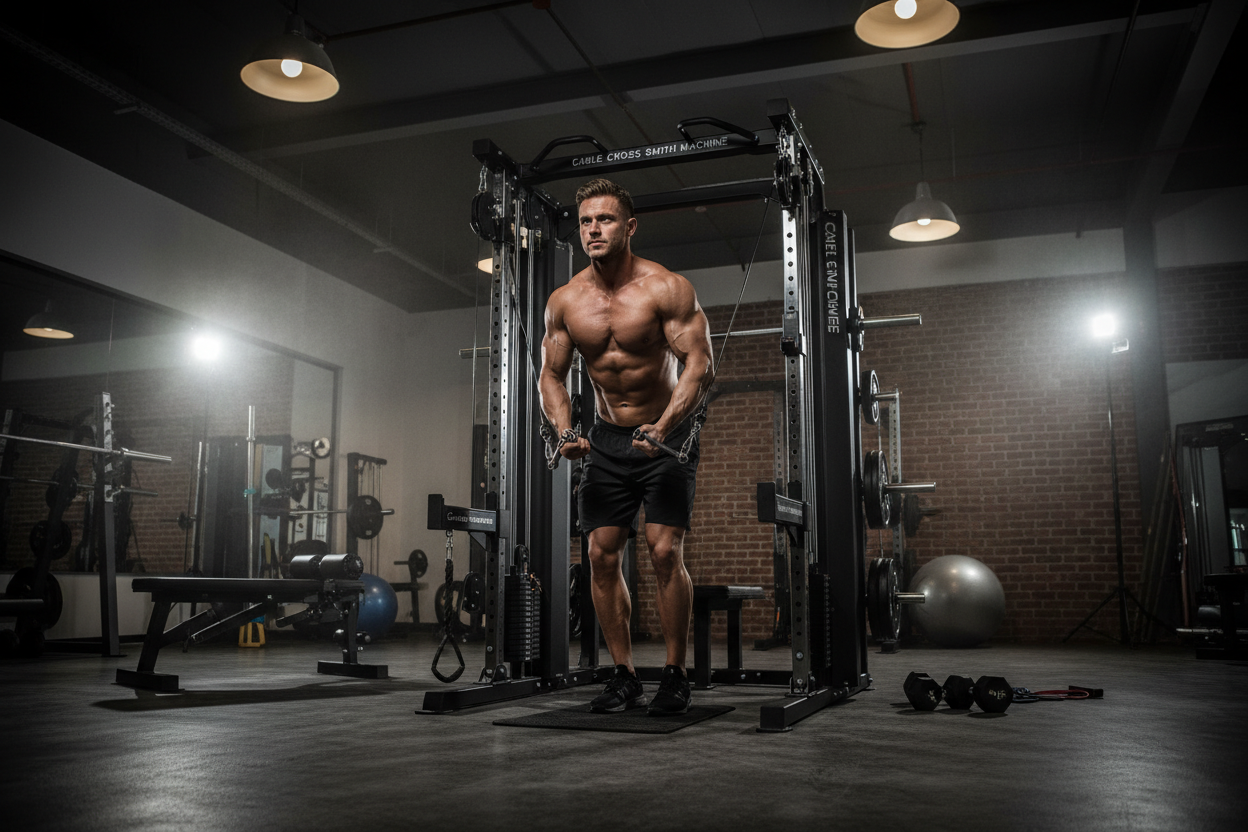
Building a home gym usually forces a painful compromise: choosing between heavy barbell movements and versatile cable exercises. If you are working out of a standard garage or a spare bedroom, you probably do not have the square footage for both a full power rack and a standalone functional trainer. That is exactly where a cable cross smith machine changes the game.
By combining two massive pieces of commercial gym equipment into one footprint, it solves the ultimate home gym space dilemma. This guide will walk you through exactly what to look for, how to plan your space, and whether this hybrid machine is the right investment for your training goals.
Key Takeaways
- Space Efficiency: Combines a half-rack, Smith bar, and dual-adjustable pulleys into a single compact footprint.
- Safety First: Built-in spotter arms and Smith bar catches allow for safe, heavy solo lifting without a training partner.
- Versatility: Offers hundreds of exercise variations, targeting every muscle group without needing extra machines.
- Cost-Effective: While the upfront cost is higher, it is significantly cheaper than buying a standalone rack and a functional trainer separately.
Space Planning for Your Hybrid Machine
Before investing in a smith machine and cable crossover combo, you need to measure your space meticulously. These units are space-savers by design, but they still command a significant chunk of real estate.
Height Clearances and Basements
Most high-quality units sit between 82 and 90 inches tall. If you are setting up in a basement with low ceilings, pay close attention to the maximum height of the pulley uprights. You also need to account for pull-up clearance, leaving at least 12 to 18 inches above the highest bar so you do not hit your head on the ceiling.
Width and Depth Realities
While the machine's base footprint might be 5 feet wide, the actual Smith bar is usually a standard 7 feet (84 inches). You must leave an additional 1 to 2 feet on each side to comfortably load and unload Olympic plates. A standard two-car garage gym handles this easily, but corner setups require careful architectural planning.
Training Application: Unlimited Exercise Potential
The true beauty of a smith machine cable crossover lies in its programming versatility. You are no longer restricted to just linear barbell paths or isolated machine work.
Blending Free Weights and Cables
You can seamlessly transition from heavy Smith machine squats to cable flyes or triceps pushdowns without walking across the room. This allows for intense supersets and giant sets, keeping your heart rate up and maximizing your workout time. The fixed plane of the Smith bar is excellent for isolating muscles safely, while the free-moving cables build stabilizing strength.
Buying Guide: Key Specs to Compare
Not every smith machine with cable crossover is built the same. When comparing models, look past the shiny attachments and focus on the core mechanics.
Pulley Ratios and Weight Stacks
Pay attention to the pulley ratio. A 2:1 ratio means a 100 lb stack feels like 50 lbs of resistance, which is standard for most functional trainers and provides enough cable travel for dynamic movements. Also, decide if you want a selectorized weight stack (pin-loaded for quick changes) or a plate-loaded system (budget-friendly but slower to adjust).
Linear Bearings vs. Bushings
For the Smith bar itself, always opt for linear bearings over nylon bushings. Bearings provide that buttery-smooth glide you feel in commercial gyms, whereas bushings can catch and drag, especially under heavy loads.
From Our Gym: Honest Take
We have tested dozens of all-in-one trainers over the past few years, and I recently installed a heavy-duty cable cross unit in my own garage gym. The immediate standout was the structural rigidity. When doing heavy weighted pull-ups at 210 lbs, the frame did not budge, a stark contrast to cheaper, lightweight racks.
However, I will be honest about the assembly: it is a beast. It took me and a buddy roughly seven hours to route the cables and align the dual-pulley system perfectly. Another minor caveat is that the Smith bar's starting weight is around 35 lbs due to the counter-balance mechanisms on some models, which is slightly heavier than the standard 20 lbs on commercial units. But once it is built, the ability to superset heavy bench presses directly into high cable crossovers without waiting for equipment is an absolute game-changer for home training.
Frequently Asked Questions
Is a cable cross smith machine worth the investment?
Yes, especially if you have limited space and train alone. It replaces thousands of dollars worth of individual machines and provides the safety of built-in spotters for heavy lifting.
Can you build muscle with just a Smith machine and cables?
Absolutely. Muscle hypertrophy relies on progressive overload and mechanical tension. The combination of heavy Smith machine compound lifts and isolating cable exercises provides everything needed for optimal muscle growth.
How much weight can these machines handle?
Entry-level models typically support 300 to 400 lbs on the Smith bar, while premium, commercial-grade units can safely handle 600 to 1,000 lbs. Always check the manufacturer's static weight rating before purchasing.