Buying an Exercise Bike? Avoid These Mistakes
If you're tired of skipping cardio because the weather turned sour or you simply don't have the time to commute to a commercial facility, you aren't alone. Bringing cardio into your house is a game-changer, but nobody wants their new equipment to become a $1,000 coat rack.
Buying an exercise bike is a major investment in your health and your home gym ecosystem. Whether you're dealing with limited basement clearance, noise constraints in an apartment, or budget limits, this guide will help you navigate the noise and find the perfect ride for your goals.
Key Takeaways
- Determine your style: Choose between studio cycles (spin bikes), upright bikes, or recumbent bikes based on your mobility and training goals.
- Prioritize magnetic resistance: It offers a quieter, smoother ride and requires significantly less maintenance than friction-based systems.
- Check the ergonomics: Look closely at the Q-factor (pedal width) and four-way seat adjustability to prevent knee and lower back pain.
- Measure your space: Most studio bikes require a footprint of at least 2 feet by 4 feet, plus clearance for mounting and dismounting.
The Ultimate Exercise Bike Buying Guide
When figuring out how to choose an exercise bike, the sheer number of options can feel overwhelming. A comprehensive exercise bike buying guide always comes down to matching the bike's specifications to your personal training style.
Understanding Resistance and Flywheels
If you want solid exercise bike advice, start with the resistance mechanism. Magnetic resistance uses magnets to create tension against the flywheel. It's whisper-quiet, making it ideal for early morning sessions while the house is asleep. Friction resistance uses felt pads; while cheaper, it requires routine replacement and generates noticeable noise. When considering what to look for in an exercise bike, a heavier flywheel (typically 30-40 lbs on studio bikes) provides a smoother, more road-like momentum, though advanced magnetic bikes can simulate this with lighter wheels.
Tech Integration vs. 'Dumb' Bikes
Do you need a built-in screen? Smart bikes lock you into their software ecosystems and monthly subscription fees. If you prefer flexibility, how to pick an exercise bike comes down to buying a high-quality 'dumb' bike with a robust tablet holder. You can stream any app you want without being tied to a single platform.
Space Planning for North American Homes
Any reliable stationary bike buying guide needs to address where this machine will actually live. Unlike treadmills, bikes are incredibly space-efficient, but they still have specific requirements.
Garage Gyms vs. Apartment Corners
If you are setting up in a garage, a heavier, commercial-grade studio bike won't be an issue. However, if you're wheeling it into a carpeted apartment bedroom, you'll want a lighter frame with high-quality transport wheels. Always invest in a heavy-duty equipment mat to protect your floors from sweat and mechanical vibration.
New vs. Pre-Owned: Making the Right Choice
Budget constraints often lead people to the secondhand market. If you are wondering how to choose exercise bike models on a budget, going used can save you hundreds, provided you know what to inspect.
What to Look for When Buying a Used Exercise Bike
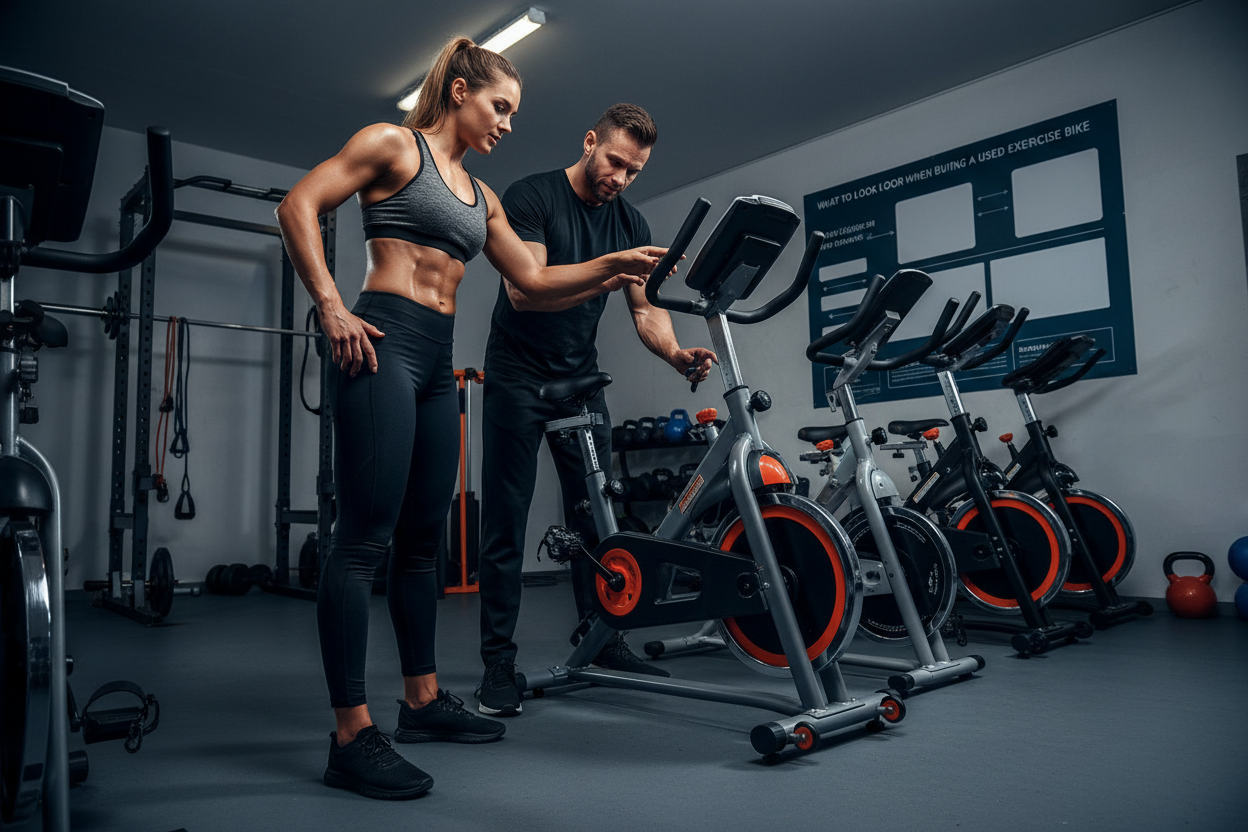
When evaluating a used bike, check the drive belt for fraying and listen closely to the bearings when pedaling at high speeds. A clicking or grinding sound often indicates a worn bottom bracket. Always test the resistance knob to ensure smooth transitions, and inspect the frame for rust, particularly around the seat post and handlebars where sweat tends to pool.
From Our Gym: Honest Take
In our own testing facility, I've logged hundreds of miles on everything from entry-level online specials to $2,500 commercial studio bikes. Here is my biggest takeaway: comfort dictates consistency.
At 6 foot 1, I quickly realized that a bike's Q-factor (the horizontal distance between the pedals) is make-or-break. A lot of budget bikes have a wide Q-factor that forced my knees outward, causing joint ache after just 20 minutes of riding. Furthermore, I once bought a friction-resistance bike for my personal garage gym to save money. After six months of humid summer workouts, the felt pads degraded, and the noise became unbearable. I ended up upgrading to a magnetic resistance model anyway. Spend the extra money upfront for magnetic resistance and a fully adjustable seat (up, down, forward, and back)—your knees will thank you.
Frequently Asked Questions
Is buying an exercise bike worth it for a home gym?
Absolutely. It offers low-impact, high-intensity cardiovascular training with a much smaller footprint than a treadmill or elliptical. It's perfect for warm-ups, steady-state cardio, or HIIT sessions.
How much space do I need for a stationary bike?
Most standard exercise bikes require a footprint of roughly 2 feet wide by 4 feet long. However, you should leave at least 2 feet of clearance on all sides for safe mounting, dismounting, and maintenance.
What is the weight limit on most exercise bikes?
Entry-level bikes typically support between 220 and 250 lbs. Mid-range to commercial-grade bikes usually offer weight capacities ranging from 300 to 350 lbs, thanks to heavier steel frames and reinforced bottom brackets.