But Work Out Architecture: Glute Loading Vectors, Movement Sequencing, and Home Floor Staging
Core Movement Planes in a Targeted But Work Out
Developing a dependable, well-rounded lower-body training session requires addressing multiple loading vectors across your weekly schedule. A balanced but work out blends vertical knee-dominant drives, horizontal hip extensions, and lateral hip abduction patterns. Each anatomical plane engages specific regions of the posterior chain, supporting balanced pelvic stability and balanced lower-body force transfer across regular home training sessions.
Focusing exclusively on a single movement pattern often leaves critical stabilizing muscle groups understimulated. When training at home, organizing lower-body work by movement plane ensures complete physical stimulus while reducing repetitive strain on the knees and lumbar spine. By alternating between varied hinge angles, unilateral foot positions, and lateral resistance lines, lifters can maintain continuous training momentum without needing commercial gym machines.
Horizontal Hip Hinging and Extension Patterns
Horizontal loading vectors place peak mechanical tension across the gluteal musculature when the hips approach full extension. Foundational movements such as Romanian deadlifts, barbell glute bridges, and elevated hip thrusts challenge the posterior chain through substantial hip excursion. Focusing on a deliberate hip hinge preserves neutral spinal mechanics while directing the primary resistance into the gluteus maximus and upper hamstrings.
During horizontal hip extension exercises, foot placement strongly dictates which muscles absorb the load. Positioning feet firmly on a stable surface with vertical shins at the peak of the thrust directs tension squarely into the hips rather than the quadriceps. Practicing deliberate lockout mechanics without hyperextending the lower back ensures that every repetition reinforces clean biomechanics.
Vertical and Split-Stance Driving Vectors
Vertical movement patterns challenge the lower body through deeper ranges of hip flexion. Compound movements like walking lunges, Bulgarian split squats, reverse deficit lunges, and deep goblet squats place substantial demands on unilateral coordination. As each leg drives through the floor, stabilizing musculature around the hips and knees coordinates to manage vertical momentum without compromising tracking or posture.
Split-stance variations are particularly effective for addressing side-to-side strength imbalances. Because each leg works independently, the nervous system must stabilize the pelvis throughout the descent and ascent. Leaning the torso slightly forward during split squats further lengthens the gluteal fibers under load, increasing the stretch stimulus at the bottom of the repetition.
Lateral Abduction and Pelvic Stabilization
Lateral movements target the gluteus medius and gluteus minimus, the primary muscles responsible for hip abduction and leveling the pelvis during single-leg actions. Integrating banded side walks, side-lying hip raises, and standing cable or band sweeps prevents compensatory hip shifting during heavy compound lifts, establishing a structurally stable foundation for overall hip health.
Without strong lateral stabilizers, the knees can collapse inward during loaded squats and dynamic lunges. Dedicating accessory volume to lateral abduction patterns trains these smaller muscle groups to fire consistently, keeping the femoral head securely centered within the hip socket during heavy vertical and horizontal training.
Best Exercises for Bums and Structural Progression
Selecting the best exercises for bums depends on current movement proficiency, available resistance equipment, and mechanical execution. Rather than cycling through arbitrary routines, long-term development thrives on consistent technique, intentional tempo, and progressive loading schemes over extended training blocks.
Bodyweight Foundations to Loaded Resistance
Before introducing external weight, mastering movement arcs with bodyweight ensures clean joint alignment and solid mind-muscle coordination. When you are ready to expand your training plan, an exercise workout perfect guide offers structured progression frameworks. Transitioning from bodyweight movements to resistance bands, dumbbells, and barbells should happen incrementally, maintaining smooth joint paths and controlled cadences throughout each training set.
A sensible progression starts with unweighted hip hinges, bodyweight split squats, and floor bridges to build baseline joint comfort. Once movement patterns feel natural and repeatable, lifters can introduce mini-bands around the thighs to increase lateral tension. From there, adding handheld dumbbells or kettlebells allows progressive mechanical overload without compromising form.
Controlling Cadence, Pause Points, and Tension
Muscular tension often responds best to controlled cadences rather than rapid, momentum-driven repetitions. Emphasizing a controlled eccentric descent followed by a distinct isometric pause at the peak of hip extension maximizes muscular engagement. Pausing eliminates reliance on elastic rebound, ensuring that the target muscle groups maintain continuous mechanical tension throughout the full range of motion.
Slowing down the tempo also protects joints from sudden, jarring reversals of direction. A deliberate tempo allows lifters to remain mindful of their breathing, brace their midsection, and ensure that the drive originates from the hips rather than shifting into the lower back or knees.
Home Floor Staging and Subfloor Protection for Lower-Body Training
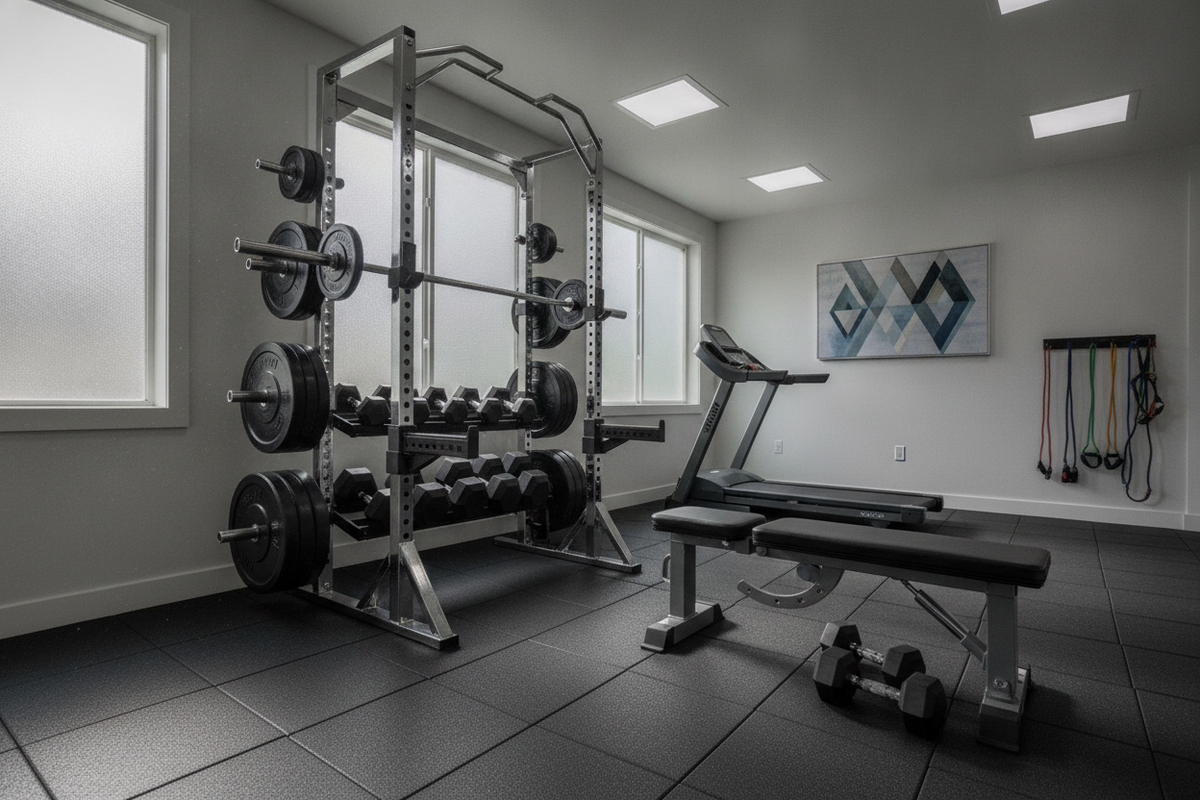
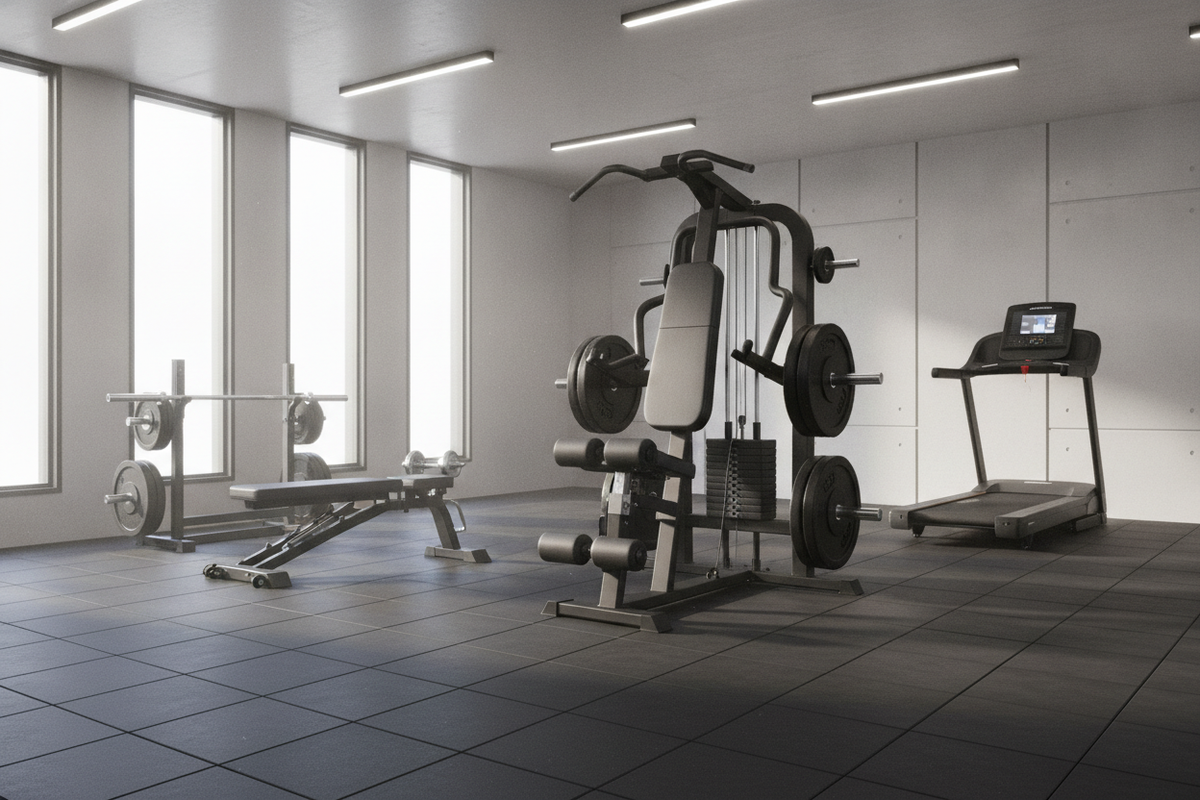
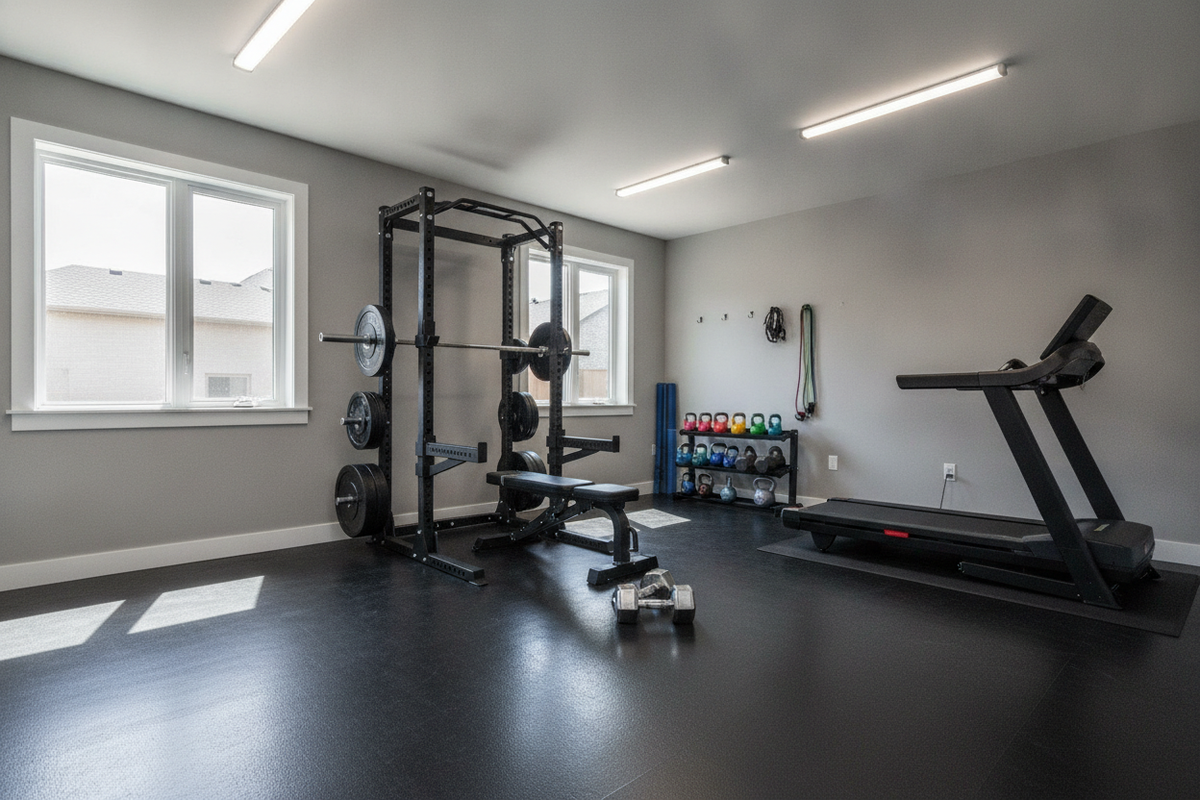
Intense lower-body sessions introduce significant forces into residential living spaces, demanding thoughtful attention to floor staging and surface stability. In our editorial assessments, we find that dedicated underfoot padding noticeably improves lifter confidence during deep lunges and heavy thrust setups.
Traction Requirements for Dynamic Lunges and Thrusts
Dynamic lower-body movements require dependable surface grip. Aggressive split squats, wide-stance sumo hinges, and weighted bridge drives exert angled shear forces against your flooring. Selecting surfaces from a dedicated exercise collection helps prevent footing slippage, keeping feet anchored during forceful drives.
When feet slip even slightly during a loaded lift, the body instinctively shifts tension away from prime movers and into defensive joint bracing. High-friction textured surfaces allow athletes to press through their heels and midfoot with complete confidence, optimizing force transfer and reinforcing solid movement mechanics across every set.
Protecting Subfloors Under Heavy Point Loads and Foot Impacts
Hip thrust benches, adjustable racks, and heavy dumbbells focus substantial weight onto tiny contact points. Without adequate floor protection, these concentrated loads can indent hardwood, crush laminate seams, or crack ceramic tile. Deploying a spacious exercise workout product distributes point pressures across a wider area while insulating residential subfloors from routine equipment impacts.
A broad protective surface also creates a designated training boundary that keeps benches, plates, and accessories contained in one secure zone. This containment prevents wandering equipment from scuffing nearby baseboards or damaging exposed floor surfaces between exercise sets.
Sample Routine: Structuring a Balanced Weekly Workout for But Development
A structured home workout groups movements into logical phases to prime the hips, tackle primary loading patterns, and finish with controlled accessory work.
- Preparation Phase: Perform unweighted glute bridges, quadruped fire hydrants, and lateral band walks to activate hip stabilizers and prime the nervous system.
- Primary Compound Lift: Focus on barbell or dumbbell hip thrusts, executing each repetition with a steady lowering phase and an isometric hold at complete extension.
- Unilateral Drive: Complete Bulgarian split squats or reverse lunges, holding moderate dumbbells to challenge single-leg stability and deep hip flexion.
- Hinge Pattern: Execute Romanian deadlifts using dumbbells or a barbell, emphasizing a controlled hip hinge and soft knee bend to load the posterior chain.
- Accessory Isolation: Finish with resistance-band kickbacks or side-lying clamshells to accumulate fatigue in the lateral gluteal stabilizers.
- Cooldown Phase: Conclude on a cushioned mat with gentle hip flexor stretches, figure-four mobilizations, and deep diaphragmatic breathing.
Mat Maintenance and Equipment Layout for Longevity
Preserving your home workout area requires consistent hygiene and organized gear management. Wipe down high-density workout surfaces regularly using mild soap and warm water to eliminate sweat, body oils, and shoe residue that could degrade surface traction over time.
Allow mats to dry thoroughly before storing portable weights or bench setups back onto the surface. Positioning heavy utility benches centrally over the most cushioned sections of your floor mat ensures uniform wear patterns, extending the life of your home training space while maintaining reliable traction for every future workout.