But Lifts Workout Guide: Biomechanical Vectors, Weight Progression, and Home Floor Staging
Targeting the posterior chain requires a deliberate blend of anatomical awareness and disciplined exercise staging. A balanced but lifts workout goes beyond random floor pulses by addressing the gluteal muscle complex through varying lines of resistance and functional joint angles. When planning a routine for home training, understanding how movement vectors alter muscular tension helps eliminate guesswork and keeps training sessions productive.
Understanding the Biomechanics of an Effective Butt Lift Workout
The gluteal complex consists of several distinct muscles working together to control hip extension, external rotation, and pelvic stability. Structuring a routine purely around low-resistance mat movements often leaves major muscle fibers understimulated. Achieving purposeful development demands a structured combination of deep stretch positions and hard contraction ranges.
Rather than treating every hip movement identically, coaches evaluate exercises by how force passes through the hip joint relative to the torso. Tension patterns shift dramatically depending on whether the hips are extending vertically against gravity or pushing horizontally across a flat plane. A comprehensive approach ensures that every functional pattern receives sufficient exposure throughout the training schedule.
The Primary Force Vectors: Horizontal vs. Vertical Glute Loading
Vertical loading exercises, such as traditional squats and lunges, deliver peak mechanical tension when the hip is fully flexed. In this stretched posture, the gluteus maximus is placed under substantial eccentric load. However, as the lifter reaches a standing lockout, gravitational resistance drops off significantly, reducing peak active tension at the top of the movement.
In contrast, horizontal loading exercises—most notably hip thrusts and supine bridges—create maximum tension at terminal hip extension. Because gravity acts downward perpendicular to the lifter's hips at lockout, the gluteal muscles must contract intensely to hold pelvic alignment. Integrating both vector profiles within your overall plan guarantees that muscles are challenged in both elongated and shortened states.
Core Exercises for Shaping Buttocks Across Movement Planes
Building an effective catalog of exercises for shaping buttocks requires incorporating frontal, sagittal, and transverse planes of motion. Relying solely on bidirectional forward-and-backward movements overlooks the gluteus medius and minimus, which govern lateral stability and pelvic balance during everyday strides.
A well-rounded program combines stable bilateral foundations with unilateral variations that highlight single-leg control. For additional structural context on pelvic positioning and movement execution, reviewing a glutes exercise buttocks guide can offer helpful reference points for movement quality.
Horizontal Hip Thrust Mechanics and Pelvic Alignment
The hip thrust serves as a primary driver of horizontal hip extension. Proper execution relies on maintaining a neutral spine and avoiding compensatory lumbar extension during the top portion of the lift. Rather than arching the lower back to force the hips higher, trainees should focus on a gentle posterior pelvic tilt paired with locked ribcage positioning.
Foot placement also dictates which muscle groups dominate the lift. Placing feet too far forward places greater demand on the hamstrings, while tucking feet too close beneath the hips shifts focus toward the quadriceps. Establishing a stable tripod position through each foot—balancing contact across the heel, the base of the big toe, and the base of the little toe—ensures consistent drive throughout each repetition.
Unilateral Movements: Split Squats and Step-Ups for Balanced Contraction
Single-leg exercises expose left-to-right disparities and engage the lateral hip stabilizers to prevent hip drop. Bulgarian split squats, reverse lunges, and elevated step-ups demand coordinated recruitment across the entire lower body. Introducing a slight forward lean of the torso shifts the line of force directly over the lead hip, emphasizing the posterior chain while minimizing passive knee shear.
When stepping onto an elevated platform, driving strictly through the lead foot without pushing off the rear foot isolates the working hip. Maintaining level hips throughout the eccentric descent ensures the lateral gluteals stabilize the pelvis effectively across every repetition.
How to Lift Your Buttocks with Weights at Home
Understanding how to lift your buttocks with weights comes down to progressive overload applied to clean movement mechanics. Adding resistance without firm technical control often leads to unwanted lower-back fatigue or knee irritation. Lifters can use dumbbells, kettlebells, or barbells to progressively challenge muscle tissue as movement patterns become consistent.
Home lifters should focus on mastering slow tempo during lowering phases and maintaining brief pauses at peak contractions. Controlling repetition speed reinforces movement pathways, making moderate weights feel significantly more demanding. Those setting up multi-station weight routines can also consult a workout exercise lifting guide to explore how selectorized equipment complements free-weight hip hinges.
Selecting the Best Exercise for Lifting Glutes: Roman Deadlifts vs. Squats
Trainees frequently ask whether squats or Romanian deadlifts represent the best exercise for lifting glutes. The answer largely depends on individual skeletal leverage and hip structure. Romanian deadlifts emphasize pure hip hinge mechanics, keeping the shins vertical while the pelvis travels rearward, loading the posterior chain deeply with minimal knee flexion.
Squats, conversely, involve simultaneous knee and hip flexion. Lifters with longer femurs often find that deep squats challenge the lower back and quadriceps before the glutes reach maximum engagement. For many home lifters, pairing a hinge-dominant Romanian deadlift with a horizontal hip thrust provides a direct posterior chain stimulus without requiring excessive knee bend.
Home Training Staging: Flooring, Stability, and Joint Comfort
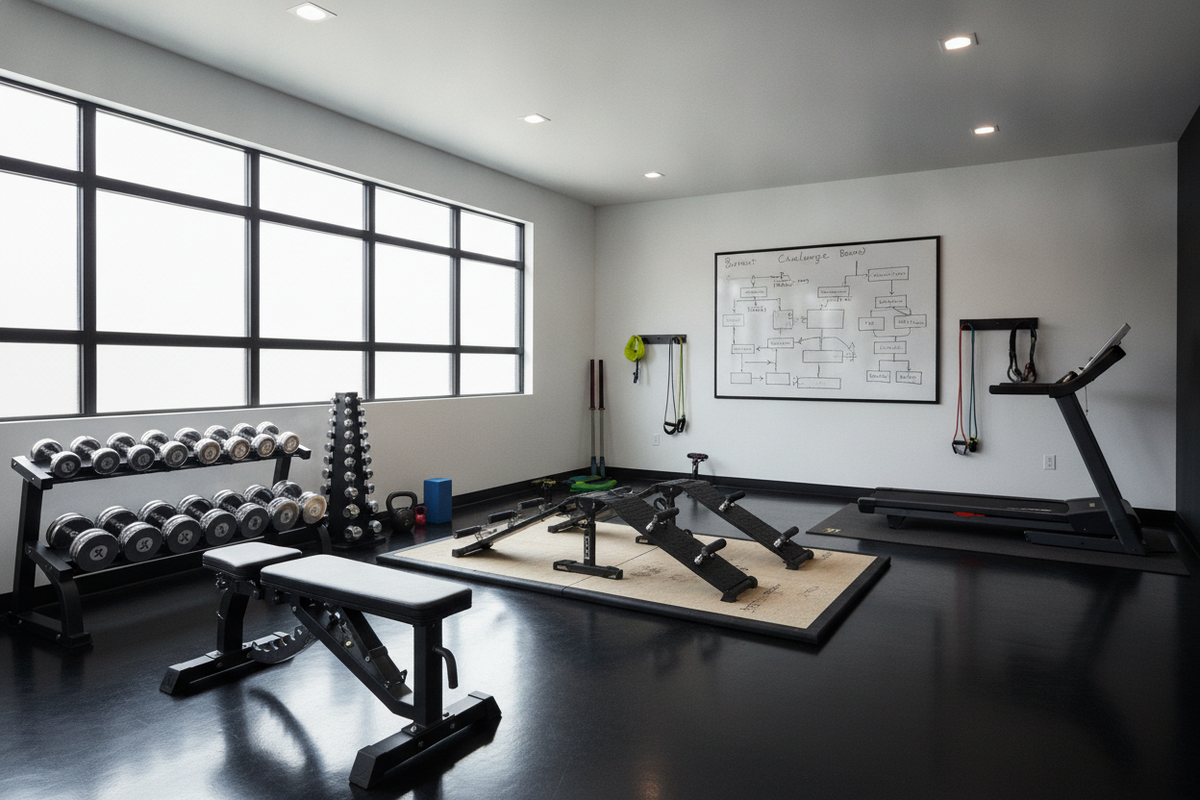
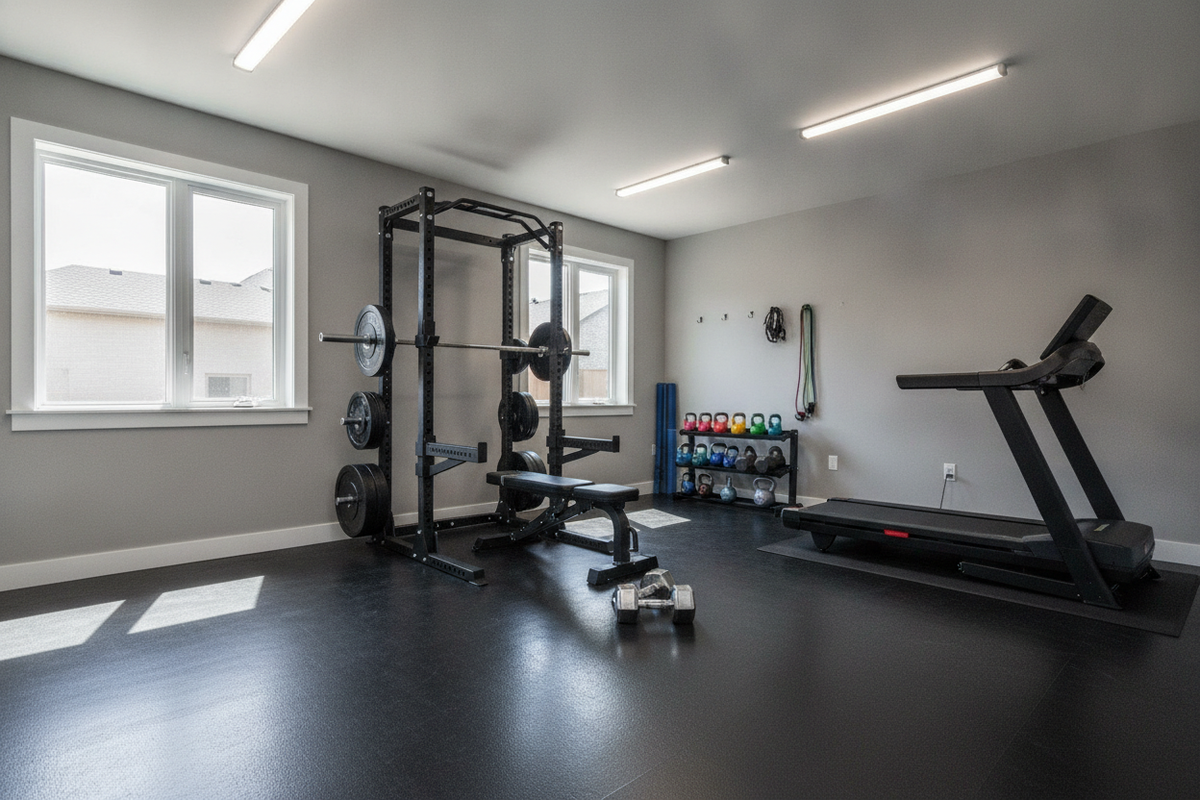
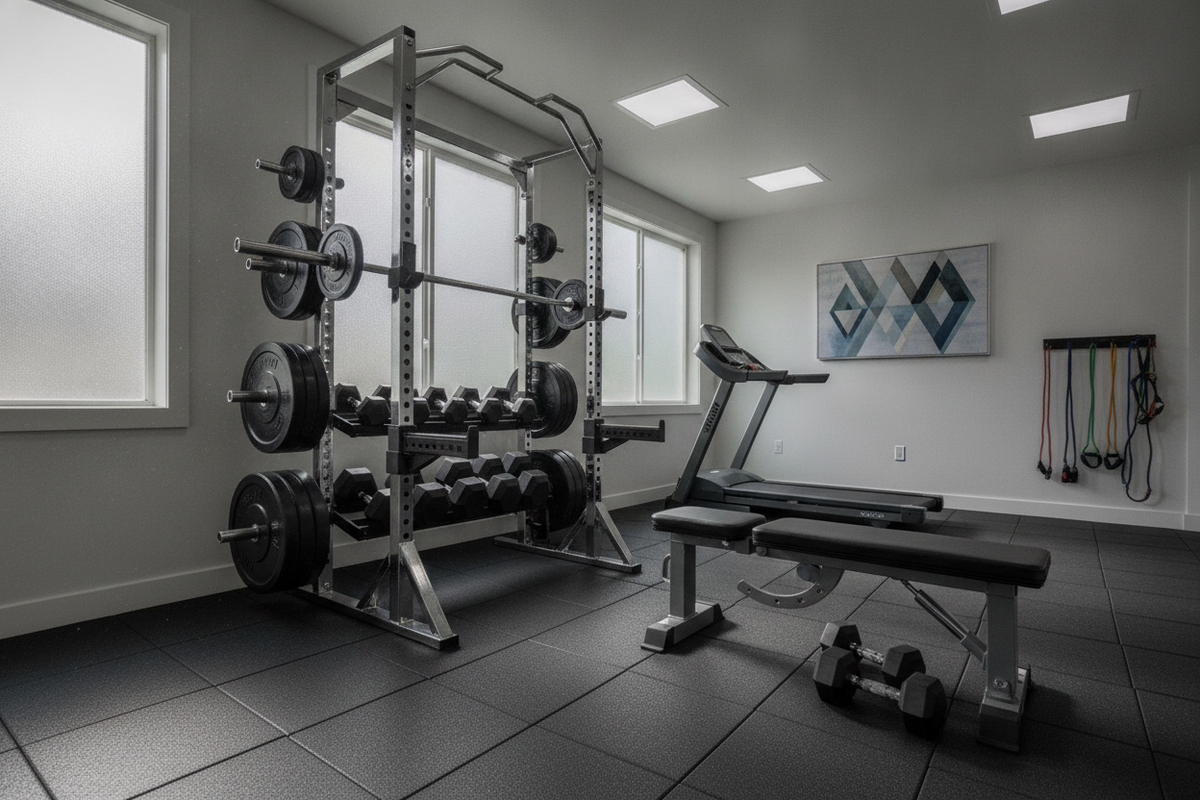
Effective glute training generates substantial downward and horizontal shear forces against your floor. Executing heavy barbell hip thrusts or wide-stance lunges on slippery hardwood, unstable rugs, or bare tile can cause bench slippage and foot drift. Establishing a secure ground surface is a foundational element of any functional workout space.
Selecting dedicated high-density matting from an established exercise collection provides a firm, slip-resistant foundation that supports joint comfort while protecting residential subfloors from heavy dumbbell or barbell impacts.
Preventing Surface Shift During Heavy Hip Thrusts and Lunges
During a weighted hip thrust, your bench rests against horizontal ground forces that attempt to slide the bench backward as your feet drive into the floor. In my editorial view, few setup flaws disrupt hip drive faster than an unstable bench drifting during a working set. A resilient foundation creates friction under both the bench legs and your footwear, locking your position in place.
Using a large format surface like a specialized exercise workout product ensures that your feet, training bench, and free weights all remain anchored to the same stable platform. The firm base prevents point-pressure denting from heavy edges while delivering predictable footing during wide-stance squats and dynamic lunges.
Structuring a Progressive Weekly Glute Lifting Split
Achieving sustained results requires an organized training schedule that provides balance between work and recovery. Rather than grouping all hip-dominant movements into a single exhausting session, spreading patterns across multiple training days helps preserve technique and overall movement quality.
- Day One: Emphasize horizontal hip extension patterns like hip thrusts paired with knee-dominant vertical squats and light lateral abduction work.
- Day Two: Focus on hinge mechanics such as Romanian deadlifts along with unilateral split squats and walking lunges to challenge single-leg stability.
- Day Three: Integrate varied vector work, focusing on step-ups, controlled bridge variations, and banded rotations to refine hip stability.
By rotating primary vectors, maintaining progressive resistance, and anchoring your home gym on a non-slip, dense matting foundation, you can construct a dependable butt lifts workout routine that builds strength and movement confidence over time.