Bum Toning Exercises: Simple Home Workouts, Floor Cushioning, and Movement Fundamentals
Foundational Mechanics of Low-Impact Bum Toning
Establishing an approachable routine for lower-body conditioning starts with understanding basic pelvic orientation and controlled hip extension. Many people begin searching for bum toning exercises to build consistency without overloading their bodies with heavy barbells or complicated machines. Focusing on bodyweight mechanics allows you to concentrate on the intentional engagement of the gluteal muscle complex rather than simply moving through momentum.
A common hurdle when exploring easy exercises for glutes female fitness routines or general beginner plans is managing posture. Maintaining a neutral spine prevents the lower back from taking over during extension movements. When the pelvis tilts too far forward, hip extension is often cut short, which shifts the training tension away from the glutes. By slowing down the tempo and pausing briefly at the peak of each repetition, you create a productive stimulus using bodyweight alone. For an in-depth look at hip mechanics and training principles, our glutes bum exercise guide offers detailed insight into long-term movement habits.
Mat-Based Supine and Quadruped Glute Exercises
Floor drills serve as the cornerstone of any accessible home routine because they eliminate the balance demands of standing work, making an easy booty workout at home both comfortable and manageable. Practicing on your back or on hands and knees keeps the center of gravity low and lets you isolate specific hip actions.
- Supine Glute Bridges: Lie flat on your back with knees bent and feet planted flat on your floor surface, roughly hip-width apart. Press downward through your heels to raise your hips until your thighs and torso align. Pausing at the top reinforces deliberate glute activation without hyperextending the lower back.
- Side-Lying Clamshells: Rest on your side with hips and knees stacked at comfortable angles. Keeping the heels lightly touching, raise the top knee upward while ensuring the pelvis does not roll backward. This targets the outer gluteal musculature essential for hip stability.
- Quadruped Donkey Kicks: Position yourself on hands and knees with a braced torso. Drive one heel toward the ceiling while keeping the knee bent, ensuring movement originates from the hip rather than an arching spine. This serves as a classic easy but exercise choice for continuous tension.
- Fire Hydrants: From the same tabletop position, lift one leg out to the side while maintaining square shoulders and hips. Controlled pacing here challenges hip abduction without requiring any added weights.
Integrating these mat-based drills into simple booty workouts helps cultivate steady mind-muscle connection. Performing small clusters of repetitions with mindful pauses creates a sustainable foundation before adding standing variations.
Standing Movements and Low-Friction Progressions
Once you are comfortable with floor-based activations, incorporating upright drills teaches your body to recruit glute muscles while managing balance and posture. Learning how to do bum exercises at home in a standing stance introduces functional movement planes that translate well to daily walking and stair climbing.
A foundational upright drill is the hip hinge. Stand with feet hip-distance apart, soften your knees, and send your hips back toward the wall behind you while maintaining a long, flat back. Rather than bending down through the spine, think of the hips acting as a door hinge. Squeeze the glutes to return to a tall standing posture. From there, reverse step-backs or gentle pulse squats can be introduced. Stepping backward keeps the front shin relatively vertical, directing work into the glute and hamstring complex rather than placing excessive shear force on the knee joint.
As your control develops, you may choose to explore progressive gym patterns or external loading. Our comprehensive glutes booty exercise guide discusses how to transition from bodyweight home drills to broader resistance training frameworks.
Surface Staging: Protecting Joints and Home Subfloors
Executing floor drills consistently requires paying close attention to your training surface. When performing kneeling kicks, side planks, or repeated bridging, resting directly on hard tile or hardwood floors can cause uncomfortable pressure points on the knees, wrists, and tailbone. In my own home setup, switching from a bare floor to a cushioned surface made quadruped work far more pleasant.
A quality workout mat does more than soften impact; it provides traction that keeps your plant foot steady during bridges and hinges. Hard surfaces can become slick, causing your feet to slide outward and interrupting smooth hip drive. Utilizing dedicated flooring from an exercise collection helps create a stable, non-migrating workout area that protects your home subfloors from scuffs while keeping your joints cushioned through repetitive movements.
Workout Zone Layout, Storage, and Surface Maintenance
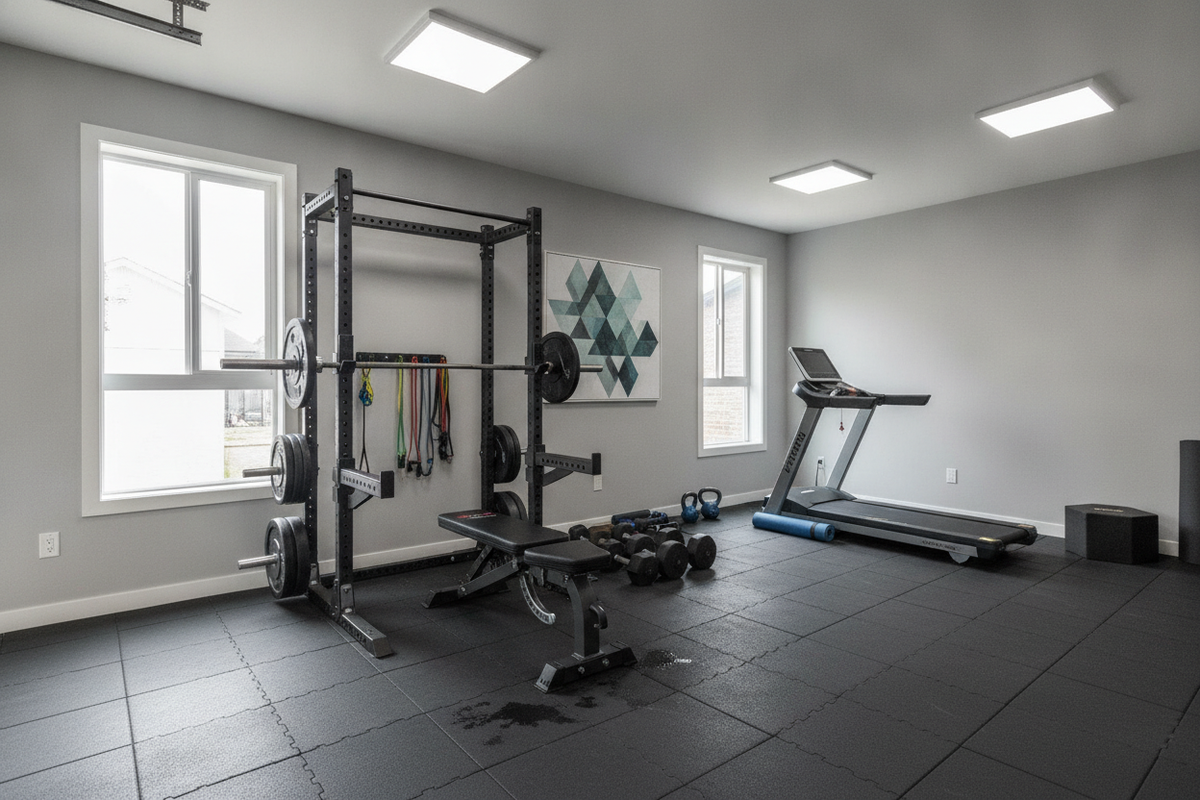
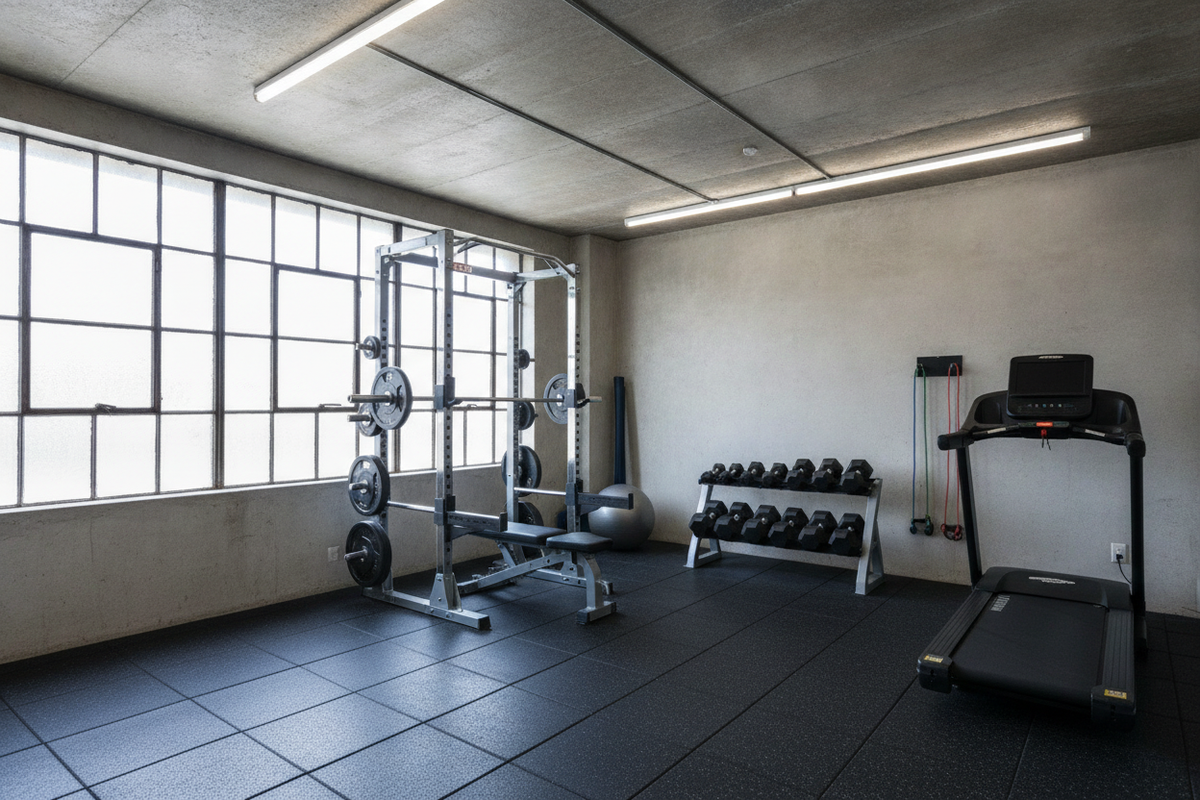
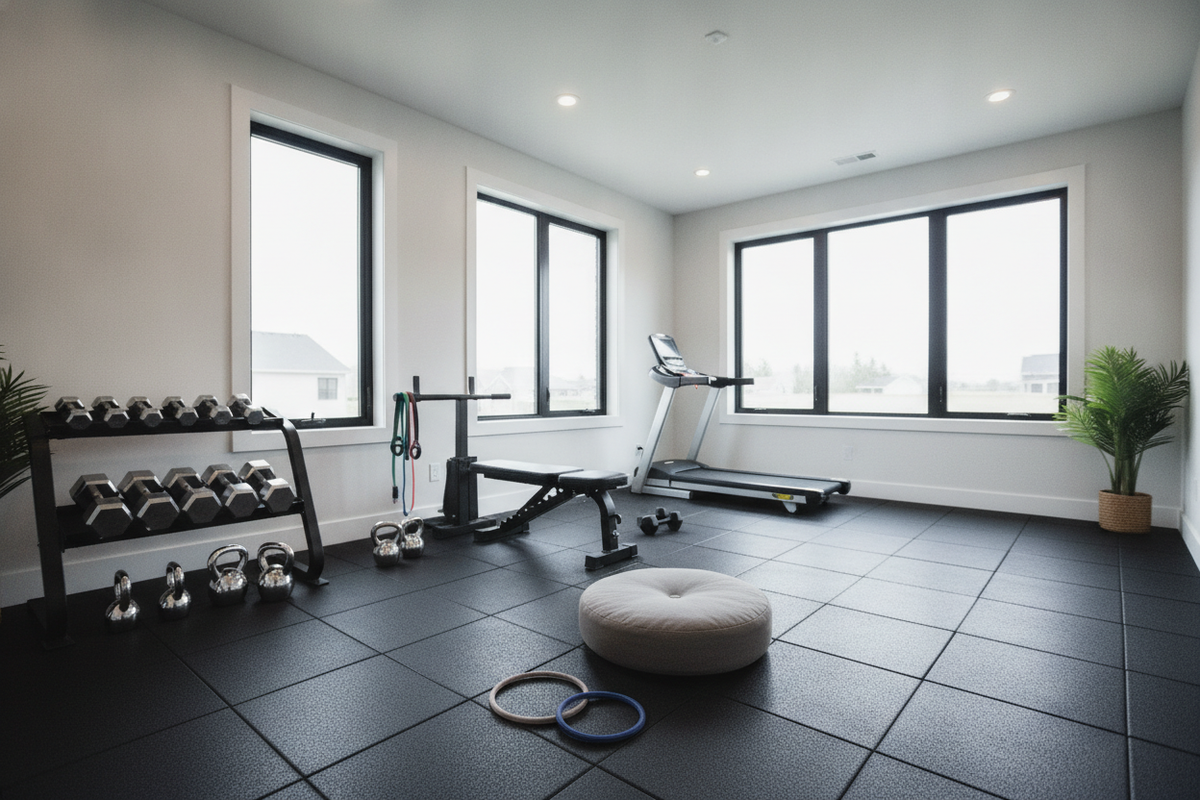
Creating an inviting home exercise corner encourages regular practice. When setting up a space to learn how to do bum exercises at home, aim for an unobstructed layout that permits full leg extensions in both supine and quadruped orientations. Ensure you have ample clearance from furniture corners, low tables, and wall baseboards.
For rooms that double as living quarters, selecting a versatile surface like an exercise workout product provides generous dimensions for sweeping leg kickbacks and sprawling floor circuits without needing to readjust your body position between sets. When workouts wrap up, keeping the surface clean requires only a gentle wipe-down with a mild, residue-free solution and a microfiber cloth. Letting the mat air-dry completely before rolling or leaving it laid out maintains material integrity and keeps your home training space ready for your next session.