Building Steel Pillars: A Real-World Approach to Lower Body Training
Most people treat leg day like a visit to the dentist: necessary, but something to be endured rather than enjoyed. You walk into the gym, see the squat rack open, and immediately feel that mix of dread and anticipation. However, developing a powerful lower body is the cornerstone of athletic performance and aesthetic balance. It isn't just about fitting into jeans better; it is about constructing a foundation that supports every other movement you make. When you train your legs, you are triggering a systemic hormonal response that can aid muscle growth throughout the entire body.
To truly unlock this potential, you need to look beyond the leg press machine. A complete physique requires a deep understanding of how the major muscle groups work together. Specifically, you need to master the synergy between your glutes quads hamstrings and calves. Neglecting one link in this chain doesn't just look disjointed; it often leads to injury. I learned this the hard way early in my lifting career, focusing entirely on what I could see in the mirror while ignoring the posterior chain that actually provides the horsepower.
The Anatomy of Power
Understanding the mechanics of your legs changes how you lift. It shifts your mindset from simply moving weight from point A to point B to actually contracting the target muscle. The quadriceps, located on the front of the thigh, are primarily knee extensors. They are the show muscles, responsible for that teardrop look above the knee. But they don't work in isolation. The hamstrings, on the back of the thigh, are knee flexors and hip extensors. They act as the brakes and the stabilizers.
Then you have the glutes—the powerhouse of the human body. These muscles drive hip extension, abduction, and rotation. In functional movements like running, jumping, or heavy lifting, the quadriceps hamstrings and glutes must fire in a coordinated sequence. If your quads are overpowering your hamstrings, you put excessive shear force on your knees. If your glutes are dormant (a common issue from sitting at desks all day), your lower back takes the load. Balance isn't just aesthetic; it is structural integrity.
My Struggle with Quad Dominance
I spent my first three years of training obsessed with heavy squats and leg extensions. I had decent quads, but my deadlift was abysmal, and I developed a nagging pain right under my kneecap. It wasn't until I worked with a powerlifting coach that I realized I was entirely quad-dominant. I was squatting with my knees shooting forward and ignoring my hips.
The fix wasn't fun. I had to drop the weight significantly and focus on Romanian Deadlifts and hip thrusts. It took months to learn how to actually feel my hamstrings working. But once that connection clicked, my knee pain vanished, and my squat numbers shot up because I was finally using my entire leg rather than just the front half. That experience taught me that training the quads hamstrings and glutes with equal intensity is non-negotiable for longevity.
The Big Three: Compound Movements
You cannot sculpt a statue without a block of marble. In fitness terms, you build that block with compound lifts. These are multi-joint movements that recruit maximum muscle fiber and allow for the heaviest loads.
The Barbell Squat
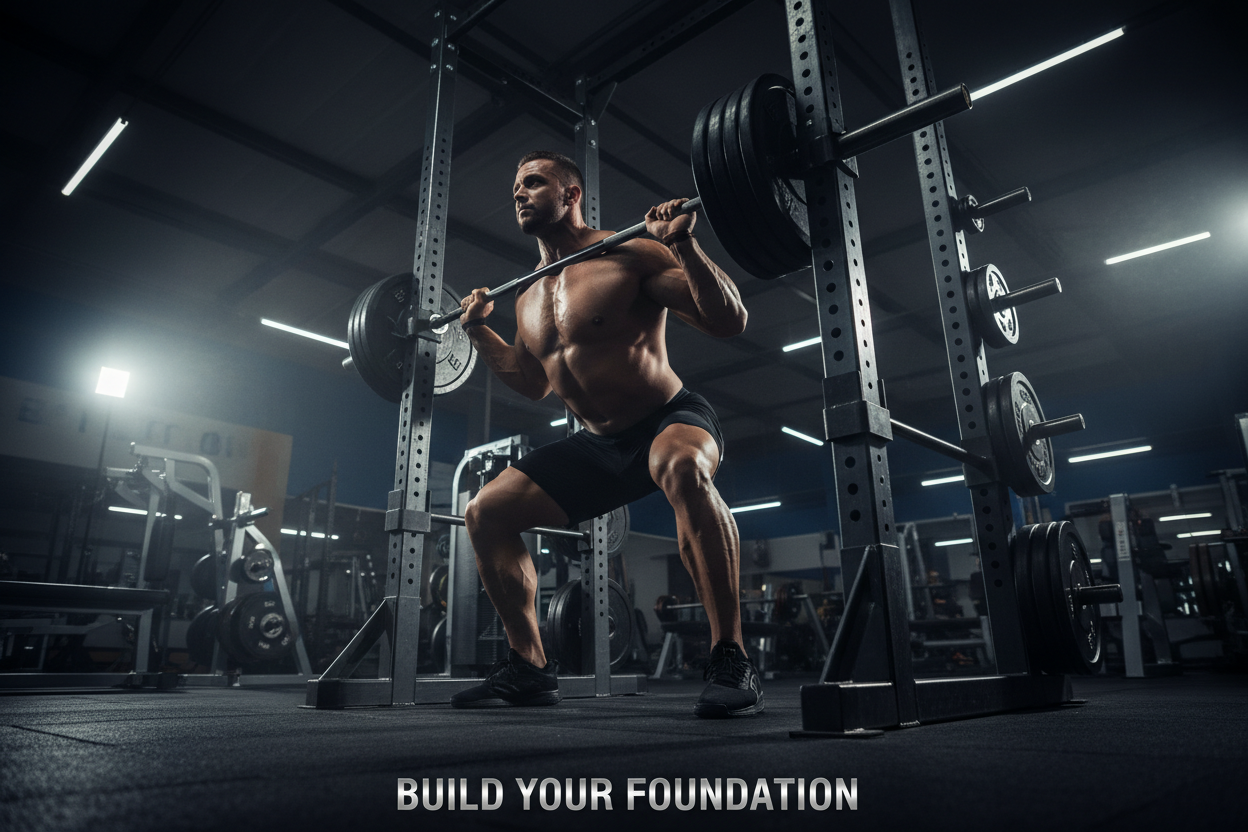
Often called the king of exercises, the squat is technical and demanding. While foot placement can shift the focus, a standard back squat hits everything. To get the most out of it, focus on bracing your core and screwing your feet into the floor. This creates tension before you even descend. As you break at the hips and knees, ensure your knees track over your toes but not excessively inward.
The Deadlift
If the squat is a push, the deadlift is a pull. It is arguably the best test of raw strength. While it is often categorized as a back exercise, a properly executed deadlift is a hamstring and glute destroyer. The initial pull off the floor requires massive drive from the legs. Keep the bar close to your shins and think about pushing the floor away from you rather than pulling the bar up.
The Lunge
Bilateral training (two legs at once) is great, but unilateral training (one leg at a time) exposes weaknesses. Walking lunges or Bulgarian split squats are humbling. They force the smaller stabilizing muscles to wake up and correct imbalances between your left and right sides. This is where you really feel the burn in the quads glutes and hamstrings workout flow, as the time under tension is usually higher.
Structuring Your Routine
Designing a leg day can be overwhelming because there are so many machines and variations. However, if you are looking for a comprehensive quads glutes and hamstrings workout, simplicity often beats complexity. A cluttered program with twenty exercises usually leads to junk volume—doing work that makes you tired but doesn't stimulate growth.
A solid structure usually starts with a heavy compound movement while your central nervous system is fresh. This is your squat or deadlift variation. Follow this with a secondary compound movement, perhaps a lunge or a leg press. Once the heavy work is done, move to isolation exercises to pump blood into the specific muscles and induce metabolic stress.
For example, start with four sets of Back Squats. Follow that with three sets of Romanian Deadlifts to target the posterior chain. Then, move to Bulgarian Split Squats. Finish with isolation work: Leg Extensions supersetted with Leg Curls. This ensures you hit the muscle from every angle without spending three hours in the gym.
The Importance of Tension and Form
Moving weight is not the same as training muscle. You can bounce a heavy weight off your chest or use momentum to swing a dumbbell, but you are robbing yourself of gains. In lower body training, the concept of "mind-muscle connection" is vital. When performing a leg curl, don't just kick your heels to your butt. Control the eccentric (lowering) phase. Feel the hamstring fibers stretching.
When performing a hip thrust, pause at the top. Squeeze the glutes hard enough to crack a walnut. This intentionality is what separates intermediate lifters from advanced ones. Achieving aesthetic symmetry among the quads hamstrings and glutes requires more than just heavy lifting; it requires intent. You have to actively think about which muscle is moving the load.
Recovery and Frequency
Leg training is taxing. It demands a lot from your nervous system. If you are training with sufficient intensity, you probably won't be able to hit legs three times a week. Twice a week is generally the sweet spot for natural lifters. This allows for a few days of recovery in between sessions.
Nutrition plays a massive role here. Your legs are large muscle groups; repairing them requires adequate protein and a surplus of calories if your goal is size. Sleep is equally critical. You don't grow in the gym; you grow while you sleep. If you are smashing your legs but only sleeping five hours a night, you are just breaking your body down without giving it the resources to build back up.
FAQ
How often should I train my legs for maximum growth?
For most lifters, training legs twice a week is optimal. This frequency allows you to split the volume, perhaps focusing one day more on squats (quad dominance) and the other on deadlifts (posterior chain), while still allowing 48 to 72 hours of recovery between sessions.
Can I build big legs with just bodyweight exercises?
You can build a degree of size and significant endurance with bodyweight moves like pistol squats and lunges, but eventually, you will need external resistance to continue driving hypertrophy. Progressive overload is difficult to maintain with bodyweight alone once you become proficient.
Why do my knees hurt when I squat?
Knee pain during squats often stems from poor mobility in the ankles or hips, or from quad dominance where the glutes aren't firing correctly. Check your form to ensure your knees are tracking over your toes and not caving inward, and consider warming up with glute activation exercises.