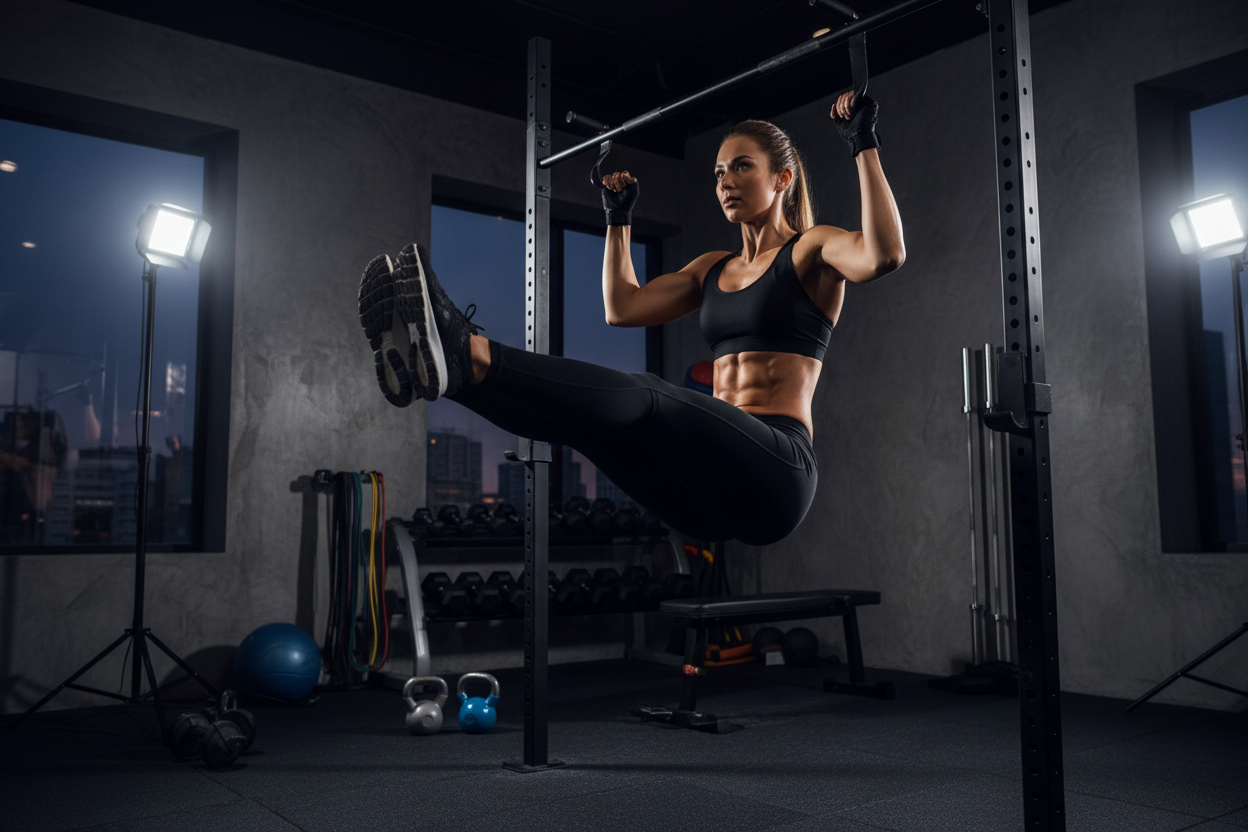
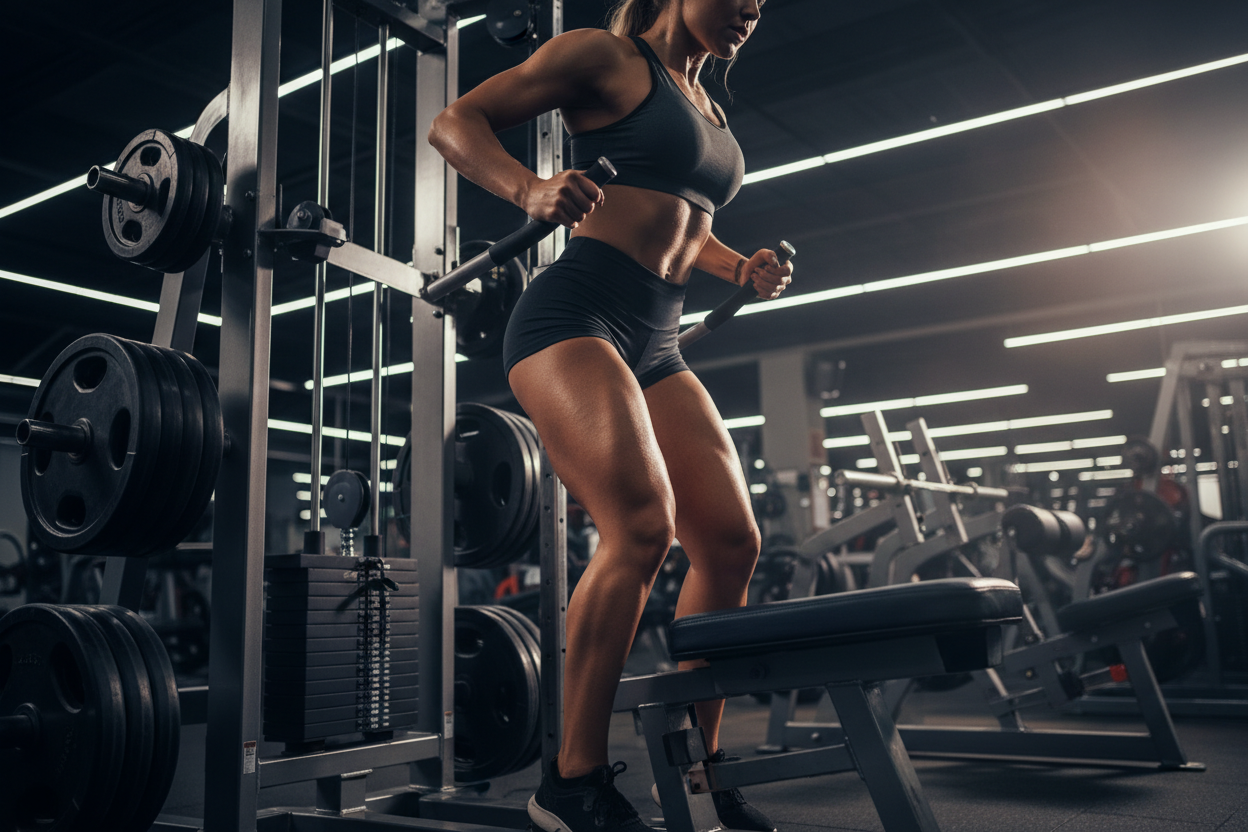
Building Powerful Legs Using Only Free Weight Exercises: The Guide
Most people overcomplicate leg training. They assume that without a leg press machine or a leg extension station, their lower body development will stall. That is simply untrue. In fact, relying solely on **free weight exercises for legs** is arguably the most effective way to build functional mass, improve balance, and develop athletic power.
Whether you are training in a garage gym with a rusty barbell or in a commercial facility, gravity acts the same way. The iron doesn't care where you are. This guide cuts through the noise and explains exactly how to construct a leg day that delivers results without the cables and pulleys.
Key Takeaways: Quick Summary
- Compound Movements Rule: Squats and deadlifts recruit the most motor units and should form the base of your routine.
- Stabilization is Key: Unlike machines, free weights force you to stabilize the load, leading to higher caloric burn and core activation.
- Unilateral Work is Mandatory: Lunges and split squats fix muscle imbalances that machines often hide.
- Progressive Overload: You must consistently increase weight, reps, or time under tension to see growth.
Why Free Weights Beat Machines for Leg Development
When you sit on a leg press, the machine stabilizes the weight for you. You can move a lot of iron, but you aren't training your body to handle that load in a real-world scenario. A free weight leg exercise forces your central nervous system (CNS) to recruit stabilizer muscles—specifically the adductors, abductors, and core—to keep you upright.
This creates a higher metabolic demand. It’s why a set of heavy barbell squats leaves you gasping for air while a set of leg extensions just makes your quads burn. The systemic stress caused by free weights triggers a stronger hormonal response, which is crucial for hypertrophy (muscle growth).
The foundational Movements
You don't need a thousand variations. You need to master a few patterns and get brutally strong at them. Here is the hierarchy of a solid legs workout free weights session.
1. The Squat Pattern (Bilateral)
Whether it’s a barbell back squat, a front squat, or a dumbbell goblet squat, this is non-negotiable. The goal here is knee flexion. To maximize quad growth, keep your torso as upright as possible and allow your knees to travel forward over your toes (provided you have the ankle mobility).
2. The Hinge Pattern (Posterior Chain)
Your hamstrings and glutes need heavy loading. Romanian Deadlifts (RDLs) are superior here. Keep a slight bend in the knees and push your hips back as if you are trying to close a car door with your butt. This creates massive tension on the hamstrings without needing a curl machine.
3. The Lunge Pattern (Unilateral)
This is where leg exercises using free weights truly shine. Split squats or walking lunges expose weaknesses. If your left leg is weaker than your right, the barbell will let you know immediately by tilting. Unilateral work ensures symmetry and prevents injury.
Structuring an Effective Routine
If you are looking for a leg day workout free weights plan, simplicity is your friend. A common mistake is doing too much volume with too little intensity.
A standard session might look like this:
- Barbell Squats: 3 sets of 6–8 reps (Focus: Strength)
- Dumbbell RDLs: 3 sets of 8–12 reps (Focus: Hypertrophy/Stretch)
- Bulgarian Split Squats: 3 sets of 10–12 reps per leg (Focus: Unilateral balance)
- Dumbbell Calf Raises: 4 sets of 15–20 reps
Adapting for Home Training
Not everyone has a squat rack. If you are looking for at home leg exercises with weights, you might be limited to dumbbells. The physics remain the same, but the grip becomes the limiting factor.
To make easy leg workouts with weights harder without adding more load, manipulate the tempo. Take 4 seconds to lower into a goblet squat, pause for 2 seconds at the bottom, and explode up. This increases "Time Under Tension," forcing the muscle to adapt even if the dumbbells aren't incredibly heavy.
My Personal Experience with Free Weight Exercises for Legs
I spent two years training in a basement with nothing but a set of adjustable dumbbells and a flat bench. I used to think I couldn't grow my legs without a hack squat machine. I was wrong.
The biggest reality check wasn't the strength in my quads—it was my grip. When performing high-rep walking lunges with 50lb dumbbells, my forearms would catch fire long before my glutes gave out. I remember the specific feeling of the diamond knurling digging into the meat of my palm, leaving a distinct, red waffle pattern that stung when I washed my hands afterward.
I also learned to respect the "wobble." The first time I tried Bulgarian Split Squats with free weights, I spent more time hopping around trying not to fall over than actually squatting. That wobble is humbling, but once it disappears, you know you've built real structural integrity that machines can't replicate.
Conclusion
Building an impressive lower body doesn't require a gym membership card. It requires a willingness to do the hard, uncomfortable work that free weights leg workout routines demand. Focus on your form, control the eccentric (lowering) portion of every rep, and progressively add weight. The results will follow.
Frequently Asked Questions
Can you build big legs with just dumbbells?
Absolutely. While barbells allow for higher absolute loads, dumbbells allow for greater range of motion and unilateral training. To build mass with dumbbells, focus on higher rep ranges (12–20) and slow tempos to fatigue the muscle fibers.
Is it safe to do squats without a rack?
If you are using a barbell, you should generally have a rack for safety. However, for leg workout with free weights at home, you can perform Goblet Squats or Dumbbell Squats safely. If you must use a barbell without a rack, stick to exercises you can safely clean to your shoulders, like Front Squats or Zercher Squats.
How often should I train legs with free weights?
Because free weight movements are more taxing on the nervous system than machines, recovery is vital. For most intermediate lifters, training legs twice a week with 48 to 72 hours of rest between sessions strikes the best balance between volume and recovery.