Building Muscle Mass Naturally: Hypertrophy Architecture, Lifting Mechanics, and Home Floor Staging
Approaching strength training with the long-term objective of building muscle mass naturally requires intentional movement patterns, persistent mechanical tension, and an environment engineered for physical stability. Unlike transient fitness routines that prioritize exhaustion and sweat over functional adaptation, natural muscular development demands clear movement mechanics, sustained patience, and solid ground interaction across every training session.
Foundational Principles of Building Muscle Mass Naturally
Athletes seeking sustainable muscular development often discover that skeletal muscle tissue responds best to predictable, well-managed physical demands. Rather than relying on guesswork or constantly rotating exercises, adhering to a grounded framework allows lifters to translate foundational ideas from a comprehensive grow muscles mass guide into practical weekly habits that yield reliable structural gains.
Mechanical Tension Over Fleeting Fatigue
Muscular growth stems primarily from high levels of mechanical tension applied through full ranges of controlled motion. While burning sensations, heavy breathing, and lingering soreness often accompany intense workouts, these sensations do not reliably measure genuine tissue adaptation. Random, high-speed conditioning circuits frequently produce immense fatigue while generating very little targeted tension across the intended muscle groups.
By prioritizing controlled lowering phases, deliberate pauses in disadvantaged positions, and powerful drives through the lifting phase, lifters can stimulate hypertrophy without accumulating excessive systemic exhaustion. Emphasizing deliberate tempo ensures that muscular fibers bear the load rather than passive connective tissue or swinging momentum. Over time, mastering tension control allows each repetition to contribute meaningfully toward building muscle mass naturally.
Structuring Progressive Loading Without Unrealistic Leaps
A natural way to build muscle mass is through gradual progression. This principle does not require attempting heavier plates on every single visit to the weight rack. Rushing to add weight before mastering movement control often causes technical breakdown, erratic bar paths, and unnecessary joint strain.
Progression can take multiple qualitative shapes, including the following:
- Refining movement tempo by slowing down the eccentric phase to increase time under tension.
- Pausing cleanly in the deepest portion of a lift to eliminate rebound and build static strength.
- Improving bar path consistency and torso rigidity throughout demanding repetitions.
- Expanding active range of motion under control while preserving joint alignment.
- Adding modest resistance increments only after current working sets look effortless and stable.
Cultivating this measured approach creates dependable gains across months and years without overtaxing structural joints or derailing long-term progress.
Core Movement Architecture for Natural Mass Gains
Developing a balanced physique naturally hinges on compound movement patterns that recruit multiple joints and muscle groups simultaneously. Multi-joint exercises recruit foundational stabilizing musculature while delivering robust tension to major muscle bellies, establishing an efficient foundation for full-body muscular development.
Compound Foot-Grounded Lifts
Foot-grounded lower-body lifts serve as the bedrock of physical power and muscular size. Squats, hinges, split stances, and lunging variations demand whole-body tension, requiring the feet to grip the floor firmly while transferring mechanical force upward through the ankles, knees, hips, and spine. Implementing a dedicated muscle building mass guide for the lower body ensures that foundational movement patterns receive the focus they deserve.
When executing heavy bilateral squats or deep Romanian deadlifts, the interaction between the lifter and the floor dictates the quality of the entire movement. The feet must maintain balanced contact across the heel, the base of the big toe, and the outer ball of the foot. Any instability or slipping at ground level disrupts the chain of force transfer, causing shifting hips, uneven loading, and compromised leverage.
Upper-Body Pushing and Pulling Frameworks
Complementing lower-body compounds with multi-angle pressing and pulling creates balanced muscular development across the chest, shoulders, and upper back. Horizontal bench presses, overhead barbell presses, pull-ups, and heavy chest-supported rows demand firm upper-back anchoring and rigid core bracing. In spaces where free-weight variety is limited, integrating a thoughtful way build muscle guide can assist lifters in targeting specific angles with controlled stability.
Upper-body mechanics also require a grounded base. Even during an overhead press or standing barbell row, ground reaction forces travel straight through the floor. A solid stance with active foot rooting stabilizes the pelvis, locks the ribcage, and prevents excessive spinal arching as loads increase.
Home Gym Floor Staging and Equipment Safety
Lifting heavy weights at home introduces environmental considerations that commercial facilities manage behind the scenes. From our perspective reviewing home training spaces, lifters often invest heavily in quality barbells and racks while neglecting the foundational floor surface beneath their feet.
Surface Grip and Joint Alignment
During heavy compound lifts such as barbell squats, walking lunges, or deadlifts, foot slippage compromises mechanical leverage and shifts stress away from target muscle groups onto passive joint structures. Hardwood surfaces, slick smooth concrete, or soft carpet tiles lack the rigid friction required to keep lifting shoes locked in place.
High-density rubber gym mats provide essential friction, enabling lifters to root their feet into the ground and generate rotational torque through the hips. A textured, slip-resistant surface gives lifters the confidence to maintain proper foot placement through demanding sets, keeping knees tracking smoothly over toes and preventing shearing forces across ankles and hips.
Protecting Subfloors Under Free Weights and Racks
Home gym spaces frequently sit over concrete slabs, engineered hardwood, or ceramic tile subfloors. Repeatedly lowering heavy dumbbells, resting loaded barbells on the floor, or positioning heavy squat stands on bare surfaces risks structural cracks, scuffs, and impact damage. Dense floor mats distribute localized point pressure, dampening vibrations and protecting both equipment knurling and underlying architectural subfloors.
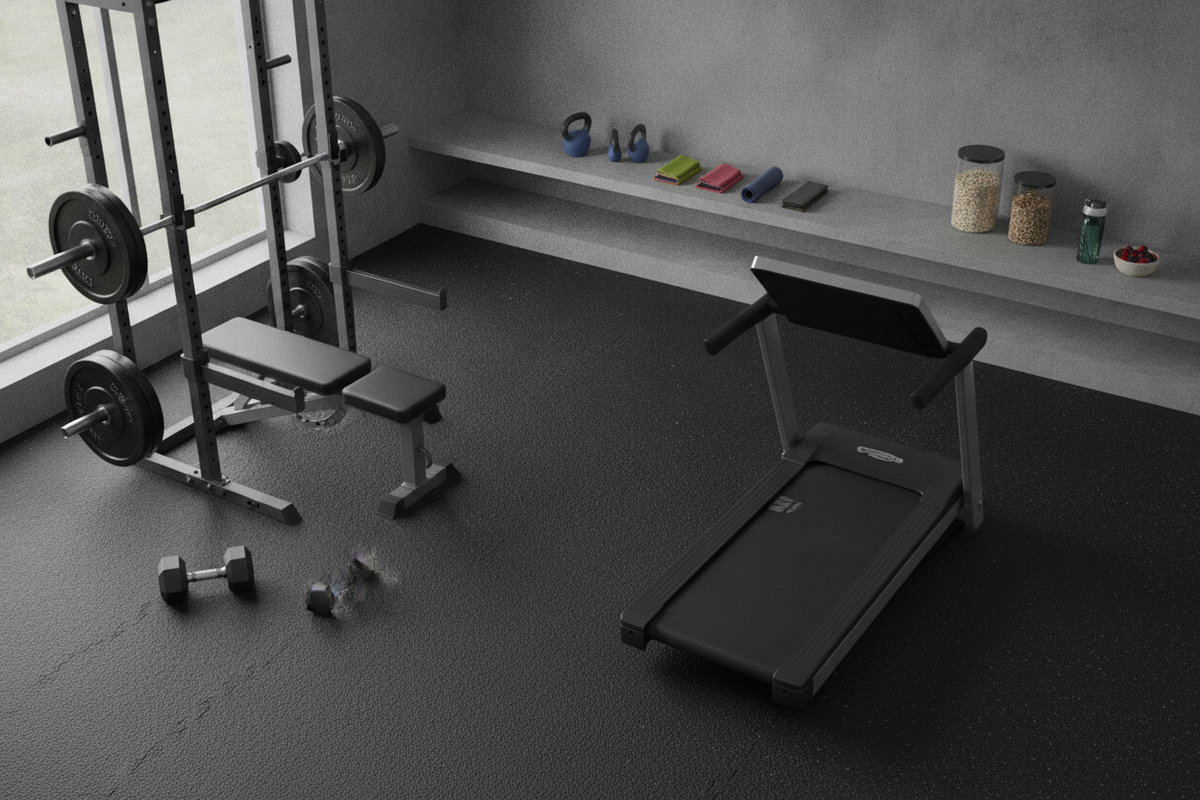
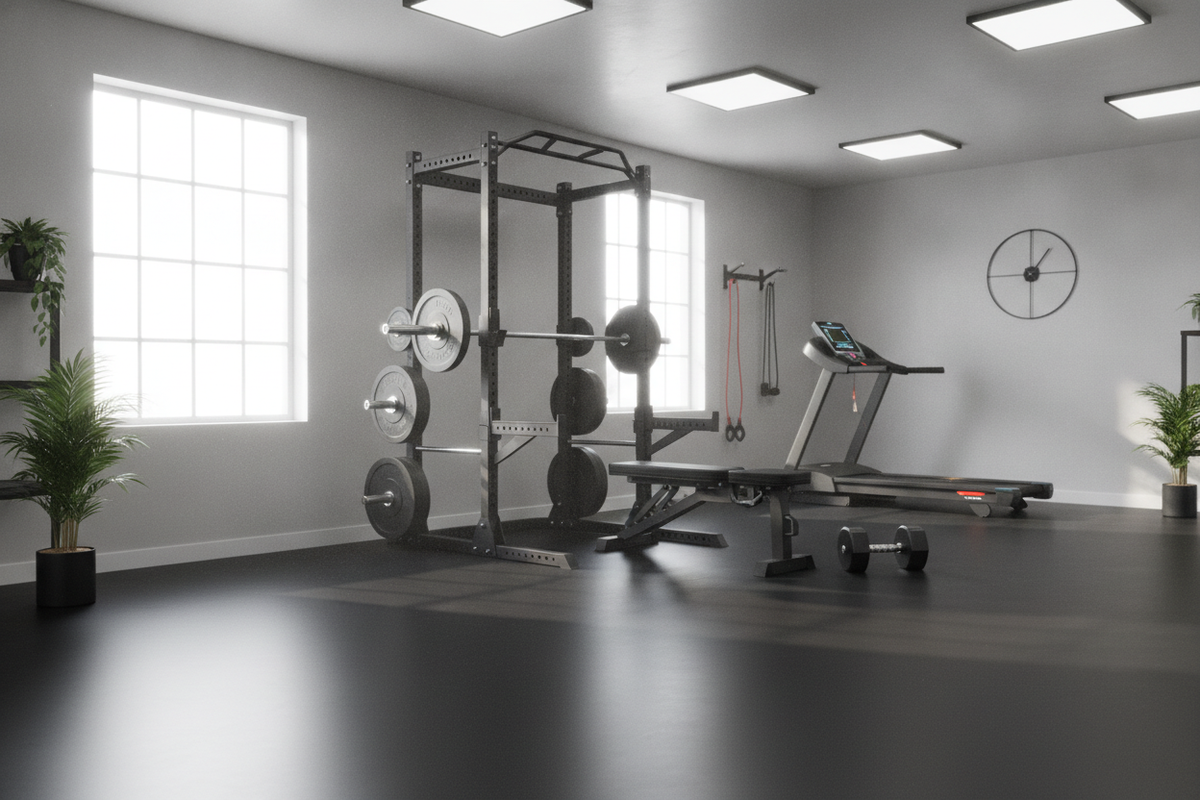
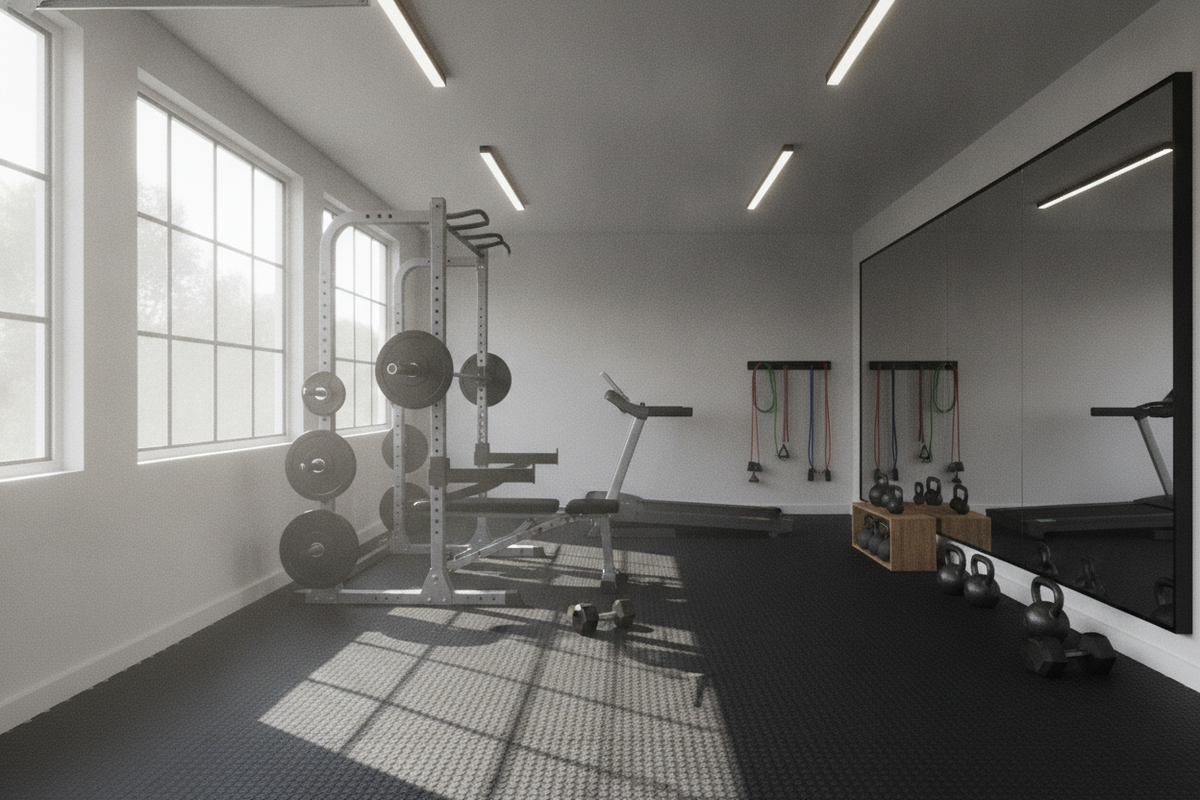
A well-zoned training area includes high-density mats placed under the primary lifting footprint, extending outward to accommodate weight plate loading zones and dumbbell staging areas. Ensuring that the flooring remains completely flat and flush prevents tripping hazards when stepping backward out of a rack with a loaded barbell.
Recovery, Session Cadence, and Sustainable Habits
Training represents only the physical stimulus; actual muscle growth occurs during the hours and days between workouts. Building muscle mass naturally requires balancing strenuous physical exertion with disciplined rest intervals, restful sleep, and steady nutritional nourishment. When lifters prioritize consistency, sound lifting mechanics, and a supportive physical environment, long-term muscular development becomes a predictable outcome.