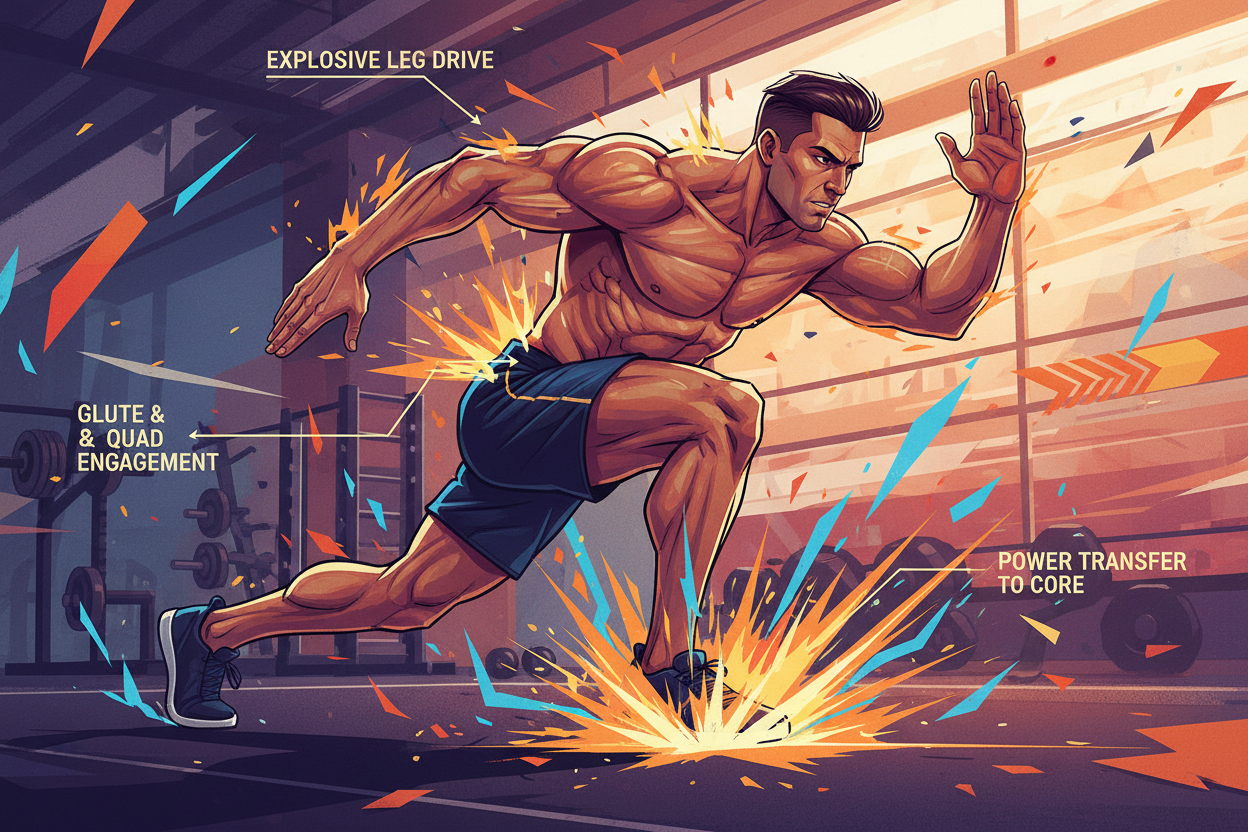
Building a Strong Foundation: Your Ultimate Guide to Leg Day
Let's be honest: leg day can feel daunting. The burn, the wobble, the thought of stairs tomorrow. Yet, a comprehensive leg routine is arguably the most rewarding thing you can do for your overall fitness. Strong, well-developed legs aren't just about aesthetics; they're the literal foundation for everything from better posture and joint health to explosive power and a faster metabolism. So, what are good leg exercises, and how do you piece them together into an effective plan? The answer lies in understanding the different muscles you're working and choosing movements that challenge them through their full range of motion.
Your legs are a complex network of muscles, primarily the quadriceps on the front of your thighs, the hamstrings on the back, the glutes in your hips and buttocks, and the calves. A balanced approach targets all these groups. Ignoring one for the sake of another can lead to imbalances, poor movement patterns, and even injury over time. The goal is to build a routine that feels challenging but sustainable, allowing you to progress safely.
Essential Movements for Powerful Legs
When considering what exercises are good for legs, you can't go wrong with foundational, compound lifts. These multi-joint movements recruit the most muscle mass and deliver the greatest return on your effort. The barbell back squat is often hailed as the king of leg exercises for a reason. It demands coordination, core stability, and raw strength, working your quads, glutes, and hamstrings simultaneously. If you're learning how to train legs, mastering a proper squat pattern is non-negotiable. Your hips should drop back and down as if sitting in a chair, keeping your chest up and knees tracking over your toes.
Another cornerstone is the deadlift, particularly the Romanian deadlift (RDL). This movement is a game-changer for the posterior chain—your hamstrings and glutes. The focus is on a hip hinge: pushing your hips back while maintaining a slight bend in the knees, feeling a deep stretch down the back of your legs. For pure quad development, few exercises rival the barbell front squat or leg press. These place more direct emphasis on the front of your thighs. Lunges, in all their variations—walking, reverse, stationary—are phenomenal for building single-leg stability and addressing any strength discrepancies between sides.
Building Your Routine: How to Workout Your Legs Effectively
Knowing individual exercises is one thing; stringing them together into a coherent fit legs workout is another. A great starting point is to focus on two dedicated leg sessions per week, allowing for ample recovery. One session might prioritize heavier, lower-rep squats and RDLs to build maximal strength. The other could focus on higher-rep work with lunges, step-ups (a fantastic functional leg step exercise), and machine-based moves like leg extensions and hamstring curls to induce muscle growth and endurance. The key is variation and progressive overload—gradually increasing the weight, reps, or sets over time.
I remember when I first started training legs seriously, I made the classic mistake of going too heavy with poor form on the squat. The result was lower back pain and stalled progress. It was a frustrating lesson. I stepped back, focused on nailing the movement with just my bodyweight, then a light bar, and slowly built up from there. That patience paid off more than any ego-lift ever did. My strength skyrocketed once my technique was solid, and the aches disappeared. This personal experience cemented for me that how to do leg exercise correctly is far more important than how much weight is on the bar.
Beyond the Basics: Variety for Continued Growth
Once you're comfortable with the primary types of leg exercises, introducing new stimuli can break plateaus and keep things interesting. Incorporating plyometrics like box jumps or jump squats can develop power and fast-twitch muscle fibers. Isometric holds, such as wall sits, build tremendous muscular endurance. Don't neglect your calves; seated and standing calf raises are simple yet brutally effective. For those wondering what the best workout for your legs is, the truth is there isn't one single answer. The best routine is the one you can perform consistently with excellent form, that challenges you, and that you can progressively make harder over months and years.
Consistency in your fitness for legs journey is the ultimate driver of results. Pair your training with adequate protein intake, hydration, and sleep to facilitate repair and growth. Listen to your body—there's a difference between good muscle soreness and sharp, joint-related pain. The former is expected; the latter is a signal to reassess your form or load. Building strong legs is a marathon, not a sprint, but the benefits to your overall health, physique, and confidence are profound and absolutely worth the effort.
Frequently Asked Questions
How often should I train legs?
For most people, training legs 2-3 times per week is optimal. This allows for sufficient training volume to stimulate growth while providing the 48-72 hours of recovery needed for muscles to repair and become stronger.
Can I build leg muscles without heavy weights?
Absolutely. While heavy weights are efficient, you can build impressive leg strength and muscle with bodyweight exercises like pistol squats, Bulgarian split squats, and Nordic hamstring curls. The principle of progressive overload still applies—you make exercises harder by adding reps, slowing the tempo, or increasing range of motion.
What's the most common mistake in leg training?
Neglecting the hamstrings and glutes in favor of the quads is a widespread issue. This can lead to an imbalance that pulls the pelvis out of alignment. Ensure your routine includes dedicated posterior chain work like RDLs, hip thrusts, and glute bridges to build balanced, healthy legs.