Building a Home Gym: How to Score the Best Deals on Barbells and Weights
Deciding to build a home gym is usually the easy part. The sticker shock that comes afterward is what stops most people in their tracks. You look at the prices of brand-new bumper plates and a high-tensile steel bar, do the math, and suddenly that monthly commercial gym membership doesn't look so bad. However, outfitting your garage or basement doesn't have to cost a fortune. If you know where to look and what to inspect, you can find high-quality gear for a fraction of the retail price.
The first step in your search should always be checking the used market. Shipping heavy iron is incredibly expensive, often doubling the cost of the equipment. Because of this, the best deals are almost always local. Open up your preferred marketplace apps and search for a barbell nearby. You are looking for people who are moving, upgrading their current setup, or simply clearing out a garage. These sellers are often motivated to get rid of the heavy equipment quickly, which puts you in a strong negotiating position.
I remember when I started piecing together my first setup. I was determined not to pay retail prices. I spent weeks refreshing local listings until I found a guy selling a rusted gym bar and weights from the 1980s. The photos were terrible, and the plates looked like they had been sitting in a swamp. But the price was right. I drove forty minutes, loaded 300 pounds of iron into the trunk of my sedan, and spent the next weekend with a wire brush and a can of spray paint. That cheap bar and weight set served me for five years before I ever felt the need to upgrade. It taught me that iron is iron; gravity doesn't care if the plates are pretty, it only cares if they are heavy.
Understanding What You Are Buying
Before you hand over cash, you need to know exactly what you are looking at. Not all bars are created equal. You will frequently see weights and bar for sale that are "standard" size (1-inch hole) rather than "Olympic" size (2-inch hole). If you are serious about training, you almost certainly want Olympic gear. Standard bars have a much lower weight capacity and the ends don't rotate, which can cause wrist strain during lifts like the clean or snatch. If you see a weightlifting bar set listed for an suspiciously low price, double-check the diameter of the sleeves. If it's one inch, pass on it unless you are strictly doing light accessory work.
When you are scanning listings for barbells and weights for sale, pay close attention to the bar itself. A little surface rust on plates is fine, but a bent bar is worthless. When you meet a seller, roll the bar on a flat surface. If it wobbles, walk away. Check the sleeves (the ends where the weights go) to ensure they spin freely. If they are seized up, the bar won't function correctly during lifts. Finding a barbell set cheap is great, but not if the equipment is dangerous or unusable.
Where to Find the Best Deals
If the used market is dry, you have to get creative with retailers. Many big-box stores and fitness outlets will have barbells and weight sets during clearance events, particularly in January (after the resolution rush) or early summer. You can also look for "b-stock" or factory seconds online. These are items with minor cosmetic blemishes—maybe a scratch in the finish or a logo that was printed crooked—that are sold at a deep discount. This is often the route to finding the cheapest barbell and weights that are still brand new and safe to use.
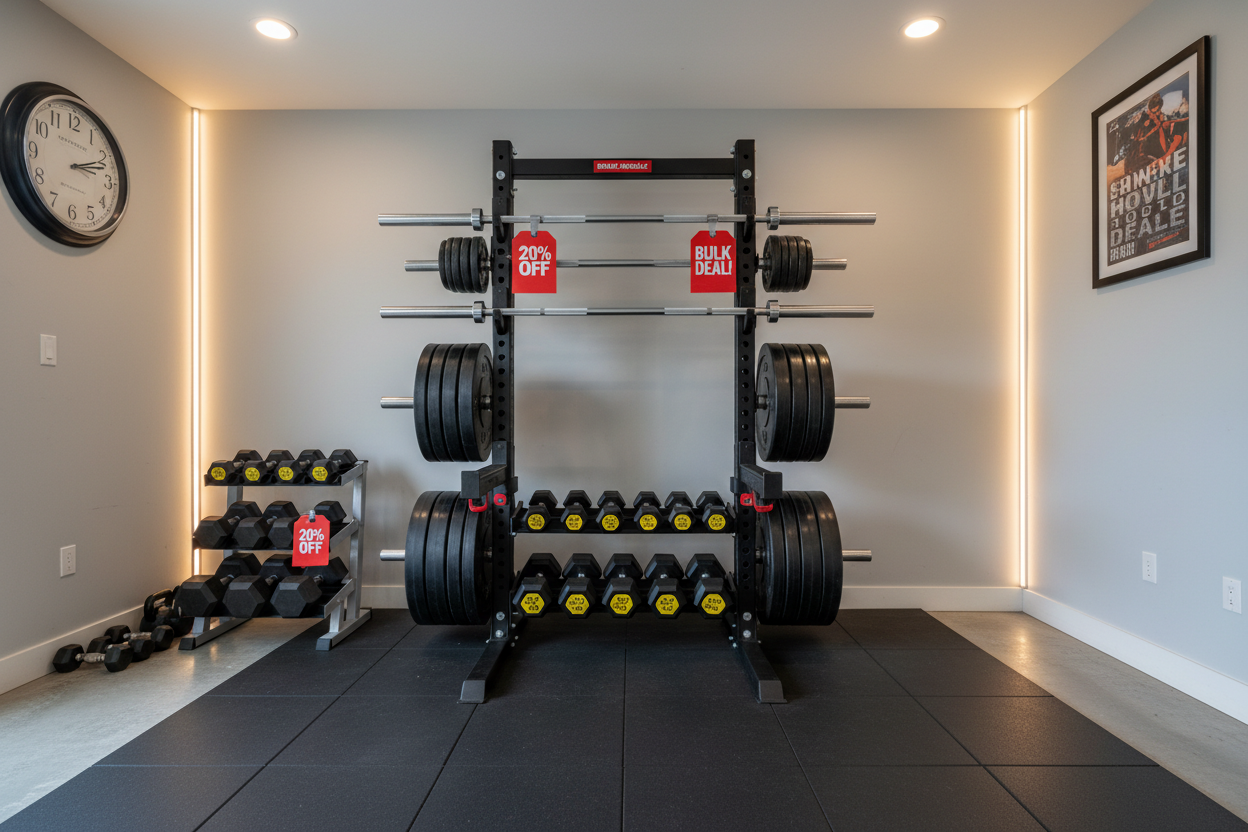
Another option is to look for package deals. Retailers often bundle items to move inventory. You might find a dumbbell and bar set combined, or a full package including a rack. While the upfront cost is higher, the price per item drops significantly. If you search specifically for barbell with weights for sale as a bundle, you avoid the premium of buying plates in pairs. The cheapest barbell set is usually the one that comes with everything you need in one go, saving you multiple shipping charges.
The Cost of Iron
Budgeting for this requires knowing the market rate. A common question beginners ask is: how much are barbell weights supposed to cost? Pre-2020, the gold standard for used iron was about 50 to 75 cents per pound. Nowadays, you should expect to pay around $1 to $1.50 per pound for decent used plates, and upwards of $2 to $3 per pound for new, calibrated, or bumper plates. If you find a cheap barbell weight set averaging under a dollar a pound, you have found a steal.
For the bar itself, expect to pay at least $150 to $250 for a reliable, entry-level Olympic barbell new. Anything less than that usually means the tensile strength of the steel is low, meaning the bar might permanently bend if you drop it with heavy weight. If you are looking for a barbell bar set on a tight budget, prioritize a good bar and cheap weights. You can always restore rusty plates, but you cannot fix a bad bar.
Sourcing Equipment Online vs. In-Person
Knowing where to buy barbell and weights online is a skill in itself. Avoid general retailers like Amazon for heavy items unless you have Prime shipping, as freight costs will kill your budget. Instead, look at dedicated fitness equipment manufacturers who offer flat-rate shipping. Many of these companies have a "clearance" or "closeout" section. If you are wondering where to buy barbell weights without paying shipping, check if these manufacturers have a local distribution center where you can pick up the order yourself.
Ultimately, patience is your best asset. The market fluctuates. You might check Craigslist for weeks and see nothing but overpriced, rusty junk. Then, one day, you search for weights and barbells and find a complete home gym setup for pennies on the dollar because someone needs the space back immediately. Whether you buy a shiny new barbell weight for sale from a retailer or drag a dusty set out of a neighbor's basement, the gains you make lifting them will be exactly the same.
Frequently Asked Questions
What is the difference between standard and Olympic weights?
The main difference is the diameter of the hole in the center of the plate and the thickness of the bar sleeves. Standard weights have a 1-inch hole and are typically used for lighter home setups, while Olympic weights have a 2-inch hole and are the standard for competitive lifting and commercial gyms. Olympic bars are generally more durable and have rotating sleeves to reduce torque on your wrists.
How can I remove rust from used weights I bought?
The most effective method is to soak the weights in a solution of water and white vinegar for 24 to 48 hours to loosen the oxidation. After soaking, scrub them vigorously with a wire brush to remove the rust, rinse them thoroughly, and dry them immediately. Once dry, apply a coat of rust-oleum or similar spray paint to protect them from future corrosion.
Is it safe to buy a cheap barbell?
It depends on how much weight you plan to lift. Extremely cheap bars often have low tensile strength and can bend permanently under heavy loads or if dropped. For general fitness and lighter weights, a budget bar is fine, but if you plan on heavy deadlifts or squats, it is safer to invest in a mid-range bar with a tensile strength of at least 165,000 PSI.