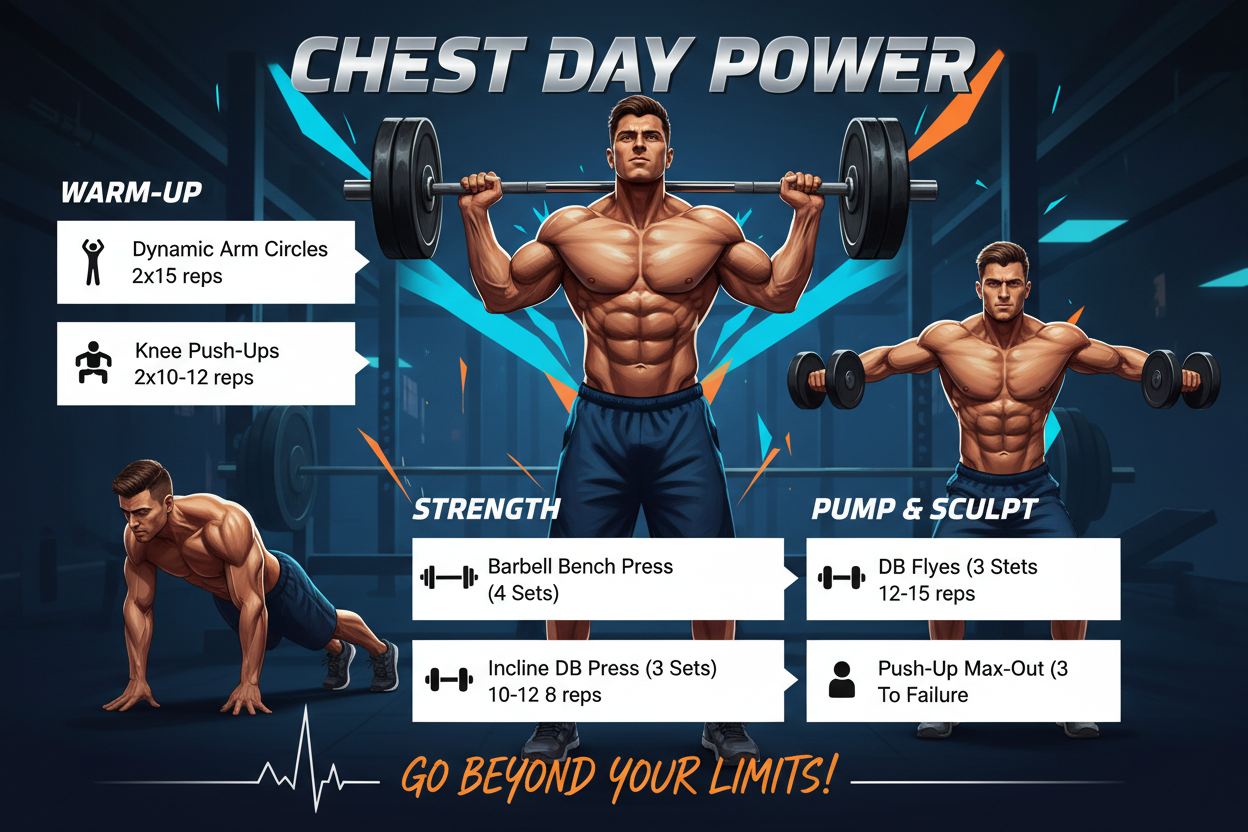
Build a Powerful Chest with This Proven Workout Plan
Developing a strong, well-defined chest isn’t just about looking good—it’s also about improving overall upper body strength, posture, and functional fitness. Whether you’re a beginner or experienced lifter, planning a dedicated chest workout day can make a big difference in your progress. A well-structured chest training program will target all areas of the pectorals, support shoulder stability, and maximize muscle growth over time.
Why Focus on a Chest Workout Day
Splitting your training into specific muscle groups allows you to devote the right amount of intensity and recovery to each. A focused chest workout plan ensures you engage both the upper and lower pectorals, as well as supporting muscles like the anterior deltoids and triceps. This deliberate approach helps avoid overtraining and promotes balanced development across your torso.
Core Principles of a Chest Training Program
Any good chest day workout should incorporate these key principles:
- Progressive overload: Gradually increase weight, reps, or intensity to push your muscles beyond their current capacity.
- Variety of angles: Use flat, incline, and decline positions to fully activate different parts of the chest.
- Compound movements first: Start with multi-joint lifts for overall strength, then move to isolation work.
- Proper recovery: Give your muscles at least 48 hours before training chest again for optimal growth.
Sample Chest Workout of the Day Routine
This example chest workout routine is designed for intermediate lifters. Adjust weights and reps according to your fitness level:
- Barbell Bench Press: 4 sets x 8-10 reps
- Incline Dumbbell Press: 3 sets x 8-10 reps
- Incline Cable Fly: 3 sets x 12-15 reps
- Push-ups (weighted if possible): 3 sets x 12-15 reps
- Dumbbell Pullover: 3 sets x 12 reps
Always warm up with light cardio and mobility work for the shoulders before starting. Between sets, rest for 60-90 seconds depending on the exercise intensity.
Incorporating Chest Day into a Weekly Plan
For balanced training, place chest day early in the week when your energy levels are high. A sample split could be:
- Monday: Chest
- Tuesday: Back
- Wednesday: Legs
- Thursday: Shoulders and Arms
- Friday: Rest or Active Recovery
By spacing out your sessions, you reduce the risk of muscle fatigue and allow adequate recovery for heavy lifts.
Building a Good Chest Workout Routine for Your Goals
When creating a chest workout plan, consider your goals:
- Strength-focused: Prioritize heavy compound lifts and fewer isolation movements.
- Hypertrophy-focused: Incorporate more volume, moderate weights, and controlled tempos.
- Endurance-focused: Use lighter weights, higher reps, and minimal rest between sets.
A good chest day workout is not one-size-fits-all—the best chest routine for one person might differ completely for another. Track your performance to fine-tune your plan over time.
Personal Experience: Testing Different Workout Plans for Chest
When I first started weight training, my chest was lagging behind other muscle groups. I tried multiple workout plans for chest, but progress was slow. Eventually, I integrated incline presses earlier in the session and added more fly variations. Within two months, the shape and strength of my chest improved noticeably. This taught me the importance of experimenting with angles and rep ranges until I found what worked for my body.
Tips for Optimizing Your Chest Routine
- Engage your core to stabilize during presses and fly movements, preventing lower back strain.
- Focus on controlled repetitions—avoid bouncing weights off your chest.
- Adjust your grip width on the barbell to emphasize different muscle fibers.
- Use progressive tracking tools or a training log to monitor your lifts weekly.
Final Thoughts on Choosing the Best Chest Routine
Consistency and correct form are far more important than the exact exercises you choose. Whether you’re following a detailed chest training program or a simplified chest workout of the day, aim for gradual improvement in strength and technique. Over time, this deliberate approach will build both size and power, making your chest one of your strongest assets in the gym.