Building a Full Home Gym With Just a Compact Smith Machine
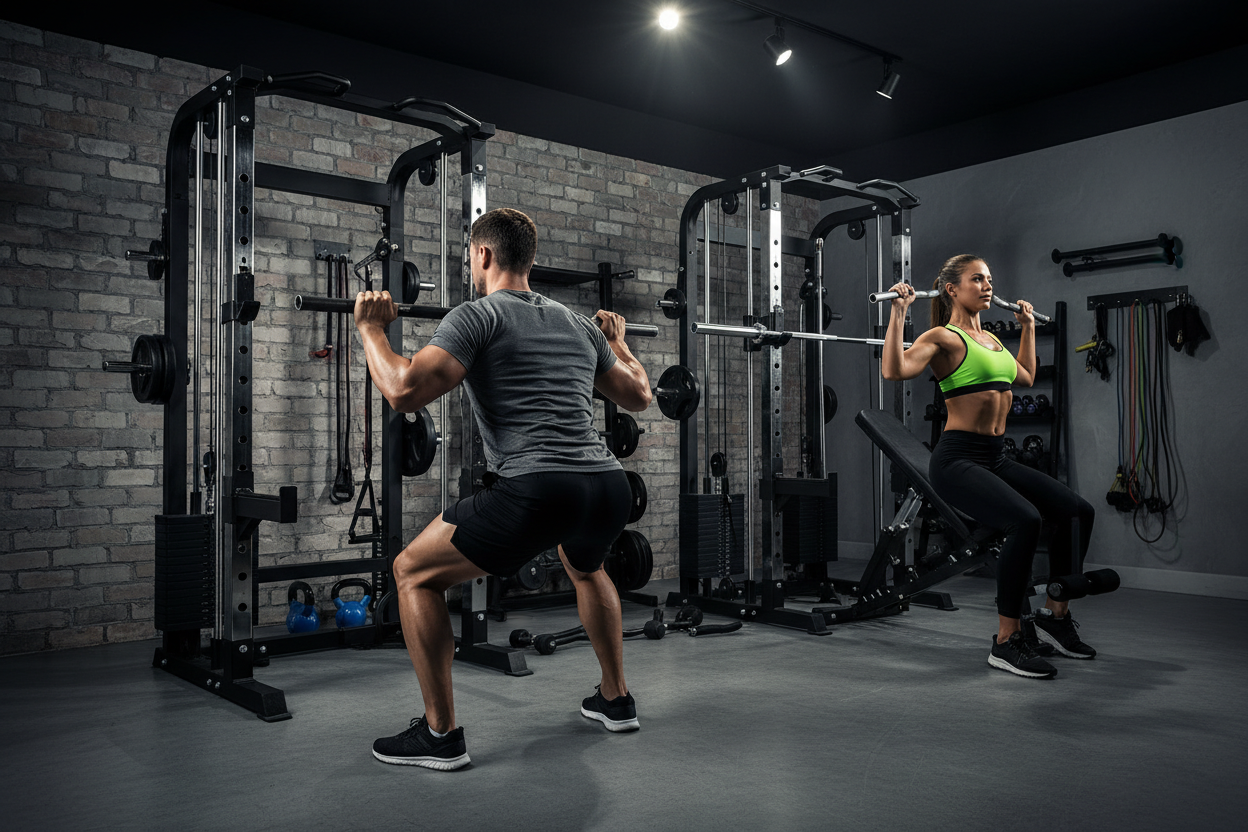
You want a serious home setup, but you don't have a garage the size of an airplane hangar. This is the most common bottleneck for lifters trying to leave the commercial gym scene. You measure your spare room, look at the footprint of a standard power cage, and realize the math doesn't work. This is where the compact smith machine bridges the gap between ambition and reality.
It is not just about saving a few inches of floor space. It is about condensing a full body-building style workout into a footprint that leaves room for you to actually walk around. Let's look at how to maximize hypertrophy in minimal square footage without compromising safety.
Key Takeaways
- Footprint Efficiency: A compact Smith machine typically saves 20-30% of floor space compared to standard cages, often fitting in corners or low-ceiling rooms.
- Safety Without Spotters: The fixed path and locking mechanisms allow you to train to failure safely in a solo home environment.
- Versatility Ratio: Look for units with integrated high/low pulleys to maximize exercise selection (lat pulldowns, rows) without buying extra gear.
- Path Mechanics: Vertical rails are better for strict isolation; angled rails (7-12 degrees) mimic natural pressing movements.
Why Small Spaces Demand Specific Engineering
When looking for a smith machine for small spaces, you aren't just looking for something "smaller." You are looking for verticality. Standard commercial machines often have a massive depth footprint to account for stability and counter-balance systems.
Compact versions alter the center of gravity. They often utilize a heavier base frame rather than a wide stance to maintain stability. This allows you to push the unit nearly flush against a wall, reclaiming the center of your room for deadlifts or floor work. The engineering goal here is maintaining the load capacity (usually 500lb+) while shaving off the unnecessary stabilizers that stick out and trip you up.
The Mechanics: Vertical vs. Angled Path
Before you buy, you must understand the glide path. In a compact footprint, this matters more than you think.
The Vertical Rail
A perfectly vertical path is ideal for heavy squats and shrugs. It forces strict form. In a tight room, vertical machines usually have the smallest footprint because the uprights don't lean back, saving you about 6 to 10 inches of depth.
The Angled Rail
Most commercial gyms use a 7 to 12-degree angle. This mimics the natural arc of a bench press. If you plan to use your smith machine compact unit primarily for pressing movements (chest and shoulders), the angle is ergonomically superior for your joints, even if it costs you a tiny bit more floor depth.
Installation Realities: What Specs Don't Tell You
Manufacturers list the dimensions of the frame, but they rarely account for your body mechanics. If a machine is 48 inches wide, you need to account for the barbell sleeve length.
Standard Olympic bars are 7 feet long. Many compact Smith machines use a proprietary, shorter bar to save space. This is a crucial distinction. If you buy a machine that uses a standard width bar, you need clearance on the left and right to actually load the plates. A good rule of thumb is to add 12 inches of clearance on each side of the machine's stated width so you aren't smashing your knuckles against the drywall when loading a 45lb plate.
My Training Log: Real Talk
I spent six months training exclusively on a compact Smith machine setup in a converted basement office that had barely 7-foot ceilings. The specs looked great on paper, but here is the grit the product page didn't mention.
The biggest adjustment wasn't the lift itself; it was the plate loading. Because I had the machine shoved into a corner to maximize space, loading the back-side weight horn was a nightmare. I had to awkwardly bear-hug the plates to slide them on because my elbow would hit the wall if I stood normally.
Also, the "glide" on compact units feels different. Commercial machines use heavy counter-balances (pulleys and weights inside the frame) to make the bar effectively weightless when unloaded. To save space, my compact unit didn't have a counter-balance system. The starting weight of the bar was a raw 45lbs with a distinct mechanical friction. You can feel the linear bearings rolling. It's not bad, but it's louder and feels "grittier" than the silent glide of a gym machine. You learn to love that mechanical sound, but don't expect it to feel like air.
Conclusion
Building a home gym is an investment in your consistency. A compact Smith machine solves the two biggest hurdles: safety during solo training and fitting heavy-duty gear into a residential room. Focus on the glide quality and the bar width relative to your room size. Once that is dialed in, you have a tool that can build just as much muscle as a warehouse full of equipment.
Frequently Asked Questions
Can I deadlift effectively on a compact Smith machine?
You can perform rack pulls and stiff-legged deadlifts, but a traditional deadlift is difficult. The fixed path forces the bar to travel in a straight line, which doesn't perfectly match the S-curve of a free-weight deadlift. It is safer for your lower back to use the machine for rack pulls and use dumbbells or a free bar for floor deadlifts.
Do I need to bolt a compact Smith machine to the floor?
Generally, no. Most modern compact machines are designed with a heavy rear base to prevent tipping. However, if you are moving heavy loads (300lb+) and the machine feels light, weighing down the rear storage pegs with plates usually provides enough stability without drilling into your concrete.
Is a Smith machine squat bad for my knees?
Not if you adjust your foot placement. The advantage of the Smith machine is that you can place your feet further forward than you could with a free weight bar. This allows you to keep your torso upright and puts more emphasis on the quads while reducing shear force on the lower back. It is a different movement than a free squat, but highly effective for hypertrophy.