Build Strong Legs in Your Living Room: No Equipment Needed
You do not need a gym membership, a squat rack, or a collection of heavy dumbbells to build a strong lower body. In fact, thinking you need fancy equipment is often the biggest barrier to getting started. If you are looking for a legs workout at home for beginners, the most effective tool you have is already with you: your own body weight. Gravity provides plenty of resistance when you are just starting out, and mastering movement patterns without weight is actually the safest way to build a foundation that lasts.
I remember clearly when I decided to take fitness seriously. I was living in a second-floor apartment with creaky floorboards and zero budget for a gym pass. I felt awkward about my lack of strength and didn't want anyone watching me struggle through a lunge. So, I cleared a small space between my couch and the TV. That 6x6 foot patch of carpet became my training ground. It taught me that consistency beats intensity in the beginning. You don't need to crawl out of the room in pain; you just need to stimulate the muscles enough to adapt.
Why Bodyweight Leg Training Works
Your legs carry you all day. To change how they look and perform, you simply need to challenge them slightly more than your daily walk does. Bodyweight exercises improve your balance, mobility, and functional strength. When you perform a squat correctly, you aren't just working your quadriceps; you are engaging your core to stay upright and your stabilizers to keep from falling over.
Many people search for easy leg workouts for beginners at home expecting a "magic pill" exercise. The reality is that the movements are simple, but the effort is what counts. Simple doesn't mean ineffective. A slow, controlled bodyweight squat can burn just as much as a rushed weighted one if you focus on the tension in your muscles.
The Essential Movements
To construct a solid routine, we need to hit the major muscle groups: quads (front of the thigh), hamstrings (back of the thigh), glutes, and calves. Here is a breakdown of the most effective movements for a novice.
1. The Bodyweight Squat
This is the king of leg exercises. It mimics the natural motion of sitting down and standing up. Stand with your feet slightly wider than shoulder-width apart, toes pointed slightly out. Initiate the movement by pushing your hips back as if reaching for a chair behind you. Keep your chest up and lower yourself until your thighs are parallel to the floor. Push through your heels to return to the start.
If you find your balance is shaky, use a literal chair. Tap your glutes to the seat and stand back up. This removes the fear of falling backward and ensures you are hitting the right depth.
2. Reverse Lunges
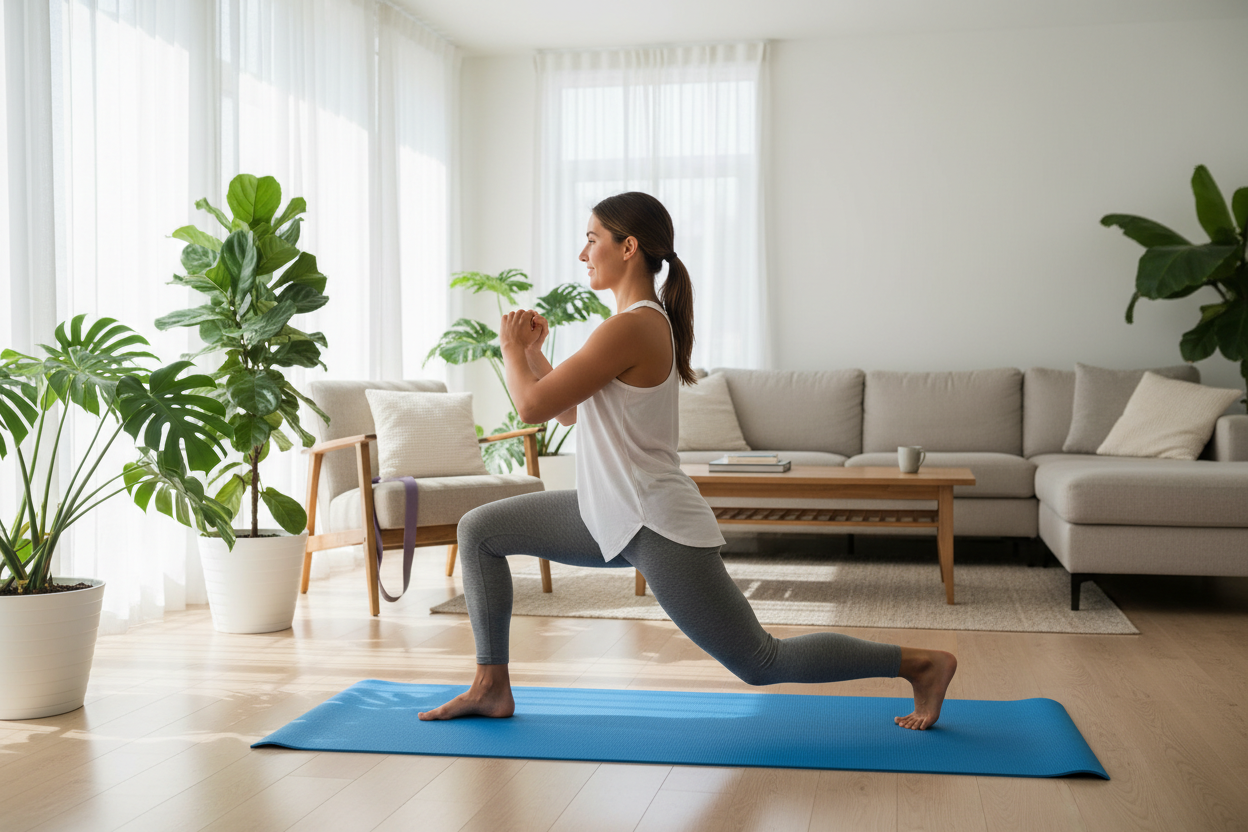
Forward lunges can be tough on the knees if your form isn't perfect. Reverse lunges are generally friendlier on the joints. Start standing tall. Take a large step backward with your right foot. Lower your back knee toward the ground until both knees form 90-degree angles. Your front knee should stay stacked over your ankle, not pushing way past your toes. Push off the back foot to return to standing. This creates stability and targets the glutes and quads effectively.
3. Glute Bridges
Most of us sit too much, leading to weak glutes and tight hips. This floor-based exercise wakes up the posterior chain. Lie on your back with your knees bent and feet flat on the floor. Press your lower back into the ground to engage your core. Squeeze your glutes to lift your hips toward the ceiling until your body forms a straight line from shoulders to knees. Hold for a second at the top, then lower slowly.
4. Calf Raises
Don't neglect the lower legs. Stand near a wall for balance. Rise up onto your toes as high as you can, hold the squeeze, and lower your heels back down until they just barely touch the floor before rising again. You can do this on a stair step to get a deeper stretch at the bottom.
Structuring Your Leg Day for Beginners at Home
Now that you know the moves, we need to organize them into a routine. Random exercise snacking is better than nothing, but a structured plan yields results. A proper leg day for beginners at home should take about 20 to 30 minutes. We will use a circuit format, meaning you do one exercise after another with minimal rest, then take a longer break at the end of the round.
The Routine:
- Bodyweight Squats: 12 to 15 reps
- Reverse Lunges: 10 reps per leg
- Glute Bridges: 15 reps
- Calf Raises: 20 reps
Perform these four exercises back-to-back. Once you finish the calf raises, rest for 90 seconds. Drink some water. Then, repeat the entire circuit two more times for a total of three rounds.
Common Mistakes to Avoid
When training at home without a coach, you have to be your own spotter. The mirror is your friend here. Watch out for "knee cave." When you squat or lunge, your knees should track over your toes. If they collapse inward toward each other, it puts immense stress on the ligaments. Actively push your knees outward as you move.
Another issue is rushing. Momentum kills muscle growth. If you drop down into a squat and bounce back up, your tendons are doing the work, not your muscles. Slow down. Take three seconds to lower yourself, pause for one second, and take one second to stand up. This tempo change makes easy leg workouts for beginners at home feel significantly harder without adding a single pound of weight.
Progressing Without Weights
Eventually, 15 squats will feel too easy. That is a good problem to have. It means you are getting stronger. You don't necessarily need to buy weights immediately. You can increase the intensity by decreasing your rest time between exercises. If you were resting 90 seconds, try resting 60.
You can also introduce unilateral work (single-leg exercises). Try a single-leg glute bridge. Or, try a split squat, where you keep your feet in the lunge position and simply move up and down without stepping back. These variations increase the load on the working muscle significantly.
Starting a fitness journey is rarely about having the perfect plan; it is about establishing the habit of moving. This routine requires nothing but floor space and effort. By focusing on form and consistency, you will build a foundation of strength that will serve you for years, whether you eventually join a gym or keep training in your living room.
Frequently Asked Questions
How often should I do this leg workout?
For beginners, two times a week is ideal. Your muscles need time to repair and grow stronger after the stress of exercise. Aim for a schedule like Monday and Thursday, leaving two or three days of rest or upper-body work in between.
What should I do if my muscles are too sore to walk the next day?
Delayed Onset Muscle Soreness (DOMS) is normal when starting a new routine. It usually peaks 24 to 48 hours after the workout. Keep moving gently with light walking or stretching to increase blood flow, which aids recovery, but wait until the soreness subsides significantly before doing another intense leg session.
Can I build big legs with just bodyweight?
You can build an athletic, toned, and strong physique with bodyweight alone, especially as a beginner. However, to build significant muscle mass (hypertrophy) similar to a bodybuilder, you will eventually need to add external resistance (weights) to continue overloading the muscles once bodyweight exercises become too easy.