Build Serious Lower Body Strength Without a Gym: The Ultimate Living Room Leg Guide
You do not need a squat rack, a leg press machine, or hundreds of pounds of iron to build a powerful lower body. The misconception that you can only grow your legs in a commercial facility stops many people before they even start. The truth is that effective leg workouts at home rely on gravity, leverage, and intensity techniques rather than external load. By manipulating tempo, rest periods, and unilateral movements, you can stimulate muscle growth and strength right in your living room.
Many people struggle with consistency simply because getting to the gym feels like a chore. An in home leg workout removes the barrier of travel time and equipment availability. You have the floor, you have your body weight, and perhaps a sturdy chair. That is all the equipment required to hammer your quads, hamstrings, and glutes into shape. Let’s break down exactly how to construct a routine that delivers results without requiring a monthly membership.
My Realization: Gravity Is Heavy Enough
I spent years believing that if I wasn't loading a barbell, I wasn't training. That changed during a period when I was traveling for work and stuck in a small apartment for three weeks with zero equipment. I decided to try a high-volume, single-leg routine. By the third set of Bulgarian split squats, my legs were shaking uncontrollably, and the soreness the next day rivaled my heaviest squat sessions. It taught me a valuable lesson about training legs at home: your body doesn't know the difference between a metal plate and the mechanical disadvantage of a single-leg movement. Tension is tension. If you apply it correctly, the muscle will adapt.
The Foundations of Indoor Leg Training
To get the most out of indoor leg workouts, you have to change your mindset from "moving weight" to "feeling tension." Since you cannot easily add 50 pounds to the bar, you must use other forms of progressive overload. Increasing the number of reps is the obvious choice, but it is not the only one. Slowing down your repetition speed—taking three seconds to lower yourself into a squat—drastically increases time under tension. Decreasing rest time between sets keeps the metabolic demand high.
Another crucial element is working one leg at a time. Unilateral training prevents your dominant side from taking over and doubles the workload on your core for stability. When you look for workouts for your legs at home, prioritize movements that force you to balance. This functional strength translates better to real-world activities like running or hiking than being locked into a machine ever could.
Mastering the Thighs: Quad-Dominant Movements
If you are wondering how to workout thighs at home effectively, the answer lies in knee-dominant exercises. The standard air squat is a great warmup, but for muscle growth, we need to increase the difficulty.
The Bulgarian Split Squat
This is the king of bodyweight leg exercises. Place one foot behind you on a couch or chair and step the other foot forward. Lower your back knee toward the ground while keeping your torso upright. This isolates the front leg's quadricep and forces the glute to stabilize. It is humbling and incredibly effective.
The Pistol Squat Progression
A full single-leg squat is an advanced move, but you can regress it. Sit on a chair, lift one leg off the ground, and stand up using only the other leg. Slowly lower yourself back down. This builds tremendous strength and balance.
Cyclist Squats
Elevate your heels on a thick book or a block. This removes the ankle mobility constraint and shifts the focus almost entirely to the teardrop muscle above your knee. Keep your torso vertical and squat deep.
The Posterior Chain: Hamstrings and Glutes
Most indoor leg exercises neglect the back of the legs, leading to muscle imbalances and knee pain. You must actively target the posterior chain. Since you don't have a leg curl machine, you have to get creative with friction and leverage.
The single-leg glute bridge is a staple. Lying on your back, bend one knee and drive your heel into the floor to lift your hips. Squeeze hard at the top. To make this harder, place your foot on the edge of the couch. For the hamstrings, try "slider curls." Put your feet on a towel (if on hardwood) or paper plates (if on carpet). Bridge up, slide your feet away from you slowly, and then curl them back in. This mimics the leg curl machine with surprising intensity.
Designing Your Leg Circuit Workout at Home
Structure is what separates a random smattering of exercises from a training program. A circuit style works best for home training because it keeps your heart rate up and accumulates metabolic fatigue, which helps compensate for the lack of heavy loads. Here is a sample leg circuit workout at home that covers all the bases.
Perform the following exercises back-to-back with no rest. Rest for 90 seconds only after completing the full round. Aim for 4 rounds total.
- Bulgarian Split Squats: 12 reps per leg (Focus on depth)
- Single-Leg Glute Bridges: 15 reps per leg (Hold the top for 1 second)
- Slider Leg Curls (or Walkouts): 12 reps (Slow eccentric phase)
- Alternating Reverse Lunges: 20 reps total (Keep weight in the front heel)
- Calf Raises on a Step: 20 reps (Full stretch at the bottom)
Advanced Techniques for Continued Progress
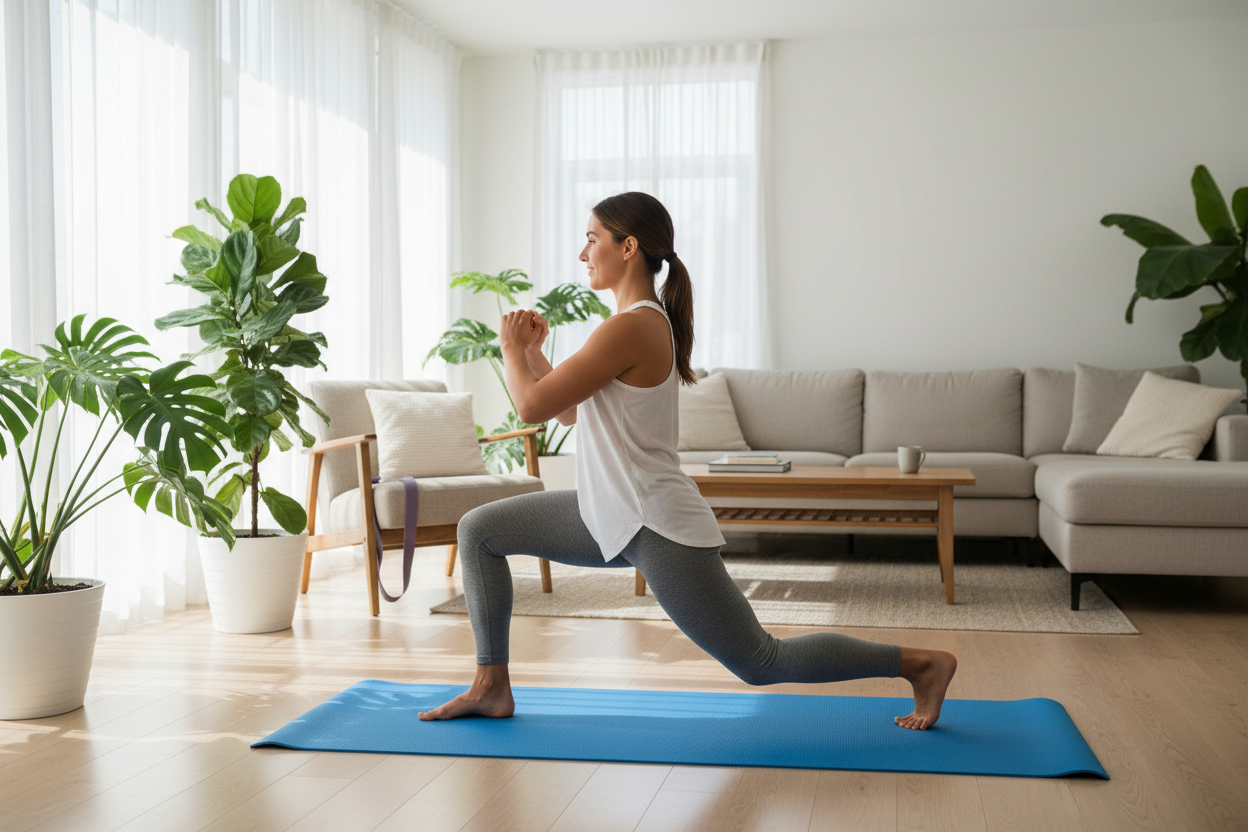
Eventually, bodyweight might feel too easy. When effective leg exercises at home start to feel comfortable, do not just add endless reps. Use pause reps. Go to the bottom of a lunge and hold it for three seconds before exploding up. This eliminates the stretch reflex and forces the muscle to generate force from a dead stop.
You can also implement "1.5 reps." Go all the way down, come halfway up, go back down, and then come all the way up. That counts as one rep. This technique keeps the muscle under tension for longer and targets the sticking points of the movement. Consistency with these intensity techniques is what builds the physique.
Staying Safe and Mobile
Training at home often means training in limited space with less-than-ideal flooring. Ensure you have a non-slip surface, especially for lunges and squats. If you are training on carpet, be mindful of your ankle stability. Always warm up before diving into your working sets. Five minutes of jumping jacks, high knees, and bodyweight squats will prepare your joints and increase tissue temperature, reducing the risk of injury.
Building legs at home is not a compromise; it is a different discipline. It requires mental fortitude to push through the burn when you don't have a heavy barbell to crush you. But if you respect the principles of tension and progression, your living room floor can produce results that rival any gym floor.
Frequently Asked Questions
Can I actually build muscle mass without heavy weights?
Yes, muscle growth occurs through mechanical tension and metabolic stress. By taking sets close to failure, using higher repetition ranges, and utilizing unilateral exercises to increase the relative load, you can stimulate significant hypertrophy at home.
How often should I do a home leg workout?
For most people, training legs twice a week is the sweet spot. This frequency allows enough volume to stimulate growth while providing adequate recovery time (48-72 hours) between sessions to repair the muscle tissue.
What if I have bad knees?
Focus on posterior chain exercises like glute bridges and hamstring curls which place less stress on the knee joint. For squat patterns, limit the range of motion to what is pain-free and focus on sitting back into your hips (box squats onto a chair are excellent for this) rather than driving knees forward.