Build Power at Home: The Only Leg and Core Dumbbell Routine You Need
You don't need a leg press machine or a cable tower to build a strong, functional physique. In fact, relying solely on machines can sometimes limit your athletic potential because the equipment stabilizes the weight for you. When you strip training down to the basics, specifically a focused leg and core workout with dumbbells, you force your body to work as a cohesive unit. This approach doesn't just build muscle; it creates stability, improves posture, and burns a significant amount of energy in a short period.
I remember a distinct period a few years ago when I didn't have access to a commercial gym. All I had was a dusty pair of adjustable dumbbells in my garage. I was skeptical that I could maintain my leg strength without a squat rack. I decided to experiment with high-intensity circuits that combined lower body movements with direct abdominal work. The result surprised me. Not only did my legs maintain their size, but my core strength skyrocketed. I wasn't just doing crunches; I was stabilizing heavy loads while lunging and squatting. That experience taught me that intensity and proper mechanics often trump fancy equipment.
Why Combine Lower Body and Core?
Training legs and abs together is arguably the most efficient way to structure a workout. Your core is the bridge between your upper and lower body. Every time you perform a squat, lunge, or hinge, your abdominal muscles must engage to protect your spine and transfer power. By intentionally designing a lower body and core workout with dumbbells, you are doubling down on this natural synergy.
Isolation exercises have their place, but compound movements offer a better return on investment for general fitness. When you hold a dumbbell in a goblet position or at your sides, your center of gravity shifts. Your abs, obliques, and lower back muscles have to work overtime to keep you upright. This means you are training your core functionally, exactly how it is used in daily life and sports.
The Essential Exercises
To get the most out of this session, focus on form over the amount of weight moved. The goal is to create tension. Here are the foundational movements for an effective leg and ab workout with dumbbells.
1. The Goblet Squat
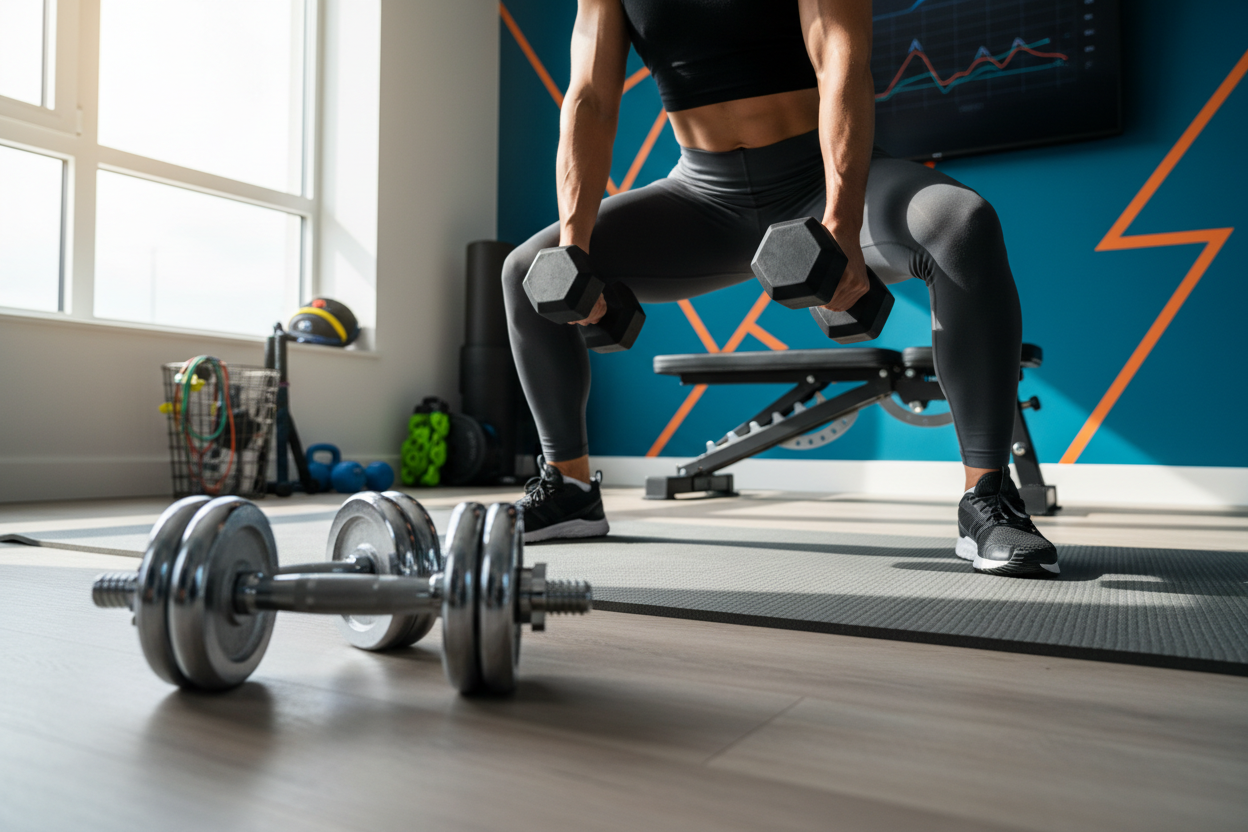
This is the cornerstone of the routine. By holding a single dumbbell vertically against your chest, you shift the weight forward. This acts as a counterweight, allowing you to squat deeper while keeping your torso upright. This position places a tremendous demand on your anterior core (the front abs) to prevent you from collapsing forward.
Stand with feet slightly wider than shoulder-width. Cup the top of the dumbbell with both hands. Lower your hips back and down, keeping your chest proud. Drive through your heels to return to the start. Throughout the movement, brace your stomach as if someone is about to punch you.
2. Dumbbell Romanian Deadlift (RDL)
While the squat targets the quads and core, the RDL attacks the posterior chain—the hamstrings, glutes, and lower back. This is crucial for a balanced legs and abs dumbbell workout. Hold a dumbbell in each hand in front of your thighs. Unlock your knees slightly, then hinge at the hips, pushing your glutes backward. Lower the weights toward your shins until you feel a deep stretch in your hamstrings. Squeeze your glutes to pull yourself back up. Your core must remain rigid to prevent your lower back from rounding.
3. Reverse Lunge with Twist
This movement introduces a rotational component, targeting the obliques and improving balance. Hold a single dumbbell by the ends at chest height. Step back with your right foot into a lunge. As you lower your back knee, rotate your torso over your front (left) leg. Rotate back to the center as you drive up to the starting position. This is a deceptively difficult addition to any legs and abs workout with dumbbells because it challenges your stability in multiple planes of motion.
4. Dumbbell Pull-Through
This exercise mimics the kettlebell swing but focuses more on the grind of the movement. Start in a high plank position with a dumbbell placed behind your right wrist. Keeping your hips square to the ground (don't let them rock!), reach under your body with your left hand, grab the dumbbell, and drag it across to your left side. Repeat with the other arm. This fries the core while your quads and glutes work isometrically to keep your body straight.
Structuring Your Routine
You can organize these movements into a circuit to keep your heart rate elevated, or perform them in straight sets for strength. For a balanced session, try the following structure:
- Goblet Squats: 4 sets of 10-12 reps
- Dumbbell RDLs: 4 sets of 12-15 reps
- Walking Lunges: 3 sets of 10 reps per leg
- Weighted Sit-Ups or Pull-Throughs: 3 sets of 15 reps
Rest for 60 to 90 seconds between sets. If you have lighter weights, slow down the tempo. Taking three seconds to lower into the squat can make a 20lb dumbbell feel like 50lbs.
Common Mistakes to Watch For
When performing a leg and core workout with dumbbells, the most common error is losing spinal integrity. As fatigue sets in, it is easy to let the lower back arch excessively or round forward. This usually happens when the core stops engaging. If you feel strain in your lower back rather than your abs or legs, reduce the weight or reset your posture.
Another pitfall is rushing the reps. Momentum is the enemy of muscle growth. Especially when training abs, swinging the weight reduces the work your muscles have to do. Control every inch of the movement.
Progression Without Heavy Weights
You might worry that you will outgrow your dumbbells. While valid, you can increase intensity without buying heavier weights. Decrease your rest periods to improve metabolic conditioning. Increase the time under tension by pausing at the bottom of every squat or lunge. Or, try unilateral training. A single-leg Romanian deadlift requires half the weight of a bilateral one but demands twice the stability, making it a perfect upgrade for your legs and abs workout with dumbbells.
Consistency remains the driver of results. A simple pair of dumbbells, used with intent and focus, provides enough stimulus to build a powerful lower body and a rock-solid midsection.
Frequently Asked Questions
How often should I do this workout?
For most people, performing this routine twice a week is sufficient. This allows enough time for muscle recovery while providing enough frequency to stimulate growth. You can alternate this with upper body days or cardio sessions.
Can I do this workout if I have back pain?
Dumbbells are often safer than barbells for back issues because the load is closer to your center of gravity, but you should proceed with caution. Focus on bracing your core properly and start with lighter weights to ensure your form is perfect before progressing.
Is this workout enough to build mass?
Yes, provided you are applying progressive overload. If you consistently increase the reps, improve your form, decrease rest times, or increase the weight over time, your muscles will adapt by growing larger and stronger.