Build Massive Legs With Just a Leg Press and Leg Curl Machine
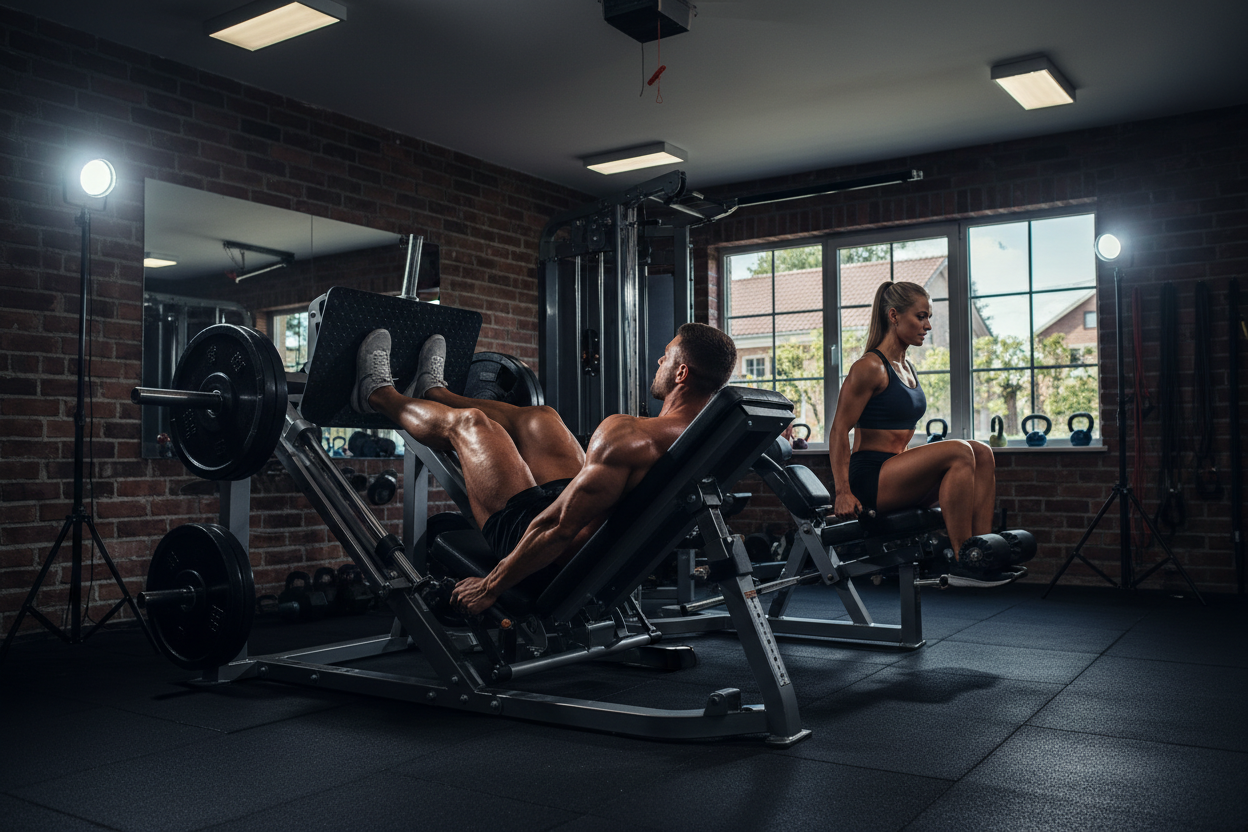
Building a serious home gym usually comes down to one frustrating variable: square footage. You want the heavy compound movements of a commercial facility, but you likely only have a garage or a spare bedroom to work with. This is where the leg press and leg curl machine becomes the MVP of your setup.
Many lifters dismiss combo machines as "jack of all trades, master of none." That is a mistake. When used correctly, this single piece of equipment allows you to hammer your quads, glutes, and hamstrings with an intensity that free weights sometimes can't match safely without a spotter. Let’s look at how to turn this footprint-saver into a mass builder.
Key Takeaways: The Dual-Machine Advantage
If you are looking for the quick answer on why this machine belongs in your routine, here is the breakdown:
- Hypertrophy Focus: It removes the stability requirement of squats, allowing you to focus 100% of your energy on pushing the weight.
- Complete Leg Development: It targets the anterior chain (quads) via the press and the posterior chain (hamstrings) via the curl without changing stations.
- Safety: You can train to mechanical failure safely without the risk of getting crushed by a barbell.
- Space Efficiency: A leg press and curl machine typically occupies less than 20 sq ft, replacing two massive commercial units.
Why the Combo Machine Works (The Biomechanics)
To understand the value here, we have to look at the mechanics. The leg press is a closed-kinetic chain exercise. Because your feet are fixed against a plate, you can load significant weight to stimulate the quadriceps and glutes. Unlike a squat, your lower back is supported, which takes the axial load off your spine.
On the flip side, the leg curl function offers an open-kinetic chain movement. This is critical for hamstring isolation. You cannot fully isolate the hamstrings with squats or lunges alone; you need knee flexion against resistance. This machine gives you that specific stimulus.
The "Switching" Factor
The main hesitation people have with a leg press and curl machine is the transition time. Modern designs have minimized this. Usually, it involves flipping a footplate and adjusting a pop-pin. This allows for "supersetting" opposing muscle groups (antagonist supersets), which drives massive amounts of blood into the legs, increasing metabolic stress—a key driver for muscle growth.
How to Maximize Growth With This Setup
Having the gear is one thing; using it to force adaptation is another. Here is how to get the most out of the machine.
1. Manipulate Foot Placement
On the leg press portion, where you place your feet dictates the load.
- High and Wide: Shifts focus to the glutes and hamstrings.
- Low and Narrow: Isolates the vastus medialis (the teardrop muscle of the quad).
2. Control the Eccentric
The biggest error I see is letting the weight stack crash down. The magic happens on the negative (lowering) phase. Take three full seconds to lower the weight on both the press and the curl. This increases time under tension and reduces the shearing force on your knees.
3. Don't Neglect the Curl Setup
When switching to the leg curl, ensure your knee aligns with the machine's pivot point. If your knee is too far forward or back, you place unnecessary stress on the joint and reduce the tension on the hamstring belly.
Common Mistakes to Avoid
Even with a machine, form breakdown kills gains. Avoid these two common errors:
Ego Lifting and Range of Motion
Loading the machine with every plate you own is useless if you only move the sled two inches. You need full depth on the press (knees close to chest without the lower back rounding) and full extension on the curl. Half reps yield half results.
The "Butt Lift"
During the leg curl, many lifters lift their hips off the pad as the weight gets heavy. This engages the lower back to help move the load. Keep your hips glued to the bench. If they rise, drop the weight.
My Training Log: Real Talk
I want to be transparent about what it’s actually like living with one of these units. I spent six months using a plate-loaded combo machine in my basement when I couldn't get to the commercial gym.
Here is the gritty reality: The transition isn't always seamless. On the specific unit I used, switching from press to curl required me to unscrew a knob that always felt a little gritty, like the threading was slightly off. It took about 45 seconds to switch modes. Because of that, I stopped trying to do rapid supersets. Instead, I learned to finish all my pressing movements first, take a distinct rest, reset the machine, and then destroy my hamstrings.
Also, the footplate texture matters. On my unit, the diamond plating was aggressive—great for grip, but if I wore thin-soled lifting shoes, I could feel the ridges digging into the balls of my feet on heavy sets. It’s a small detail, but it’s something you feel on that last, grinding rep that you don't think about when reading the spec sheet online. Despite the quirks, my quad sweep improved significantly because I could safely go to absolute failure alone in my basement.
Conclusion
The leg press and leg curl machine is not just a space-saver; it is a legitimate hypertrophy tool. It allows you to push past the mental barrier of injury risk that comes with heavy squats. By mastering the setup and controlling your tempo, you can build a set of legs that look like they were forged in a high-end bodybuilding club, right from your spare room.
Frequently Asked Questions
Can a leg press and curl machine replace squats?
For muscle growth (hypertrophy), yes. The machine can stimulate the quads and glutes effectively. However, for overall athletic performance and core stability, squats are superior. If your goal is purely aesthetics, the machine is sufficient.
Is the leg curl portion as good as a standalone machine?
Generally, yes. While dedicated commercial machines might offer smoother cam profiles (consistent resistance throughout the movement), a high-quality combo machine provides enough resistance and isolation to build significant hamstring size.
How often should I use this machine?
Legs respond well to volume. You can effectively use this machine 2 times per week. One session can focus on heavy loads (6-10 reps), and the second session can focus on metabolic stress and volume (15-20 reps).