Build Elite Fitness With A Personal Trainer Home Gym Setup
Most home workouts fail for one specific reason: they lack the intensity and structure of a professional environment. We buy a treadmill, use it for two weeks, and then turn it into a clothes rack. The solution isn't buying more gear; it is adopting a personal trainer home gym mentality.
Whether you are hiring a professional to come to your house or setting up your space to mirror a commercial facility for remote coaching, the environment dictates the outcome. It is time to stop exercising and start training.
Key Takeaways
- Environment Dictates Effort: A dedicated space with professional-grade flooring and lighting improves focus significantly.
- Programming Over Equipment: Success comes from a structured plan, not just owning a squat rack.
- Hybrid Options: You can combine personal training in your home with remote digital coaching for cost-effectiveness.
- Safety First: Solo training requires specific safety arms and bail-out strategies that a trainer would typically spot.
The Reality of Personal Training in Your Home
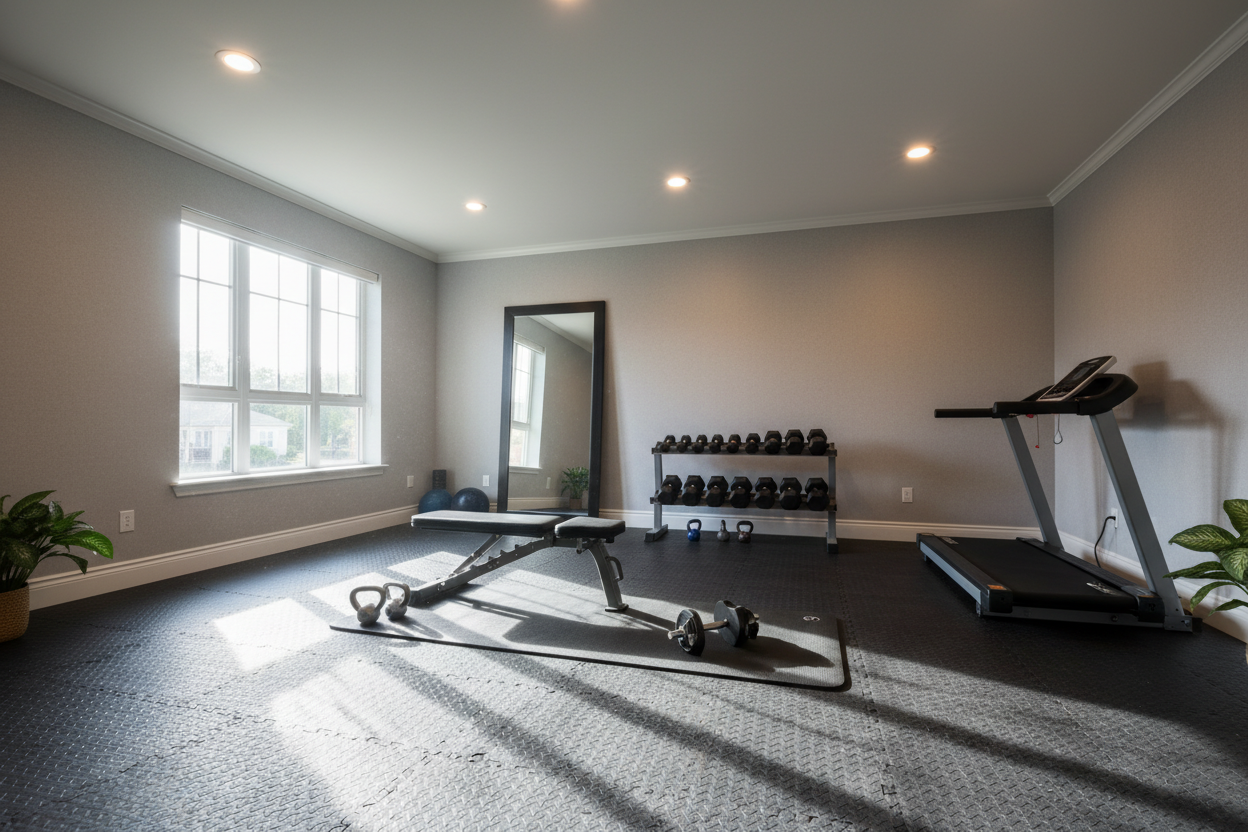
Bringing a professional into your living space changes the dynamic of fitness. It removes the friction of the commute, which is the number one killer of consistency. However, personal training in your home requires more than just clearing off the coffee table.
Creating the "Third Space"
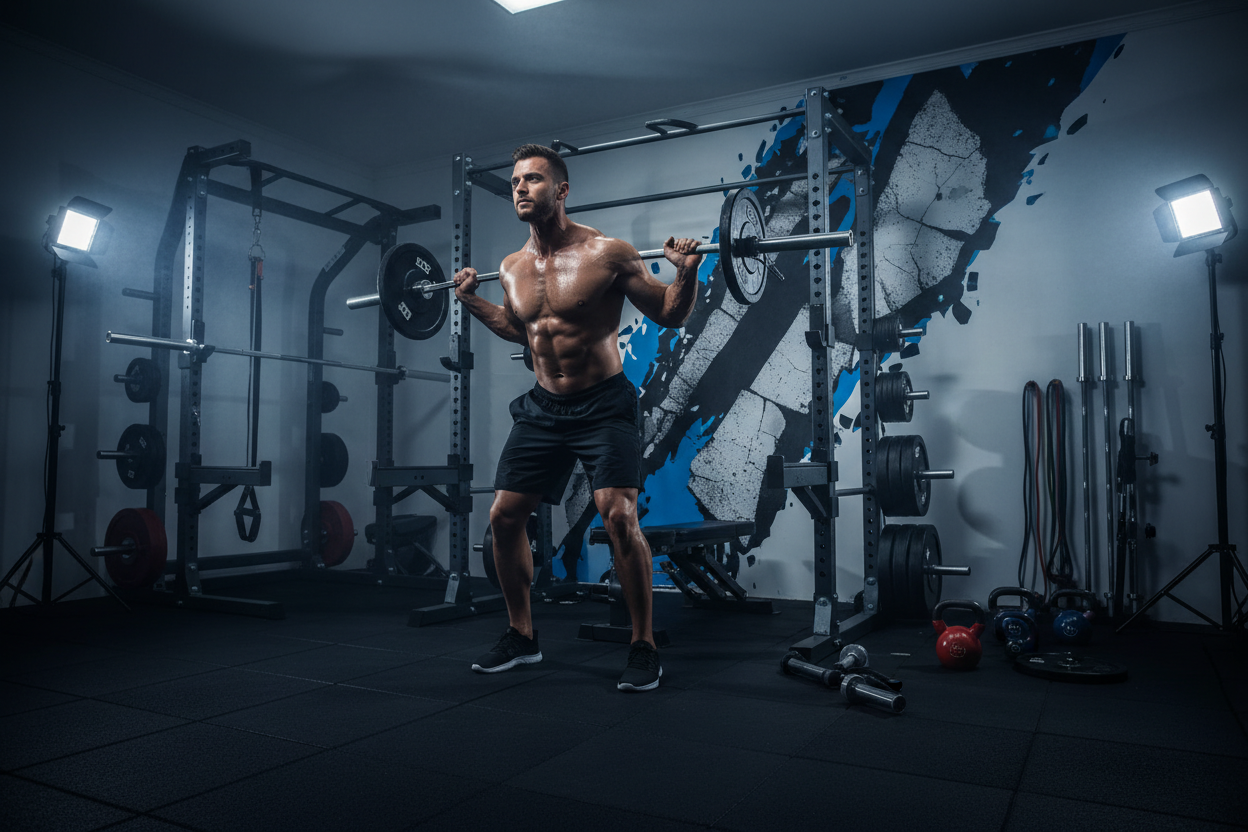
Your brain associates your living room with relaxation and your office with stress. To get results, your training area must feel distinct. This is why a home gym personal trainer will often advise clients to install heavy-duty rubber flooring (horse stall mats are the gold standard) and change the lighting temperature. When you step onto that black rubber, your brain needs to switch modes from "parent/employee" to "athlete."
Equipment: What a Pro Actually Uses
If you walked into a high-end studio, you wouldn't see complex multi-function machines that do 50 things poorly. You would see heavy, stable basics. When building a personal training home gym, mimic this minimalism.
Focus on a quality power rack with high-weight capacity, a barbell with good knurling (grip texture), and adjustable dumbbells. A trainer needs tools that allow for progressive overload. If your equipment wobbles or maxes out at 50 pounds, your progress halts. The gear must be robust enough to handle the intensity a coach demands.
The Remote Coach Revolution
Not everyone can afford a trainer standing next to them three times a week. This has given rise to the remote personal training home gym model. You build the facility, and the coach programs the workout via an app.
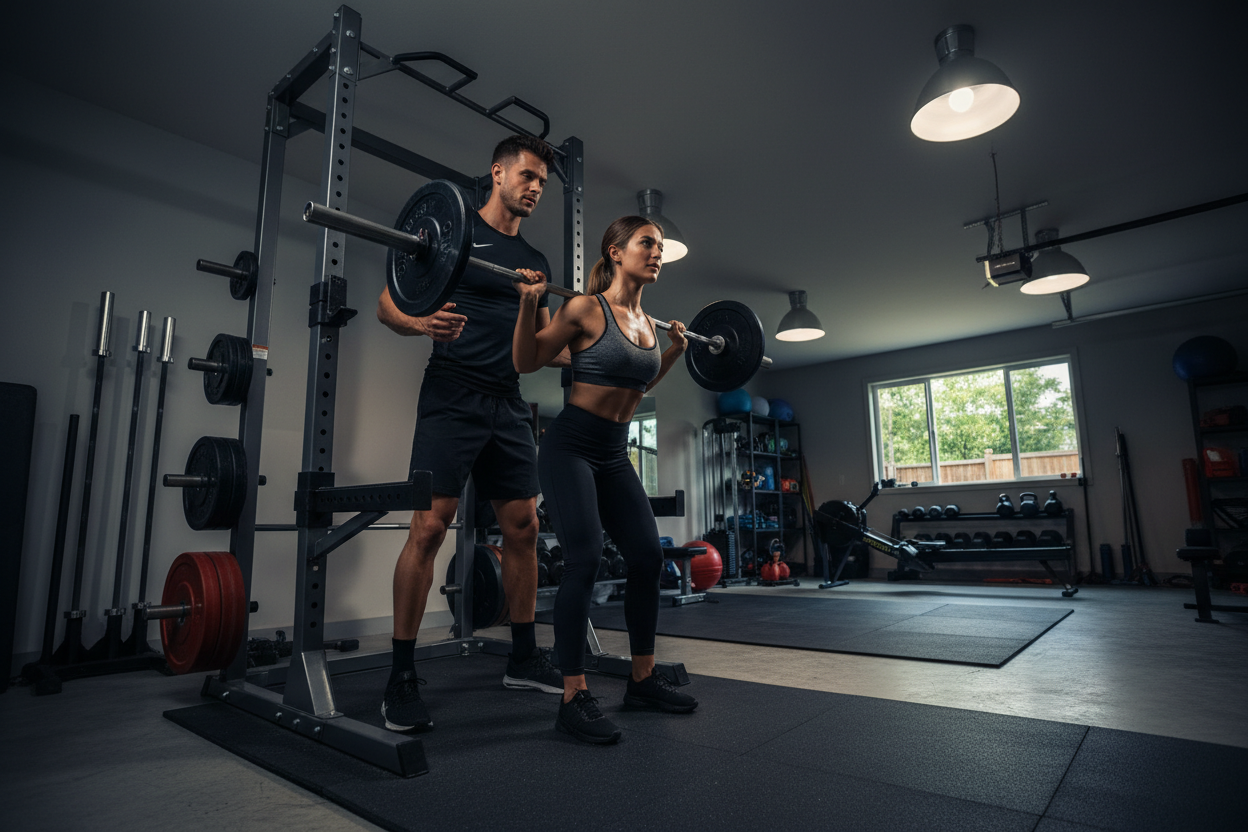
This only works if you film your lifts. Without a physical spotter, you need to record your sets for technique review. This adds a layer of accountability. Knowing a pro will critique your squat depth later forces you to perform better now, even if you are alone in your garage.
My Personal Experience with Personal Trainer Home Gyms
I have spent years training clients in commercial facilities, but my own training happens in a converted garage. There is a specific "unpolished" reality to this that most articles gloss over.
I remember the first winter I committed to training exclusively at home. The knurling on my barbell would get so cold it felt like it was burning my palms, even through the chalk. I actually had to start keeping the bar in the laundry room and carrying it out just before the session.
There is also the issue of floor leveling. In a commercial gym, the floor is perfectly flat. In my garage, there is a slight slope for drainage. During heavy deadlifts, if I don't orient the bar exactly parallel to the slope, the right plate rolls forward the second I set it down. It’s annoying, and you have to reset your stance every single rep. That subtle "clink-roll" noise is something you only understand if you've actually ground out a session on a concrete slab.
Conclusion
Building a personal trainer home gym is about more than convenience; it is about autonomy. By combining professional-grade equipment with expert programming—whether in-person or remote—you remove every excuse standing between you and your goals. Treat your space with respect, and the results will follow.
Frequently Asked Questions
How much space do I need for personal training at home?
You don't need a massive basement. A 10x10 foot area is sufficient for most functional training. The critical dimension is actually ceiling height; you need enough clearance to press a weight overhead without hitting the rafters or light fixtures.
Is a home gym personal trainer more expensive than a gym membership?
Upfront, yes. However, over time, it often balances out. You save on gym membership fees and gas. Furthermore, many trainers charge slightly less for home visits or remote programming because they don't have to pay overhead to a commercial facility.
What is the first piece of equipment I should buy?
Start with adjustable dumbbells and a sturdy adjustable bench. This combination allows for hundreds of movement variations. Avoid large cardio machines initially; they take up too much footprint for the value they provide compared to strength tools.