Breast Exercises You Can Do at Home for Strength and Shape
For many individuals, maintaining a toned upper chest and improving the overall firmness in the breast area can be achieved without expensive gym memberships or special equipment. While breasts themselves do not contain muscle tissue, the pectoral muscles underneath play a crucial role in supporting and shaping the area. By engaging in targeted breast exercise at home, you can strengthen these muscles, enhance posture, and create a fuller appearance.
Understanding the Role of Pectoral Muscles
The breasts rest on the pectoralis major and minor muscles. These muscles contribute significantly to the way your chest looks and feels. While exercising won't directly enlarge breast tissue, a consistent breast workout at home can increase muscle tone, reduce sagging from loss of firmness, and improve upper body strength. Such results are best achieved through evidence-based workouts targeting the chest, shoulders, and triceps.
Essential Exercises for Home
Here are several expert-recommended movements you can easily integrate into your routine without needing complex equipment.
Push-Ups
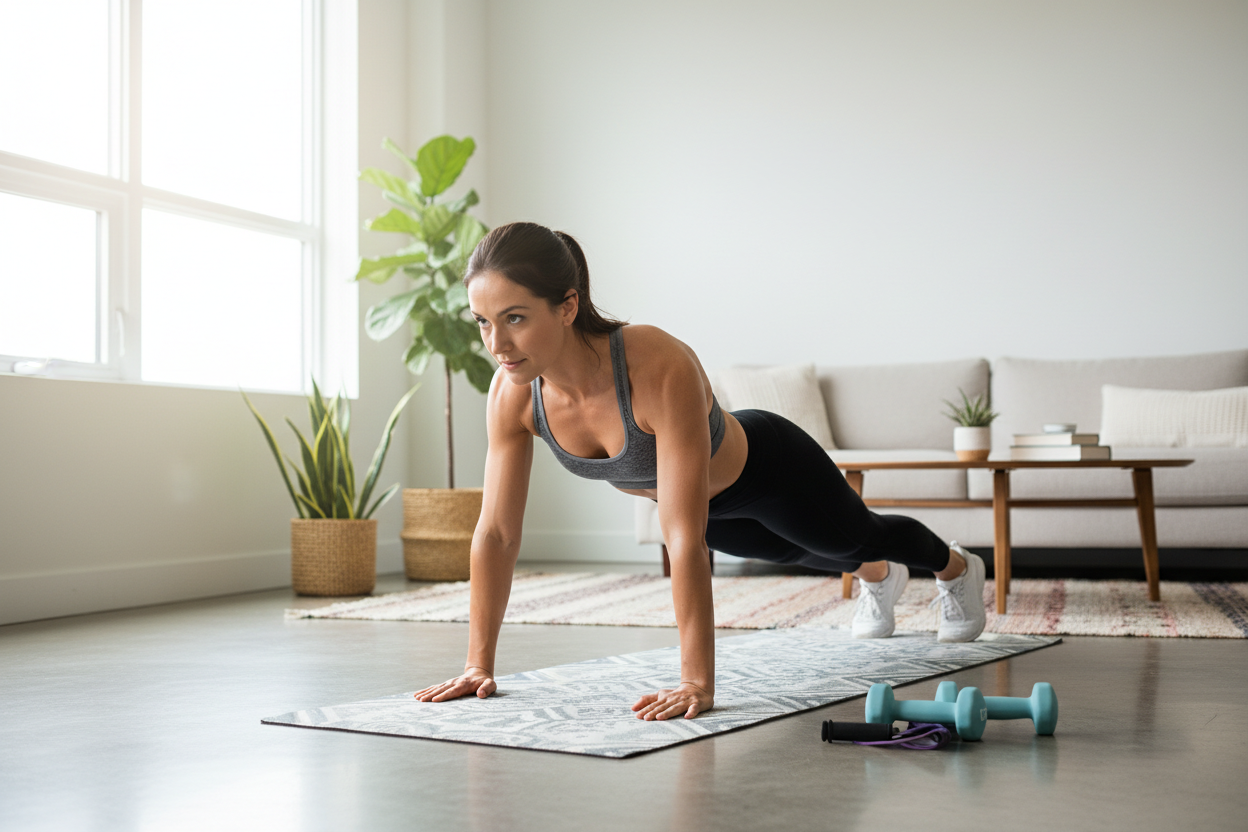
Push-ups are a classic workout for breast at home because they engage the pectoral muscles effectively. Start in a plank position with your hands slightly wider than shoulder width, lower your chest toward the floor, and then push back up. For beginners, placing knees on the floor reduces intensity while still activating the muscles.
Chest Press with Dumbbells
Using light to medium-weight dumbbells, lie flat on a mat or bench. Hold the weights above your chest, slowly lower them to chest level, and push them back up. This boob workout at home strengthens the muscles beneath the breast tissue and supports better definition.
Chest Flys
Lie on your back with dumbbells held above you, palms facing each other. Open your arms wide and lower the weights to each side while keeping a slight bend in the elbows. Bring them back up slowly. This breast workout at home isolates the pectoral muscles for focused engagement.
Wall Press
Stand facing a wall, place your palms flat against it at chest level, and press your weight forward until your nose almost touches the wall. Push back to the starting position. This low-impact exercise is great for anyone recovering from injury or beginning resistance training.
Structuring Your Routine
For optimal results, aim for 2-3 sets of each exercise, performing 10-15 repetitions per set. Consistency is key. Scheduling these workouts 3-4 times per week can yield visible changes in tone and firmness within 8-12 weeks. Incorporate rest days to allow muscle recovery and growth.
Complementing Exercises with Lifestyle Habits
In addition to a structured workout for breast at home, maintaining a balanced diet with adequate protein assists muscle repair and growth. Hydration and proper posture also play an important role in how your chest area appears and feels over time. Avoid slouching, as rounded shoulders can diminish chest definition.
Personal Experience and Tips
When I started my own home chest routine, I used basic household items – two water bottles as weights – while following a steady schedule. Within a few months, I noticed improved upper body strength and a more lifted appearance. My posture also felt better, which further enhanced the results. This firsthand experience confirmed that you don’t need a gym membership to achieve noticeable improvements.
Safety Considerations
Always warm up before exercising to increase blood flow and reduce the risk of injury. Exercises like arm circles, light stretches, and shoulder rolls are effective preparation. If you feel pain (not to be confused with mild muscle fatigue), stop immediately and consult a professional. Proper form is crucial – quality of movement outweighs quantity.
Final Thoughts
Integrating breast exercise at home into your wellness routine supports muscle strength, firmness, and posture. Whether you choose traditional push-ups or dumbbell chest flys, the key is consistency, proper form, and a balanced lifestyle. Over time, even simple steps can lead to a noticeable improvement in how your upper chest looks and feels.