Bodybuilding Upper Body Routine: Hypertrophy Splits, Movement Vectors, and Floor Staging
Principles of an Effective Bodybuilding Upper Body Routine
Constructing a dependable bodybuilding upper body routine requires more than compiling favorite exercises into a single afternoon. Muscle hypertrophy relies on intentional mechanical tension, balanced joint loading, and managing systemic fatigue across the torso. When structuring an upper bodybuilding workout, athletes must account for muscle groups that share anatomical responsibility, such as the triceps assisting horizontal pressing or the biceps stabilizing heavy pulling movements.
A well-conceived plan avoids excessive overlapping stress on vulnerable structures while distributing training stress evenly across the chest, back, shoulders, and arms. Rather than chasing arbitrary fatigue, the primary objective is presenting predictable resistance across complete active ranges of motion, allowing each muscle group to receive sufficient stimulus for adaptation.
Movement Vector Architecture: Categorizing Upper Body Exercises
A reliable framework for programming upper body exercises bodybuilding practitioners depend upon is organizing movements by directional vectors. Classifying movements this way ensures balanced muscular development between anterior and posterior muscle chains:
- Horizontal Pressing: Variations such as flat barbell presses, dumbbell presses, and seated machine presses target the sternal pecs, anterior deltoids, and triceps.
- Incline Pressing: Low-to-moderate incline dumbbell or barbell presses shift emphasis toward the clavicular head of the pectoralis major.
- Vertical Pressing: Standing overhead presses, seated dumbbell presses, and machine shoulder presses prioritize the medial and anterior deltoid heads along with the upper trapezius.
- Vertical Pulling: Pull-ups, chin-ups, and lat pulldowns target latissimus dorsi width and teres major development.
- Horizontal Pulling: Chest-supported rows, barbell rows, and cable rows emphasize mid-back thickness, rhomboids, rear deltoids, and lower trapezius musculature.
- Isolated Accessory Work: Dedicated movements for lateral deltoids, rear deltoids, biceps, and triceps allow volume accumulation without disproportionate central nervous system fatigue.
For an expanded breakdown of movement options and target musculature, consulting an upper body exercise guide can assist in selecting suitable variations for individual limb lengths and mechanics.
Structuring Your Weekly Upper Body Splits
How an upper body bodybuilding workout fits into a weekly calendar dictates recovery capacity and training frequency. Two split architectures remain widely recognized for their balance and flexibility:
The Upper / Lower Framework
In an Upper / Lower structure, the upper musculature is trained across two dedicated sessions per week, separated by lower body days or rest days. This arrangement provides predictable recovery windows, allowing an athlete to train each upper body muscle group twice every seven days with manageable per-session volume.
The Push / Pull / Legs System
In a Push / Pull / Legs framework, pushing musculature (chest, shoulders, triceps) is separated from pulling musculature (back, rear deltoids, biceps). While this split decreases the number of muscle groups trained per session, it requires either higher training frequency or extended rest between identical sessions.
For lifters outfitting a garage gym or personal training space, reviewing an upper body workout guide focused on equipment choices can help clarify how different split layouts align with available apparatus.
Complete Sample Workouts for Upper Body Hypertrophy
To implement an effective upper body workout for bodybuilding within an Upper / Lower split, lifters often alternate between two distinct sessions: Upper A, which emphasizes chest pressing and vertical pulling, and Upper B, which prioritizes back density and shoulder development.
Upper Session A: Chest and Lat Emphasis
- Incline Dumbbell Press: Controlled descent with full stretch at the bottom position, driving upward along natural pressing angles.
- Neutral-Grip Lat Pulldown or Weighted Pull-Up: Full vertical reach at the top, drawing elbows downward toward the ribcage.
- Flat Machine Press or Barbell Bench Press: Stable base, even tempo, prioritizing consistent sternal chest contraction.
- Chest-Supported Row: Mid-grip position targeting horizontal row mechanics without lumbar fatigue.
- Cable Lateral Raise: Smooth abduction through the scapular plane for lateral deltoid tension.
- Overhead Cable Triceps Extension: Long-head triceps isolation with controlled elbow flexion.
- Incline Dumbbell Curl: Strict biceps isolation emphasizing a lengthened muscle position.
Upper Session B: Back Thickness and Shoulder Emphasis
- Standing Overhead Barbell Press or Seated Dumbbell Shoulder Press: Solid foot grounding, pressing vertically in line with the torso.
- Barbell Bent-Over Row or T-Bar Row: Braced hinge position, pulling toward the lower ribcage for lat and mid-back density.
- Slight-Incline Dumbbell Fly or Cable Crossover: Continuous tension across the chest through horizontal adduction.
- Close-Grip Pulldown or Chest-Supported High Row: Vector adjusted to emphasize upper back and lat integration.
- Dumbbell Lateral Raise: Controlled tempo without swinging torso momentum.
- Rope Triceps Pushdown: Full elbow extension with flared rope handles at completion.
- Standing Hammer Curl: Neutral-grip pulling to target brachialis and forearm musculature.
- Face Pull or Reverse Pec Deck: Rear deltoid and external rotator stability work.
For additional programming layouts and progression templates, lifters can consult a dedicated workout resource to tailor set volumes to their training phase.
Gym Flooring and Ground-Force Stability for Upper Body Training
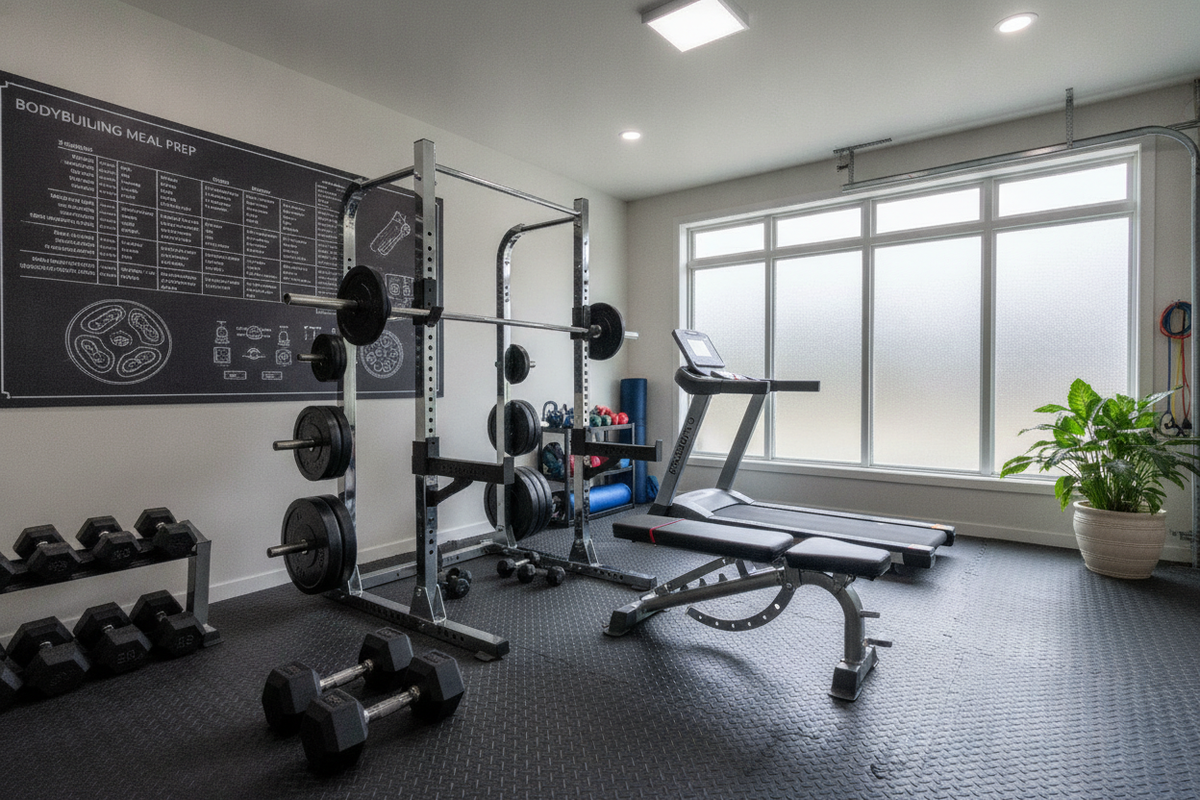
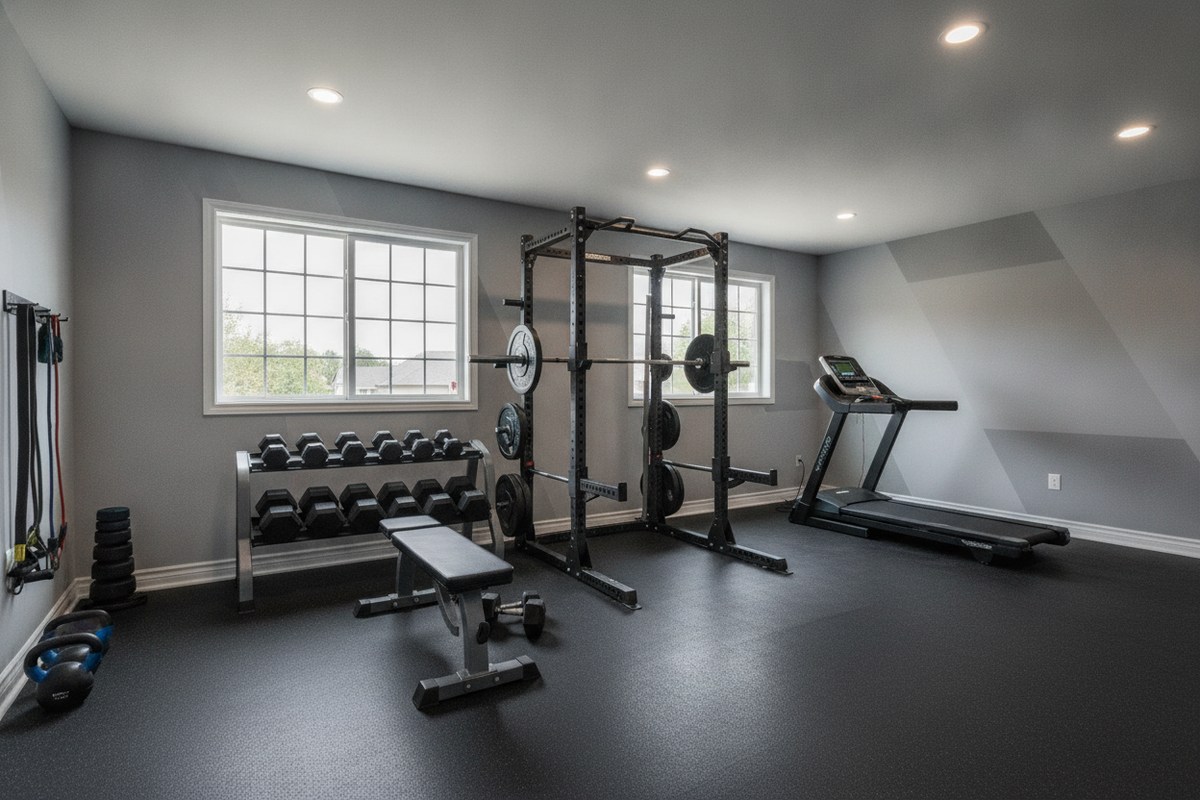
A critical yet frequently overlooked component of a stable upper bodybuilding workout is the floor surface underneath the lifter and equipment. While upper body exercises emphasize the arms, chest, and back, forceful execution depends on ground-force transfer and rigid equipment stability.
Leg Drive and Bench Press Traction
Effective bench pressing requires substantial leg drive, where the lifter plants their feet firmly into the floor to stabilize the pelvis, arch the thoracic spine, and lock the shoulder blades into position. Smooth concrete or slippery residential flooring reduces traction, allowing feet to slide forward and collapsing the upper back arch. High-density rubber gym mats provide non-slip friction, keeping shoes securely anchored under heavy loading.
Overhead Pressing and Foot Planting
Standing overhead barbell presses, push presses, and heavy dumbbell shoulder presses demand unwavering balance throughout the feet, hips, and core. A firm, resilient mat prevents wobbling and provides a consistent platform, preventing balance shifts that could disrupt pressing mechanics or compromise vertical bar paths.
Free-Weight Floor Protection
Upper body sessions involve handling heavy dumbbells, barbells, and weight plates. Heavy chest-supported rows, bent-over rows, and dumbbell bench drops place subfloors at risk of damage. Durable gym flooring absorbs equipment contact, reduces vibration transmission throughout the home structure, and preserves both barbell knurling and concrete foundations.
Execution, Progression, and Safety Considerations
Longevity in bodybuilding requires smart execution alongside consistent progressive overload. Incorporating several practical habits ensures steady progression while maintaining joint comfort:
- Warm-Up and Joint Preparation: Begin with general mobility for the thoracic spine and dynamic warm-ups for the rotator cuff, such as band pull-aparts and arm circles, before approaching loading sets.
- Repetition Tempo: Emphasize a controlled eccentric phase to maximize mechanical tension, followed by a momentary pause at full stretch and an intentional concentric drive.
- Double Progression Method: Establish a target repetition range for an exercise. Once all prescribed sets can be completed at the upper rep target with clean form, increase the resistance by the smallest increment available.
- Bench and Machine Setup: Adjust seat heights, pad positions, and bench angles to match individual skeletal structures rather than forcing limbs into awkward mechanical angles.
Lifters balancing upper body specialization alongside compound lower-body training can reference an exercise body workout guide to integrate overall training demands into a cohesive weekly schedule.