Bodybuilding at Home Workout Plan: Hypertrophy Splits, Movement Blueprints, and Floor Staging
Building noticeable muscle mass does not require an endless collection of specialized gym machines. A well-designed bodybuilding at home workout plan focuses on fundamental movement mechanics, continuous mechanical tension, and structured progression. When lifters transition to home bodybuilding, the primary hurdle is rarely a lack of motivation; it is learning how to replicate the tension curves, stability, and volume loads typically provided by selectorized gym stacks. By combining deliberate leverage variations with dedicated floor protection, you can build a balanced physique entirely in your personal training space.
Foundations of Home Bodybuilding: Stimulating Hypertrophy Without Commercial Machines
Hypertrophy relies on mechanical tension, metabolic stress, and adequate muscle recovery. In commercial facilities, heavy cable systems and guided tracks stabilize loads automatically. With bodybuilding home training, your body must generate its own stabilization while maintaining targeted tension across working muscles. Instead of relying purely on heavy plate loads, home lifters can drive adaptation through deliberate cadence, isometric holds, extended eccentrics, and subtle angle changes.
Compound multi-joint lifts remain the foundation of muscular growth because they recruit large amounts of muscle mass simultaneously. Implementing compound baselines ensures that each training session yields meaningful mechanical stimulus. For a broader look at organizing multi-joint patterns across full sessions, consult our exercise body workout guide. In our editorial view, slowing down the negative portion of a lift often does more for muscle engagement than simply adding more loose resistance plates.
Essential Equipment Selection and Home Gym Floor Staging
Executing a productive workout for bodybuilding at home requires a practical baseline of versatile gear. High-utility home setups typically center around adjustable dumbbells, looped resistance bands, an overhead pull-up station, and a flat utility bench. These tools allow lifters to load horizontal and vertical pushing, pulling, and hinging movements across a wide range of resistance settings.
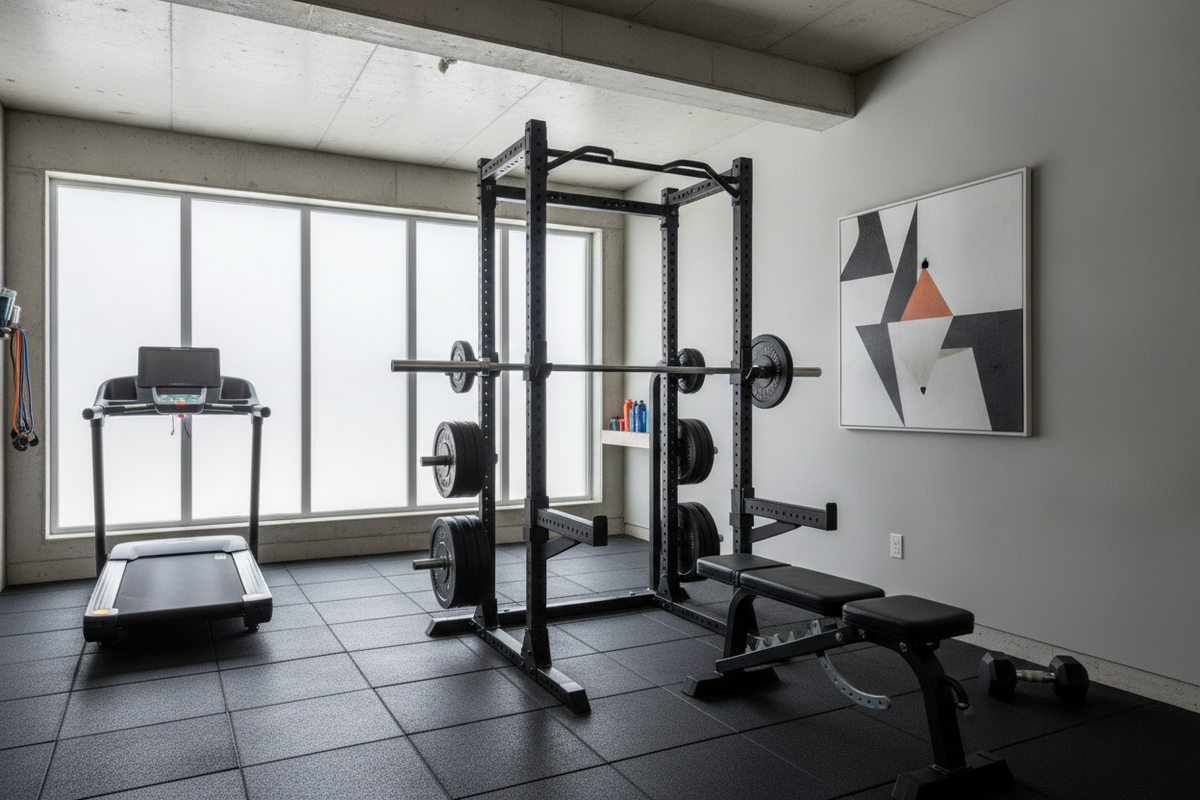
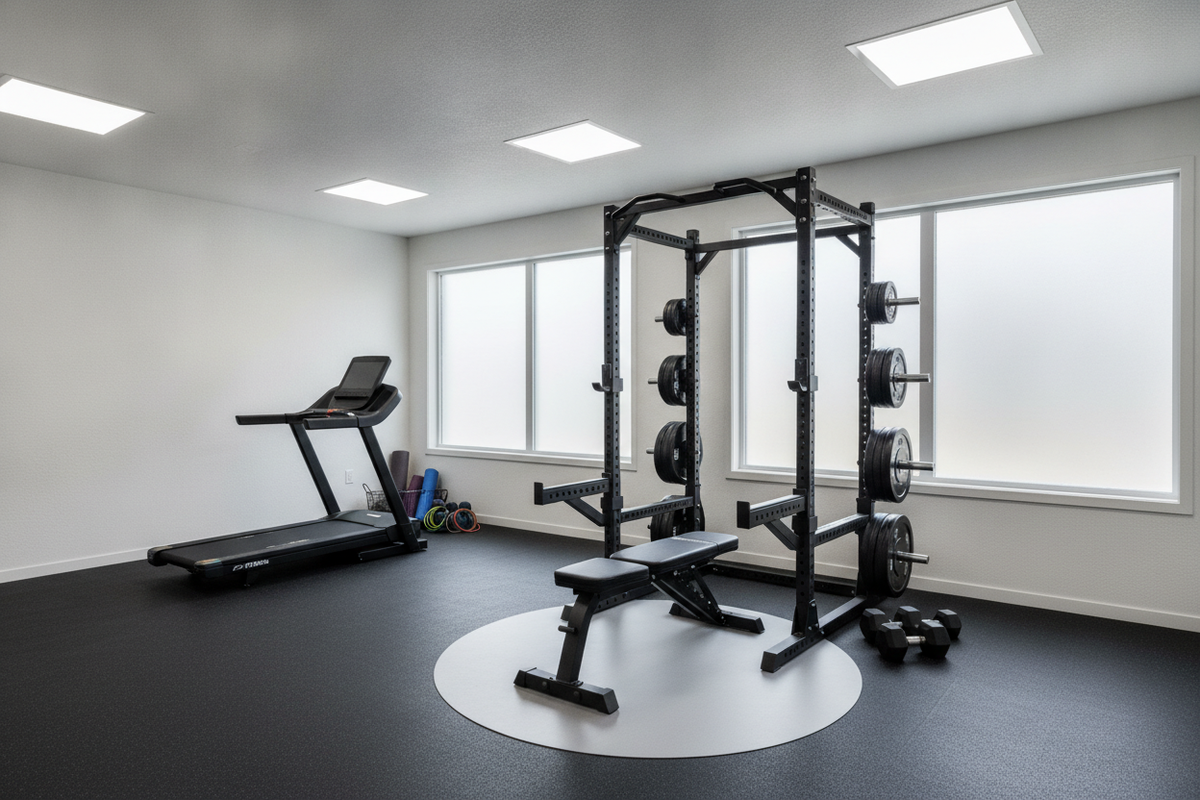
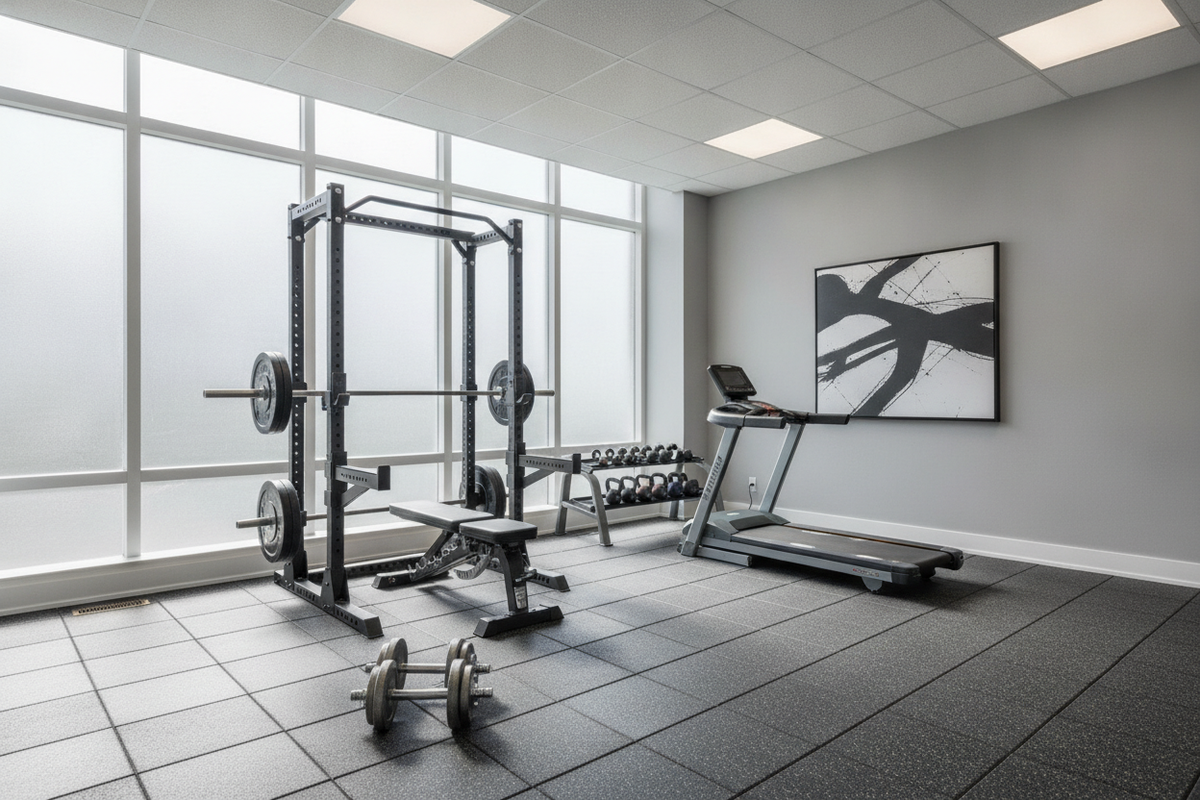
Equally critical is your training surface. Standard domestic flooring like hardwood, tile, or laminate is vulnerable to dropped equipment and lacks the traction needed for heavy unilateral foot planting. Staging a dedicated zone with high-density padding creates an anti-slip platform that cushions equipment contact and preserves the subfloor. Lifters seeking appropriate ground coverage can examine our foundational exercise resource to evaluate surface options that withstand rigorous lifting sessions without shifting underfoot.
Movement Vector Frameworks: Targeting Every Major Muscle Group
A comprehensive bodybuilder workout at home addresses every primary movement plane. Rather than viewing workouts as random collections of exercises, organize your sessions around distinct movement vectors: horizontal press, vertical press, horizontal pull, vertical pull, knee flexion, and hip hinge.
To structure balanced development across muscle groups, home trainees should match each movement angle to an opposing counter-movement. For instance, pairing flat dumbbell presses with bent-over rows balances chest and upper-back tension, while matching overhead presses with wide pull-ups ensures complete shoulder girdle development. For a detailed breakdown of anatomical pairings and muscle isolation strategies, review our body workout training guide. Utilizing deliberate vectors ensures balanced symmetry throughout your bodybuilding home routine.
Structured Weekly Split Architecture for Home Lifters
Consistency and volume distribution define long-term muscular development. A dedicated bodybuilding home workout plan can be organized around several customizable weekly splits, depending on available training days and recovery preferences:
- Upper / Lower Split (Four Days): Alternates between upper-body push-pull days and dedicated lower-body sessions. This layout provides balanced frequency, giving muscle groups ample rest before the next exposure.
- Push / Pull / Legs Split (Three to Six Days): Groups pushing muscles (chest, shoulders, triceps), pulling muscles (back, rear delts, biceps), and legs into distinct workouts. This template reduces overlap between fatigued muscle groups.
- Full Body Rotations (Three Days): Emphasizes high-effort compound movements across the entire physique every other day, ideal for compact schedules.
When selecting your cadence, manage recovery and time-under-tension carefully. For further strategies on structuring rest intervals and pacing training blocks, explore our exercise workout plan guide to establish a steady, progressive rhythm.
Step-by-Step Home Bodybuilding Exercise Blueprint
Here is an adaptable movement menu designed specifically for a bodybuilding exercise workout at home, using dumbbells, bands, and bodyweight leverage:
Chest and Shoulders
- Floor Press or Deficit Push-Ups: Lying on a padded mat allows floor presses to emphasize triceps and pectoral lockouts while maintaining stable shoulder positioning. Elevating hands on blocks or dumbbells increases the stretch at the bottom.
- Seated Dumbbell Overhead Press: Establishes vertical pressing tension across the anterior and lateral deltoids without requiring a full power rack.
- Lateral Raises with Bands or Light Dumbbells: Focus on constant tension and smooth, controlled tempos to isolate the lateral head of the deltoid.
Back and Biceps
- Chest-Supported or Bent-Over Dumbbell Rows: Target the latissimus dorsi and rhomboids. Emphasize drawing the elbows toward the hips rather than simply pulling upward.
- Overhead Pull-Ups or Inverted Rows: Vertical and horizontal pulling movements build back width and density using bodyweight resistance.
- Incline or Standing Bicep Curls: Controlled supination isolates elbow flexors across full ranges of motion.
Lower Body and Core
- Goblet Squats and Bulgarian Split Squats: Elevated rear-foot split squats produce intense quadricep and glute stimulation with moderate dumbbell weights.
- Romanian Deadlifts: Emphasize hip hinging and hamstring loading while maintaining a neutral spine and firm footing.
- Floor Hollow Holds and Hanging Leg Raises: Strengthen the anterior core and pelvic control without demanding complex machinery.
Training Space Zoning, Flooring Care, and Equipment Safety
Sustainable working out at home bodybuilding requires deliberate space management. Designate a clear movement perimeter free of furniture, low fixtures, and clutter. When lifting freestanding weights, maintaining a stable, level stance on protective flooring prevents unnecessary equipment shift.
Protecting your training surface requires basic routine maintenance. Wipe down workout mats after intense sessions with mild cleansing soap and water to remove perspiration and dust. Avoid harsh chemical solvents that can degrade mat texture or compromise grip integrity. Trainees interested in durable ground layers and protective surface guidelines can review this additional exercise resource for maintenance recommendations. Setting up a dedicated, durable training footprint allows you to focus fully on mechanical tension, progressive overload, and long-term physique development right at home.