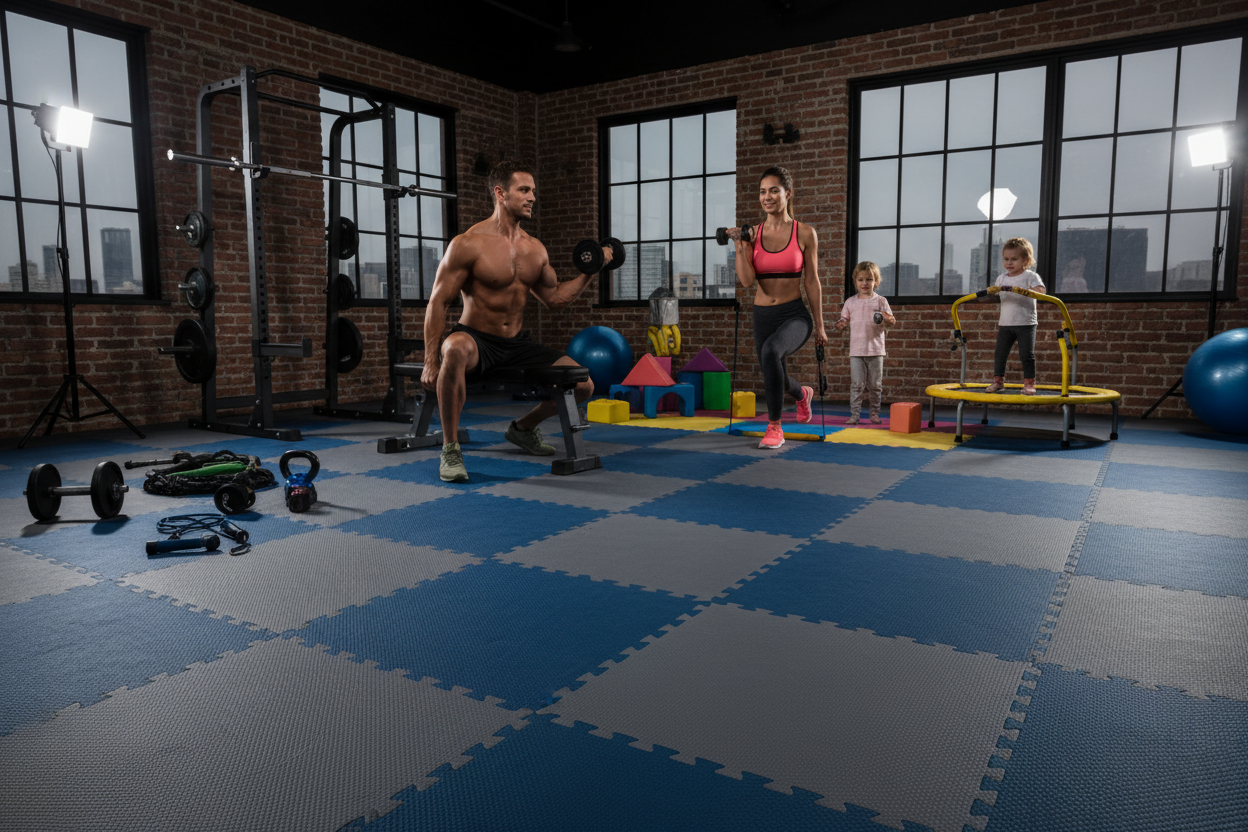
Big Foam Play Mat: The Secret to a Family-Friendly Gym
If you are trying to build a functional home gym that doubles as a family space, you already know the struggle. Hard concrete garage floors or cold basement tiles are unforgiving on your joints during mobility work, and they are completely unsafe for kids. Investing in a big foam play mat is often the easiest, most cost-effective way to transform a harsh environment into a comfortable, multi-use training zone.
Whether you need a dedicated stretching area, a spot for bodyweight exercises, or a safe boundary for your toddlers while you lift, choosing the right flooring is critical. In this guide, we will break down exactly what to look for when upgrading your home gym with foam flooring.
Key Takeaways
- Thickness matters: Aim for at least 0.5 to 1 inch of thickness for optimal joint support and impact absorption.
- Interlocking design: Puzzle-style tiles offer the most flexibility for custom room shapes and easy storage.
- Material quality: Look for high-density EVA foam that is non-toxic, water-resistant, and easy to wipe down.
- Zoning: Use foam mats to create a clear separation between heavy lifting zones and mobility zones.
Evaluating Play Mat Flooring for Multi-Use Gyms
Thickness and Density Requirements
When shopping for a foam play floor, the biggest mistake people make is buying mats that are too thin. For a home gym environment, you want thick foam play mat tiles—ideally 3/4-inch to 1-inch thick. This provides enough cushion for kneeling stretches, ab workouts, and burpees, while also offering a soft landing pad for energetic kids. High-density EVA foam is the gold standard here, as it resists tearing and maintains its shape far better than cheap alternatives.
The Interlocking Advantage
While roll-out mats have their place, a foam puzzle floor play mat is usually the superior choice for home setups. Playmat interlocking systems allow you to customize the exact footprint of your mobility zone. If you have an awkwardly shaped basement or need to navigate around support beams, you can simply cut the playmat floor tiles to fit seamlessly against the wall.
Sizing and Space Planning
Covering Large Areas
If you are outfitting a two-car garage or a spacious basement, you will want to look into extra large foam floor mats. Standard 12x12-inch tiles take forever to assemble and can easily separate under lateral movement. Instead, opt for xl foam mats that measure 24x24 inches or larger. These create fewer seams, which means less shifting during your dynamic warm-ups and less trapped dirt over time.
Apartment and Corner Setups
Working with limited square footage? A large activity play mat can be tucked into the corner of an apartment living room or home office. Because play mat foam large tiles are incredibly lightweight, you can easily break them down and slide them under a bed or couch when your workout is over.
From Our Gym: Honest Take
When I first set up my garage gym, I desperately needed a safe zone for my toddler while I lifted, plus a comfortable spot for my own post-workout yoga. I installed a 10x10 foot section of thick interlocking foam tiles right next to my lifting platform. The high-density texture is fantastic—my chalked hands do not slip during planks, and it provides great insulation against the freezing winter concrete.
However, here is my honest caveat: EVA foam compresses easily under heavy, static loads. Do not drop a loaded barbell on these, and definitely do not rest a 500-pound power rack directly on top of them. The feet of the rack will permanently puncture the foam. Keep your heavy equipment on stall mats or hard rubber, and reserve the foam mats strictly for bodyweight work, stretching, and family play.
Frequently Asked Questions
Is a big foam play mat safe for heavy gym equipment?
No. Foam is designed for impact absorption and comfort, not heavy load-bearing. Heavy equipment like treadmills, weight benches, or power racks will permanently dent or tear the foam. Always use high-density rubber flooring for heavy gear.
How do I clean a foam puzzle floor play mat?
Maintenance is incredibly simple. Sweep or vacuum loose debris using a hard-floor setting. For sweat and spills, wipe the mats down with a damp cloth and a mild soap. Avoid harsh bleach, which can degrade the foam over time.
Are xl foam mats safe for babies and toddlers?
Yes, provided you purchase mats made from non-toxic, BPA-free, and phthalate-free EVA foam. High-quality foam flooring is specifically designed to be safe for children while remaining durable enough for adult fitness routines.