Best Time to Lift Weights to Build Muscle: Circadian Timing Windows, Daily Consistency, and Home Floor Staging
Understanding Daily Timing Windows for Strength and Muscle Building
Choosing when to complete a strength training session often involves balancing physiological readiness with real-world schedules. Trainees frequently wonder whether lifting in the early morning or late afternoon yields superior muscle growth. While circadian rhythms influence alertness, core body temperature, and joint mobility throughout the day, sustainable muscle hypertrophy depends primarily on consistent progressive overload and long-term training adherence.
Morning Lifting: Focus, Consistency, and Warm-Up Demands
Morning resistance training offers the practical advantage of fewer daily interruptions. Completing a lifting session before work or family obligations arise helps ensure that workouts are rarely skipped due to unforeseen schedule conflicts. However, morning sessions require deliberate preparation. Upon waking, body temperature is typically lower, and connective tissues can feel stiff. A structured dynamic warm-up and gradual ramp-up sets are essential to prepare the musculoskeletal system for heavier loads.
Afternoon and Evening Training: Peak Physical Readiness and Fueling
Later training windows, typically occurring between mid-afternoon and early evening, naturally coincide with higher core body temperature and several meals of dietary fueling. For many lifters, this timeframe provides a subjective feeling of greater physical power and alertness. The primary obstacle for evening workouts is mental fatigue from the workday, alongside the risk that unexpected daily delays may derail planned gym time.
Decision Framework: Selecting Your Optimal Lifting Window
Determining your ideal training window requires balancing biological preferences with lifestyle demands. Selecting a time you can sustain consistently month after month is far more critical than chasing a marginal theoretical advantage in a timing window that causes constant scheduling friction.
Lifestyle Alignment vs. Theoretical Peak Hours
When selecting your lifting routine, examine your weekly calendar objectively. A trainee who attempts to force late-afternoon sessions despite frequent overtime demands often experiences missed workouts, whereas an early morning routine offers a predictable environment. Conversely, individuals balancing diverse conditioning goals—such as combining hypertrophy with metabolic intervals like those explored in a workout weight loss guide—may prefer midday or afternoon slots when baseline energy levels feel more established.
Managing Energy Fluctuations and Pre-Workout Preparation
Energy levels naturally rise and fall across the day. If you must train during a window when your energy feels suboptimal, systematic pre-workout rituals can help establish training readiness:
- Hydration and Nutrition: Ensure adequate fluid intake before lifting, especially in the morning when the body has been without fluids overnight.
- Movement Mobilization: Spend extra time on joint-specific mobility drills to counteract seated desk work or morning stiffness.
- Mental Focusing: Use a brief transitional routine, such as controlled breathing or deliberate movement prep, to switch mindset from daily tasks to resistance training.
Adapting Session Architecture to Your Training Time
Your session structure should adapt to the time of day you train. Modifying your warm-up pacing, exercise sequence, and set progression helps ensure that each lift is executed with high quality and control.
Morning Session Pacing and Progressive Loading
When training early, allocate additional time to progressive warm-up sets before reaching working weights. Starting with multi-joint bodyweight movements or lighter dumbbell exercises helps elevate core temperature smoothly. For structured session ideas that manage movement pacing and volume, consulting a strength workout weights guide can provide useful frameworks for balancing density and recovery.
Evening Session Decompression and Mental Transitioning
For afternoon and evening workouts, physical readiness is often already high, but cognitive fatigue from work or daily stress can impair focus during heavy lifts. In these windows, keep warm-up routines concise and purposeful to avoid lingering fatigue, and prioritize technical concentration on complex barbell or machine movements early in the workout.
Staging Your Home Lifting Space for Any Time of Day
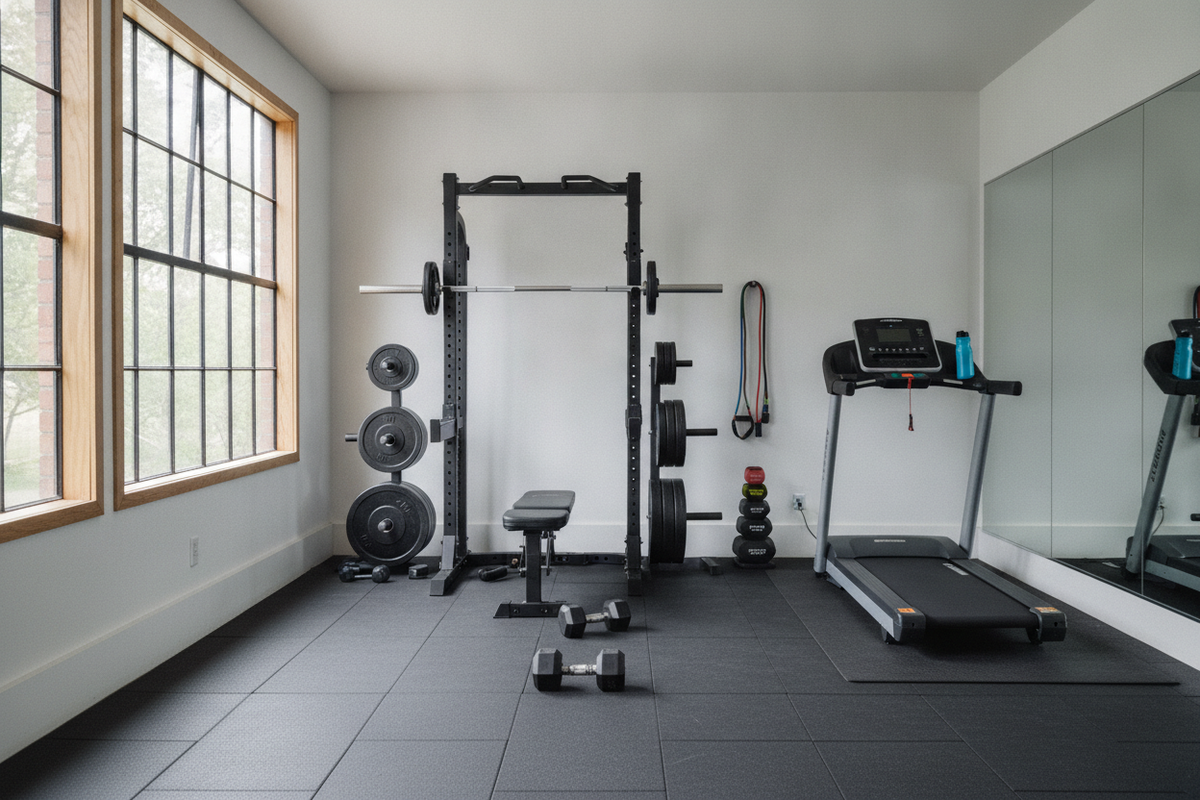
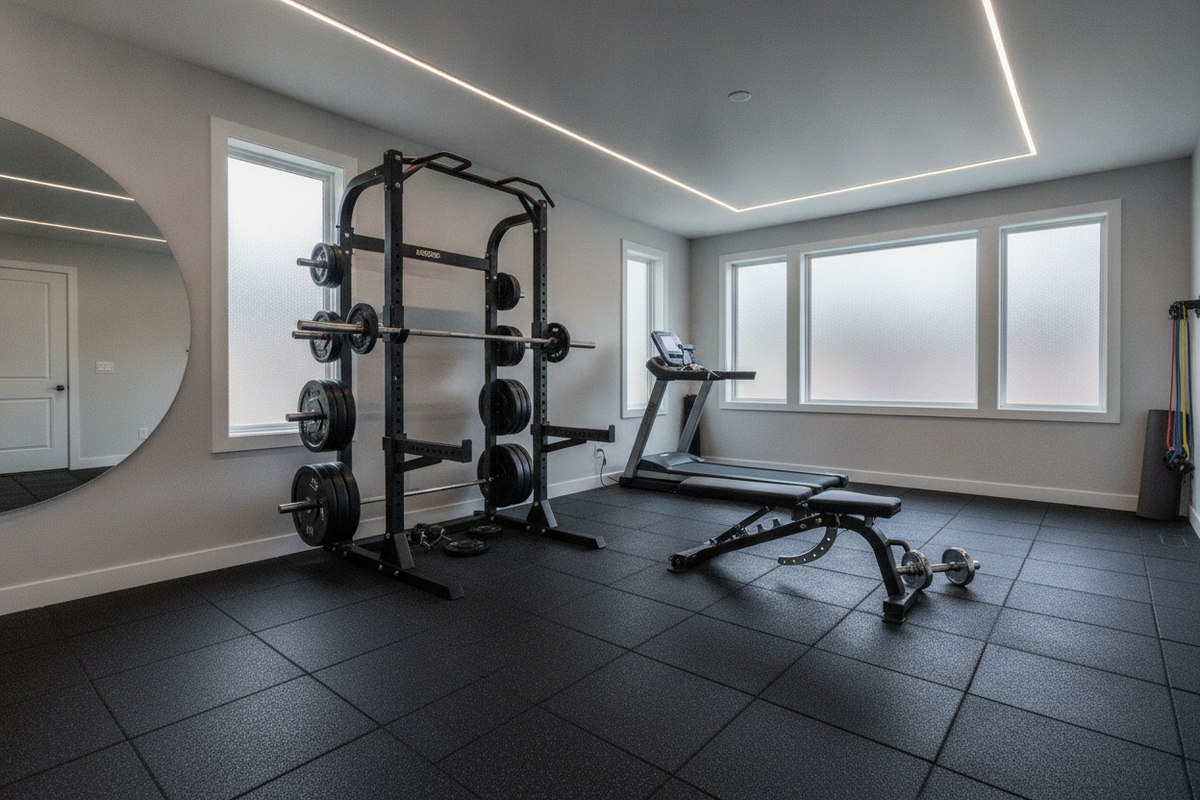
Training at home offers the flexibility to lift whenever your schedule permits, whether at dawn or late in the evening. However, training at off-peak hours introduces practical considerations around household noise, equipment stability, and floor protection.
Impact Absorption and Acoustic Dampening for Off-Peak Training
Early morning and late-night strength workouts require an environment that minimizes vibrations and sharp acoustic impacts. Dropping dumbbells, setting down heavy kettlebells, or racking barbells can send vibrations through residential flooring. Installing dense, high-density matting creates an effective acoustic barrier that dampens sound transfer and absorbs mechanical impact, allowing you to train without disturbing family members or neighbors.
Subfloor Protection and Stable Traction Under Heavy Loads
Heavy compound movements like squats, deadlifts, and overhead presses demand an unyielding, slip-resistant foundation. Standard household flooring, such as hardwood, tile, or laminate, can crack or deform under concentrated weight. Utilizing a dedicated, heavy-duty workout product provides firm traction for your footwear while shielding the underlying structural floor from heavy load distribution.
Equipment Layout and Station Organization
A well-organized home lifting layout streamlines workout execution, particularly when training on a tight morning schedule. Position primary lifting stations—such as power racks or heavy units from a strength collection—on reinforced, level flooring with clear clearance on all sides. Keep smaller resistance bands, collars, and specialty handles organized within a dedicated strength training collection area to eliminate time spent searching for gear during brief training windows.
Maintaining Your Training Surface for Long-Term Durability
A safe, reliable lifting space requires regular surface care. High-density mats exposed to daily chalk, sweat, and footwear friction should be maintained consistently:
- Routine Debris Removal: Sweep or vacuum lifting mats regularly to remove dust, chalk dust, and loose particles that reduce grip.
- Gentle Surface Cleaning: Wipe down matting periodically with mild soap and warm water to eliminate sweat buildup without degrading the material surface.
- Moisture Management: Ensure the subfloor beneath large mats remains dry, especially in basement or garage gym setups where temperature shifts can cause condensation.
By pairing a consistent daily lifting schedule with a well-staged, protective home gym environment, you create the optimal foundation for sustainable muscle building and strength progression over the long term.