
Best Rated Rowing Machines: A Buyer’s Guide to Real Performance
You have likely spent hours scrolling through retail sites, overwhelmed by the sheer volume of options, trying to distinguish between genuine quality and marketing fluff. Finding the best rated rowing machines isn't just about counting stars; it is about understanding how a machine handles the brutal physics of a 2k sprint or a steady-state marathon.
Many home gym owners make the mistake of buying based on aesthetics or silence alone, only to end up with a clothes rack that offers zero athletic progression. Let’s cut through the noise and look at what actually matters when investing in a rower.
Key Takeaways: What Defines the Best Rowers?
If you are looking for a quick summary of what separates elite machines from budget toys, here is what you need to know:
- Resistance Fidelity: The best machines offer consistent tension throughout the stroke (catch, drive, finish) without "dead spots."
- Monitor Accuracy: Data is king. A machine is only as good as its ability to track split times and watts accurately (e.g., the Concept2 PM5 standard).
- Build Quality: Look for steel legs and aluminum monorails rather than plastic housing that creaks under load.
- Connection Points: The handle chain/strap and the foot stretchers are high-wear areas; durability here is non-negotiable.
Analyzing the Mechanics: Resistance Types
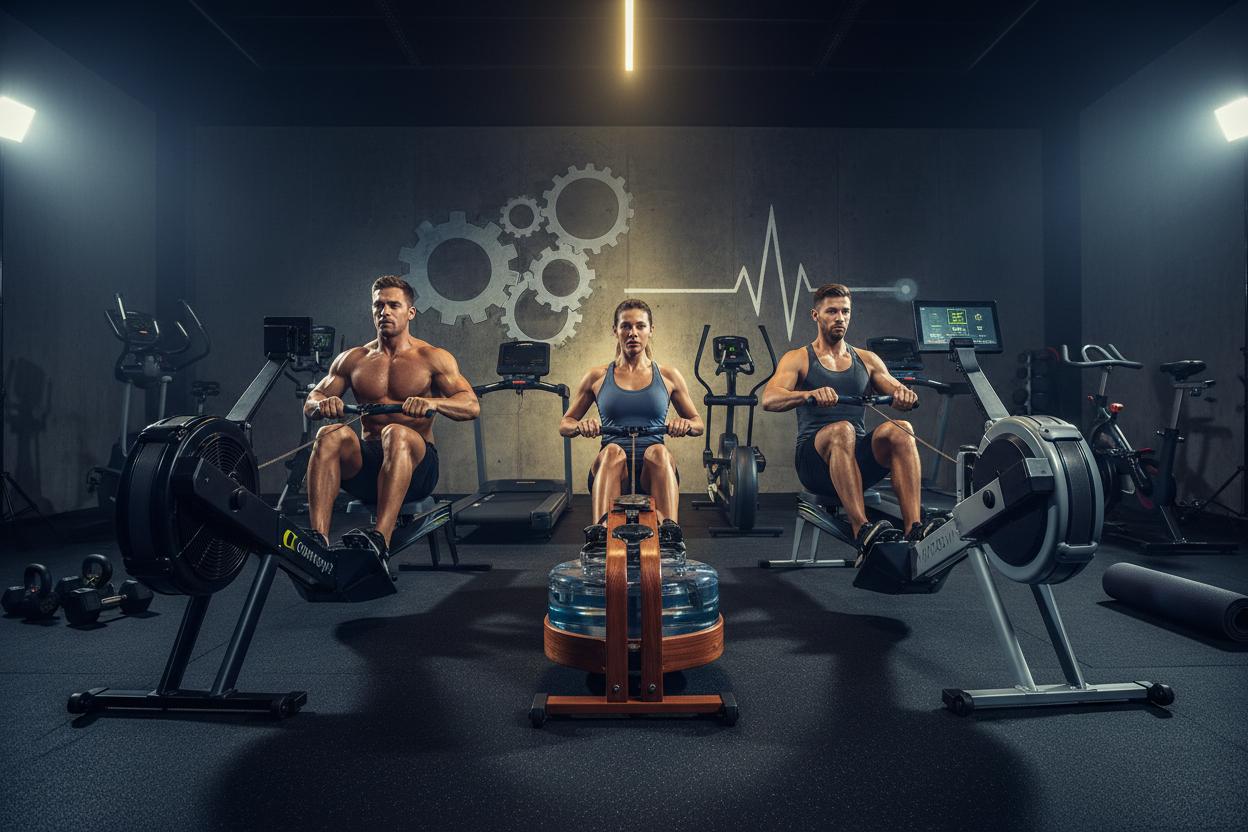
When you look at the best rowers on the market, you will notice they generally fall into three categories: Air, Water, and Magnetic. Understanding the difference is critical for your training goals.
The Air Rower Standard
Air rowers generate resistance via a fan flywheel. The harder you pull, the more wind resistance you create. This provides infinite scalability. It is why every CrossFit box and Olympic training center uses them. The downside? They are loud. But for pure athletic conditioning, they are unmatched.
Water vs. Magnetic
Water rowers provide a smooth, swooshing sound and a natural feel, as the resistance increases dynamically with your stroke speed. However, maintenance involves water purification tablets and potential tank leaks.
Magnetic rowers are the quietest option, using magnets to create drag. However, many best rowing machine review columns fail to mention that budget magnetic rowers often lack the "dynamic" feel. The resistance stays the same regardless of how hard you pull, which can limit explosive power development.
The Monitor: The Brain of the Operation
You cannot improve what you cannot measure. A common theme in best rower reviews is the frustration with cheap LCD screens that only track "calories" based on a generic algorithm rather than your actual work output.
If you care about performance, you need a monitor that measures Watts and 500m Split times accurately. This allows you to compare your times with rowers worldwide. If the machine doesn't have a reputable monitor, it is essentially a blind treadmill.
Durability and The "Creak" Factor
Stability is everything. When you are driving with your legs at 24 strokes per minute, you are generating significant force. Best rowing machine reviews often highlight that lighter machines (under 50 lbs) tend to "walk" across the floor during sprints.
Look for a machine with a heavy front end and a solid monorail. You want a seat that glides on industrial rollers, not plastic wheels that will grind down into dust after six months of use.
My Personal Experience with Best Rated Rowing Machines
I have spent years on various ergs, from high-end boathouse standards to budget basement finds. Here is the reality that spec sheets won't tell you.
There is a specific feeling you get on a cheap magnetic rower that drives me insane—it’s the "slack" at the catch. When you compress your legs and reach forward to take a stroke, the chain (or strap) should be tight and ready to bite instantly. On lower-tier "best rated" machines, I’ve often felt a split-second of nothingness before the resistance kicks in. It ruins the rhythm and jars the lower back.
Another detail is the handle texture. I recall testing a sleek, wooden water rower that looked beautiful in a living room, but the handle was perfectly smooth varnish. Ten minutes into a sweaty 5k, my grip was slipping everywhere. Compare that to the gritty, rubberized texture of a utilitarian air rower; it feels rough on the palms initially, but when you are in the pain cave at the 1500m mark, that grip is the only thing keeping you connected to the machine.
Conclusion
Selecting the right equipment comes down to your environment and your goals. If you want silence and aesthetics, a water or high-end magnetic rower works. If you want to compare yourself to athletes and track tangible progress, stick to the proven air resistance models. Don't just buy the hype; buy the machine that supports your physiology.
Frequently Asked Questions
What is the most reliable type of resistance for a home rower?
Air resistance is widely considered the most reliable and durable. Since it relies on air displacement rather than friction pads or brake pads, there are fewer parts to wear out over time. This is why air rowers are the standard in commercial gyms.
Are expensive rowing machines worth the investment?
Generally, yes. Higher-priced models (typically $900+) offer standardized monitors, replacement part availability, and higher resale value. Cheaper models often lack accurate tracking and use proprietary parts that are impossible to replace if they break.
How much space do I need for a full-sized rower?
Most full-sized rowers require a footprint of about 9 feet by 2 feet (approx. 275cm x 60cm) while in use. However, the best designs allow the machine to be stored upright or separated into two pieces, reducing the storage footprint to roughly 3 feet by 3 feet.


