Best Full.Body Exercises for Maximum Gains in Minimal Space
If you are juggling a busy schedule, a tight budget, and limited square footage, spending two hours a day on isolation exercises just isn't practical. The secret to maximizing your home gym investment and your gains lies in mastering the best full.body exercises. Whether you are training in a spacious garage or a cramped apartment corner, focusing on compound movements is the ultimate game-changer for efficiency.
In this guide, we will break down exactly which movements deliver the highest return on investment, how to program them, and what equipment you actually need to execute them safely.
Key Takeaways
- Compound movements recruit multiple muscle groups simultaneously, slashing your workout time in half.
- The most effective routines require minimal equipment—often just a barbell setup or heavy adjustable dumbbells.
- Training your entire body 2-3 times a week yields superior recovery and strength adaptations for home gym athletes.
- Proper space planning ensures you have the necessary clearance for overhead presses and barbell deadlifts.
Why Compound Lifts Dominate Home Gyms
Maximizing Your Equipment
When you design a home gym, versatility is your best friend. A single piece of high-quality equipment, like a power rack with a reliable barbell, unlocks dozens of movement patterns. Instead of buying single-use machines that gather dust and eat up floor space, investing in free weights allows you to perform lifts that challenge your nervous system and musculature simultaneously.
The Best Workouts for Whole Body Results
The foundation of the best workouts for whole body strength relies on fundamental human movement patterns: squat, hinge, push, pull, and carry. By selecting one exercise from each category per session, you guarantee complete muscular development without the need for a massive commercial facility.
Essential Movements for Your Setup
Squat and Hinge Variations
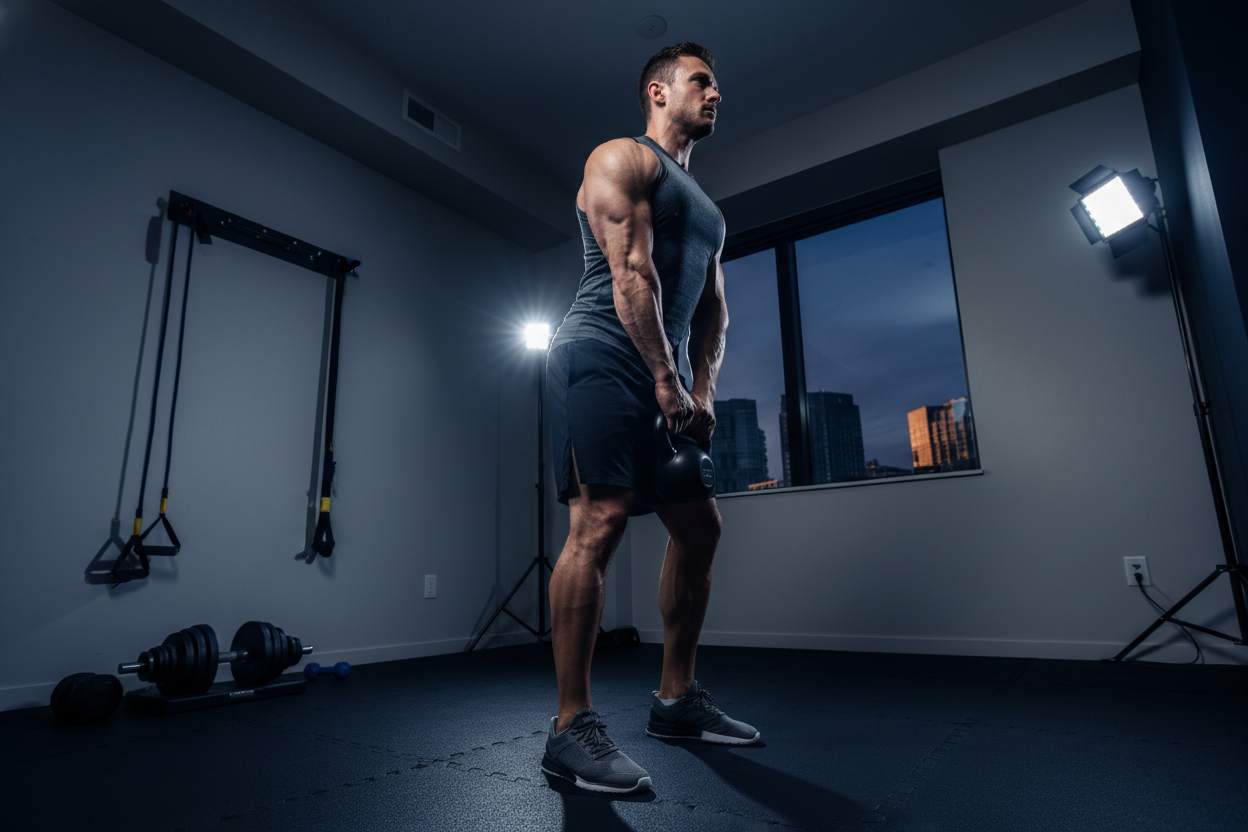
You cannot discuss comprehensive training without the barbell back squat and the Romanian deadlift (RDL). The squat acts as the cornerstone for lower body power and core stability. If you are working with limited ceiling height or lack a rack, the goblet squat using a heavy kettlebell or adjustable dumbbell is a phenomenal substitute. RDLs torch the posterior chain and require less weight than standard deadlifts, making them perfect for those with limited bumper plates.
Push and Pull Mechanics
For the upper body, the overhead press and the barbell row are non-negotiable. The overhead press demands immense core stabilization, while rows counteract the poor posture developed from sitting at a desk all day. If you have a pull-up bar attached to your squat stand, strict pull-ups are the ultimate bodyweight complement to your weighted pulls.
Space and Equipment Planning
Garage Gyms vs. Apartment Corners
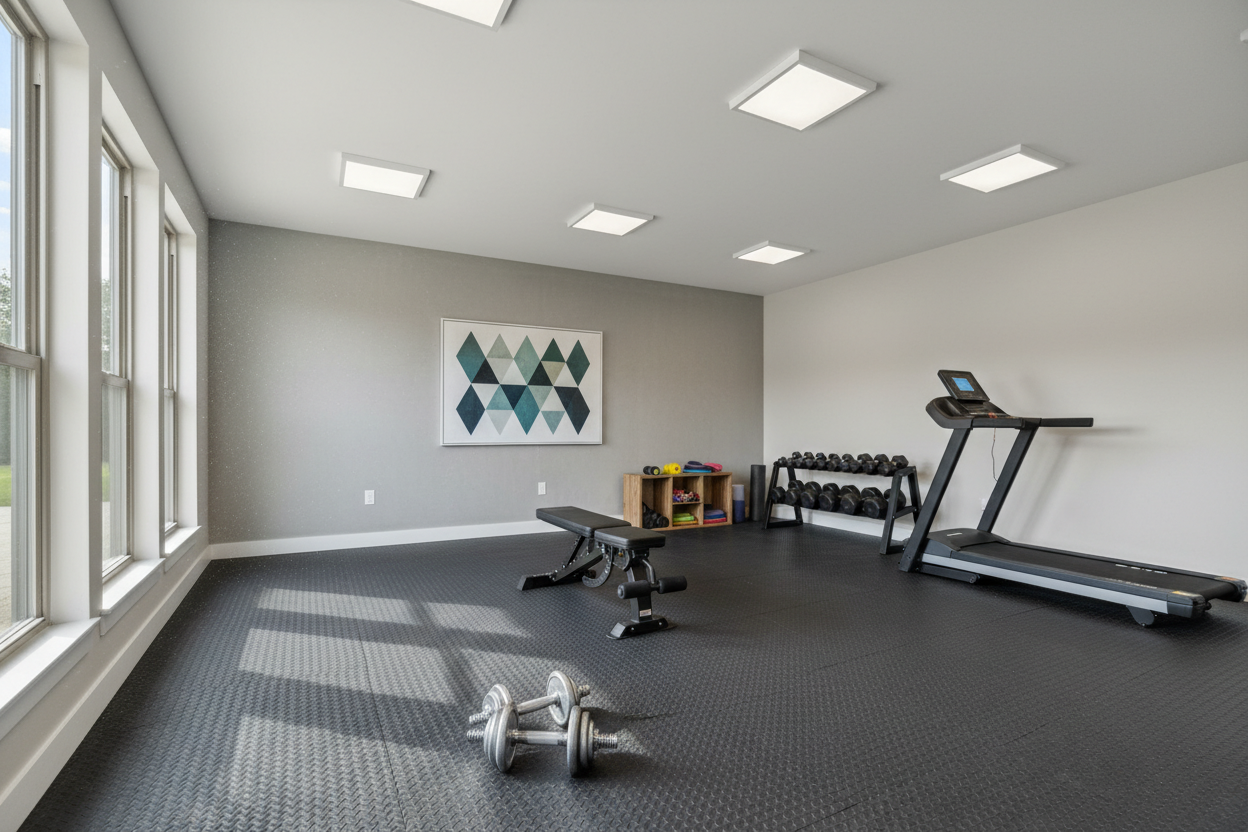
Your exercise selection must match your environment. A standard 7-foot Olympic barbell requires at least 10 feet of horizontal clearance to load plates comfortably. If you are in a basement or spare bedroom, you might need a 'shorty' barbell or a robust pair of adjustable dumbbells to perform these lifts safely without putting holes in your drywall.
From Our Gym: Honest Take
When I first built my basement gym, I made the classic mistake of trying to replicate a commercial gym split with a bulky cable machine and a leg extension attachment. It felt cramped, and my progress stalled. The turning point was stripping everything down to a simple flat bench, a half-rack, and a barbell.
Transitioning exclusively to compound lifts changed everything. However, I learned the hard way about ceiling height. At 6'1', my standard basement ceiling was too low for standing overhead presses with 45-pound bumper plates—they scraped the joists. I had to pivot to seated barbell presses or Z-presses. If you are setting up indoors, measure your overhead clearance before you buy full-sized plates, or stick to iron plates which have a smaller diameter.
Frequently Asked Questions
How often should I do full-body workouts?
For most home gym owners, 3 days a week on non-consecutive days (e.g., Monday, Wednesday, Friday) is the sweet spot. This allows for adequate central nervous system recovery while providing enough frequency to trigger muscle growth.
Do I need a power rack for these exercises?
While a power rack provides the highest level of safety for heavy squats and bench presses, it is not strictly mandatory. You can build incredible strength using heavy adjustable dumbbells, kettlebells, or a high-quality sandbag for your compound lifts.
Can I build muscle with just adjustable dumbbells?
Absolutely. Adjustable dumbbells are arguably the most space-efficient tool for comprehensive training. Exercises like Bulgarian split squats, dumbbell bench presses, and renegade rows provide more than enough stimulus for hypertrophy.