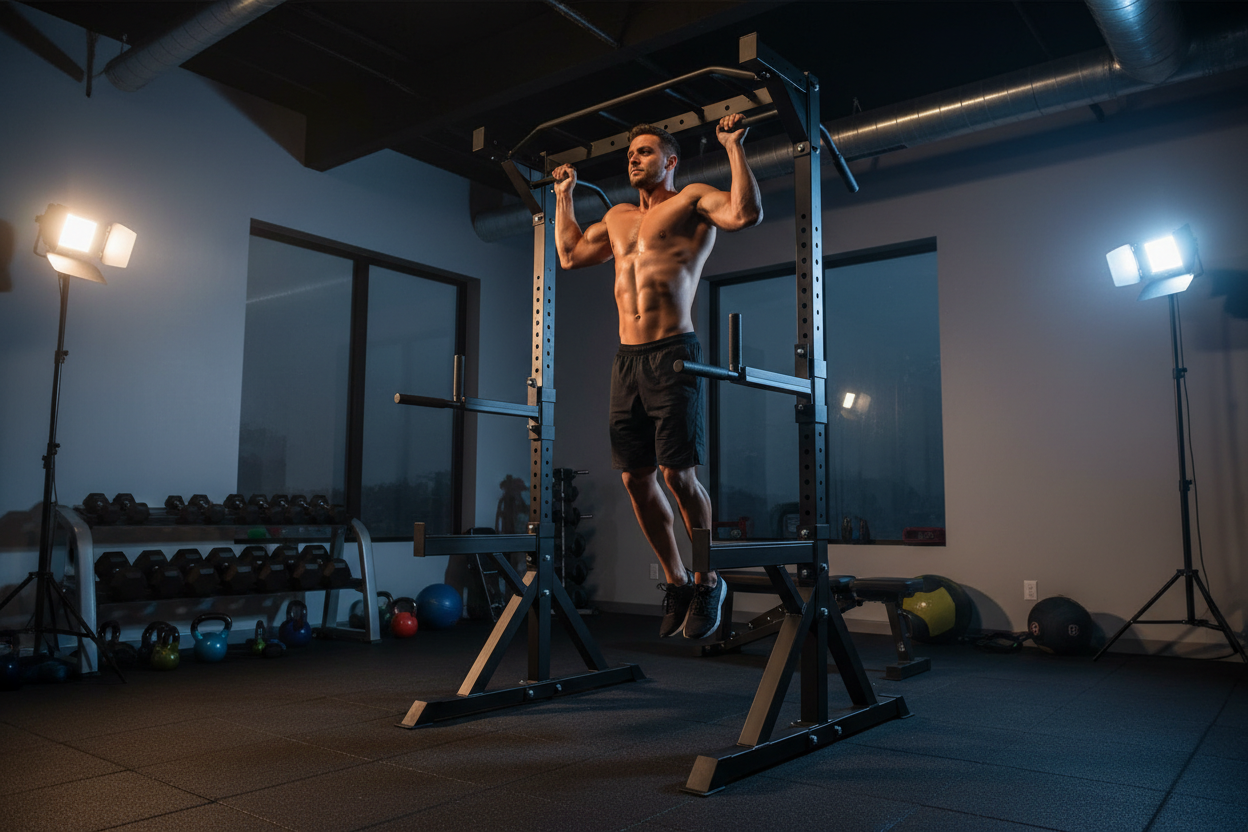
Best Free Standing Chin Up Bar: Is It Worth The Floor Space?
We have all been there: staring at a flimsy doorway pull-up bar, wondering if today is the day it finally rips the door trim off the wall. If you are serious about upper body strength but cannot drill into your garage studs or apartment walls, finding the best free standing chin up bar is the ultimate solution.
But not all towers are created equal. Some wobble the second you engage your lats, while others take up half a room. In this guide, we will break down exactly what to look for so you can build a massive back without sacrificing your safety or your floor plan.
Key Takeaways
- Stability is paramount: Look for a wide, H-shaped or U-shaped base to prevent tipping during explosive movements.
- Check your ceiling height: Most towers require at least 84 inches of clearance, plus room for your head above the bar.
- Weight capacity matters: A true heavy-duty unit should support a minimum of 300 lbs to safely accommodate weighted pull-ups.
- Versatility adds value: The best pull-up station will also include dip bars and push-up grips for a full upper-body workout.
What Makes the Best Pull-Up Station?
Base Design and Weight Capacity
When you are hanging suspended above the ground, trust is everything. The foundation of any reliable pull up rack for home use is its base. A wider footprint distributes weight more evenly, minimizing the dreaded side-to-side sway. Look for heavy-gauge steel construction and a weight capacity of at least 300 to 400 pounds. Even if you weigh 180 pounds, that extra capacity ensures the frame will not flex when you add a dipping belt with a 45-pound plate.
Height Adjustability and Grip Options
A premium setup should cater to your specific biomechanics. The best home pull up station usually features adjustable uprights, allowing you to set the bar height anywhere from 70 to 90 inches. Additionally, pay attention to the grips. You want a multi-grip bar that supports wide-grip pronated, close-grip supinated, and neutral grips to target different areas of your back and biceps.
Fitting a Pull Up Rack For Home Gyms
Maximizing Limited Square Footage
Space is the biggest hurdle for most home gym owners. If you are working with a tight basement or a shared garage, a compact pull up station is your best bet. These units typically require a footprint of about 40 by 50 inches. However, you must factor in vertical clearance. Always measure your ceiling height and leave at least 15 to 20 inches of space above the maximum bar height so you do not smash your head at the apex of your rep.
Multi-Functional Footprints
If you are giving up precious floor space for the best pull up bar station, it needs to earn its keep. Many modern towers integrate dip stations, vertical knee raise (VKR) pads, and lower push-up handles. This transforms a single-purpose footprint into a complete calisthenics hub.
From Our Gym: Honest Take
We have tested dozens of towers over the years, and I can tell you firsthand that the biggest lie in home gym equipment is the 'wobble-free' guarantee. Last month, I set up what claimed to be the best pull up bar stand on the market in my own garage gym. At 210 pounds, I found that strict, dead-hang pull-ups were buttery smooth. The knurling on the multi-grip bar was aggressive enough to hold chalk without tearing my calluses.
However, the moment I tried to incorporate aggressive kipping or muscle-ups, the back legs started to lift slightly. The reality? Even the best pull up rack will have a slight sway under dynamic, explosive loads unless you weigh the base down with heavy sandbags. If you are a strict calisthenics athlete doing controlled reps, a free-standing unit is perfect. If you are practicing high-velocity CrossFit movements, you might need to reconsider your setup and look into wall-mounted rigs.
Frequently Asked Questions
How much space do I need for the best pull up stand?
Plan for a floor footprint of at least 4 feet by 4 feet to allow for body sway and comfortable mounting. Vertically, you need your ceiling height to be at least 1.5 to 2 feet taller than the bar's maximum height setting.
Are free-standing pull-up bars actually stable?
Yes, provided you buy a quality unit with a wide base and heavy-gauge steel. They are incredibly stable for strict movements like standard pull-ups, chin-ups, and dips. However, they are generally not recommended for swinging exercises like kipping pull-ups.
Can I keep my pull-up tower outside?
Unless the unit is specifically galvanized or coated with UV-resistant, outdoor-grade powder coating, it is best kept indoors. Humidity, rain, and morning dew will quickly rust standard indoor fitness equipment, compromising the structural integrity of the steel.