Best Exercises for Thighs and Buttocks: Movement Biomechanics, Balanced Routines, and Home Floor Staging
Developing strength, shape, and balance across the lower body requires an understanding of how the quadriceps, hamstrings, and gluteal musculature interact. Rather than viewing lower-body training as isolated leg movements, organizing your training around functional movement patterns creates balanced muscular stimulation while supporting joint longevity.
Anatomical Foundations: Understanding the Thigh and Gluteal Kinetic Chain
The lower body functions through interconnected muscle groups that control hip extension, knee flexion, knee extension, and pelvic stability. Selecting the best exercises for thighs and buttocks begins with understanding these key anatomical components:
- Quadriceps (Anterior Thigh): Composed of the rectus femoris, vastus lateralis, vastus medialis, and vastus intermedius, these muscles primary extend the knee and assist in hip flexion during squatting and lunging motions.
- Gluteus Maximus, Medius, and Minimus: The gluteus maximus provides powerful hip extension, while the gluteus medius and minimus stabilize the pelvis during single-leg actions and drive hip abduction.
- Hamstrings (Posterior Thigh): The biceps femoris, semitendinosus, and semimembranosus decelerate knee extension, bend the knee, and assist the glutes in extending the hip.
- Adductors (Inner Thigh): These muscles stabilize the femur and pelvis across multi-planar lunges, wide squats, and dynamic stepping patterns.
The Best Exercises for Thighs and Buttocks by Movement Pattern
A comprehensive lower-body program relies on multiple movement categories rather than repeating single exercises. Incorporating compound patterns ensures all regions of the thighs, hips, and bum receive adequate training stimuli. Trainees seeking deeper programming principles can consult our exercise buttocks thighs guide for structured progression models.
Squat Variations for Quadriceps and Gluteal Depth
Squats form the cornerstone of knee-dominant training, placing tension across the quads while engaging the glutes through deep hip flexion. Goblet squats and wide-stance sumo squats allow trainees to adjust their torso angle and stance width to emphasize either the anterior quads or the inner thighs and glutes. Maintaining consistent foot contact across the tripod of the foot ensures smooth force transfer throughout the movement.
Hip Hinges: Dedicated Exercise for Back of Thighs and Bum
When looking for an effective exercise for back of thighs and bum, hip hinge variations are essential. Romanian deadlifts (RDLs) and good mornings load the hamstrings and glutes through an active eccentric stretch while minimizing direct knee shear. Keeping the spine neutral and pushing the pelvis backward directs mechanical tension directly into the posterior chain.
Unilateral Lunges and Step-Ups for Gluteal Engagement and Symmetry
Unilateral training helps correct strength discrepancies between legs while placing significant demand on the gluteus medius for hip stability. Bulgarian split squats, reverse lunges, and lateral step-ups provide targeted stimulus to the hips, thighs, and bum. Elevating the rear foot or stepping backward reduces forward knee travel, shifting greater load to the gluteus maximus.
Horizontal Thrusts and Bridges for Peak Contraction
While squats and hinges load the glutes in a lengthened position, hip thrusts and glute bridges create peak tension at full hip extension. Performing barbell hip thrusts or single-leg elevated bridges creates high gluteal activation without excessive spinal loading.
Structuring an Effective Bum and Thigh Workout at Home
Executing a bum and thigh workout at home requires balancing volume, intensity, and recovery across the training week. To build exercises to tone thighs and bum into a cohesive weekly routine, consider an alternating split that distributes knee-dominant and hip-dominant work:
- Session A (Squat & Bridge Focus): Goblet squats, Romanian deadlifts, floor hip thrusts, and lateral band walks.
- Session B (Unilateral & Hinge Focus): Bulgarian split squats, single-leg deadlifts, walking lunges, and elevated glute bridges.
For individuals looking to integrate core conditioning into lower-body training, exploring our tone bum thigh guide offers complementary circuit ideas.
Home Gym Floor Staging: Stability, Knee Protection, and Joint Cushioning
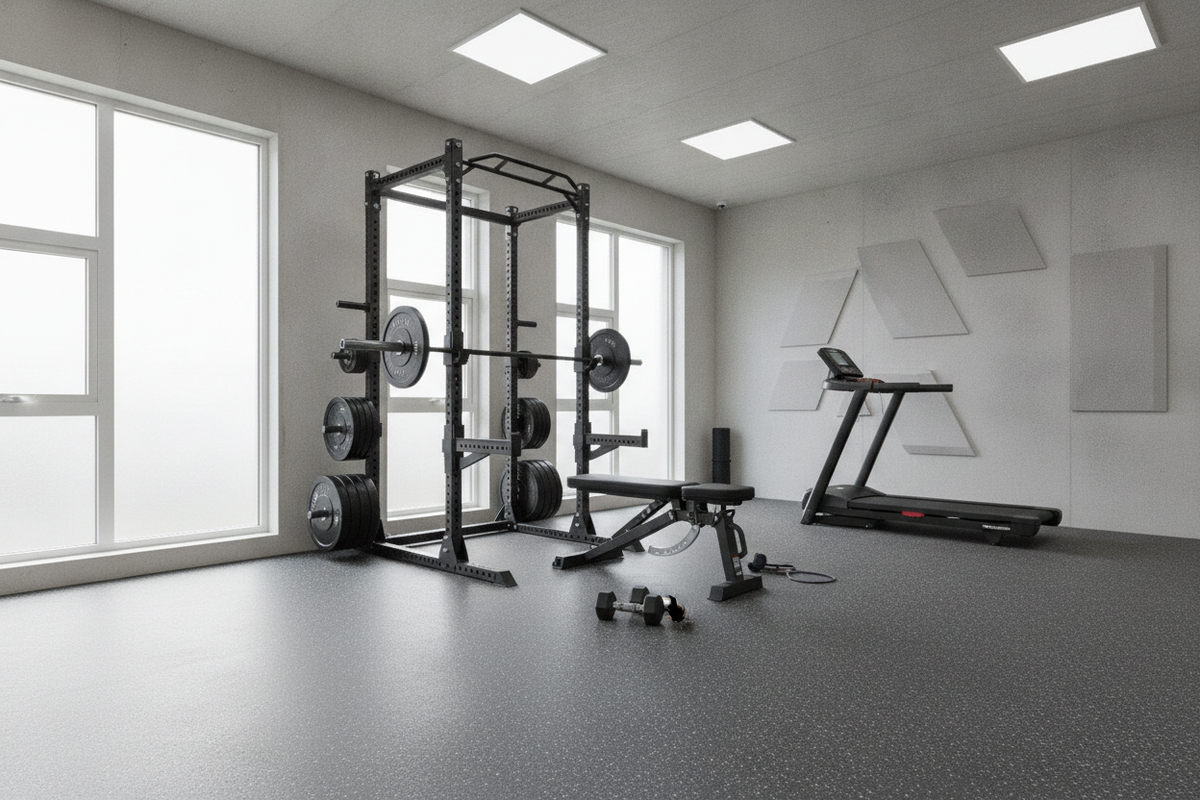
Effective lower-body training at home demands a dedicated surface that provides non-slip footing and joint protection. High-density workout flooring prevents footwear from sliding during heavy lunges, wide squats, and explosive step patterns. In our experience, setting up a stable floor foundation is essential for maintaining proper joint alignment throughout demanding lower-body sessions.
Explore our dedicated exercise collection to find dense, impact-absorbing flooring options suitable for free-weight training. Placing an expansive exercise workout product under your workout zone cushions the knees during kneeling hip extensions and protects home subfloors from dumbbell contact.
Technique Refinements and Common Execution Pitfalls
To maximize training effectiveness and maintain joint comfort, keep these essential technical cues in mind during lower-body workouts:
- Avoid Knee Valgus: Ensure knees track in line with the second and third toes during squats and lunges rather than collapsing inward.
- Maintain Pelvic Control: Prevent excessive anterior or posterior pelvic tilt during deep hinges and hip thrusts.
- Control the Eccentric Phase: Lower weights with deliberate tempo to keep tension focused on the target muscle groups rather than relying on momentum.