Best Exercise for Overall Strength: Kinetic Chain Frameworks, Movement Hierarchies, and Home Floor Staging
The Anatomy of Overall Strength: Foundational Kinetic Chain Criteria
True overall strength is more than isolated muscular development; it represents the neuromuscular system's ability to produce, transfer, and stabilize force across the entire kinetic chain. When searching for the single best exercise for overall strength, the primary criterion rests on systemic involvement. A movement must demand coordinated muscular action from the feet on the floor up through the hands, engaging multiple joints simultaneously while resisting unwanted rotation or spinal flexion.
Axial Loading and Core Rigidity
Compound exercises that place an axial load—direct or indirect vertical compression through the skeletal structure—stimulate profound systemic adaptations. Managing this load requires an unyielding core cylinder: deep spinal stabilizers, the rectus abdominis, obliques, and the pelvic floor working together in intra-abdominal pressurization. Without robust core rigidity, force generated by the primary movers dissipates before it can move the external load, making trunk stability a key component of total-body capacity.
Kinetic Chain Connectivity from Ground to Extremities
Grounded strength movements require force to travel seamlessly through joint linkages. When executing heavy multi-joint lifts, power initiated by hip and leg drive must travel through the pelvis, spine, shoulder girdle, and arms. If any link in that chain fails to maintain integrity, lifting efficiency drops. Selecting the best overall strength exercises means prioritizing lifts that integrate these segments into a unified, high-output movement pattern.
The Prime Contender: Why the Deadlift Reigns for Total-Body Output
Among all barbell movements, the conventional deadlift is widely regarded as the ultimate single exercise for total-body strength. By requiring an athlete to pull a stationary load from a complete dead stop, the deadlift eliminates the stretch-shortening cycle, requiring pure starting strength and instant neuromuscular recruitment.
Posterior Chain Dominance and Structural Extension
The deadlift targets the posterior chain—the hamstrings, gluteal complex, adductors, and the entire erector spinae musculature. These muscle groups function as the primary engine for human locomotion, hip extension, and structural resilience. To optimize foundational hip mechanics and maintain symmetrical stability during heavy hinge pulls, reviewing an exercise strength guide on pelvic stabilization can help identify subtle compensations before adding heavy loads.
Torso Rigidity and Upper Body Isometric Demands
While the lower body drives the hip hinge, the upper body undergoes intense isometric tension during a deadlift. The latissimus dorsi, trapezius, rhomboids, and forearm flexors must contract forcefully to keep the bar path close to the body and prevent spinal rounding. This simultaneous demand on lower-body dynamic power and upper-body isometric stability makes the deadlift an unmatched tool for developing comprehensive, real-world pulling strength.
The Foundational Tier: Essential Supporting Compound Movements
While the deadlift stands at the pinnacle of posterior recruitment, a complete strength profile requires balanced structural development across complementary movement planes. Relying solely on a single lift can leave gaps in anterior knee extension, horizontal pressing, and vertical overhead mechanics.
The Squat Pattern: Knee Extensor and Pelvic Foundation
The barbell back squat serves as the premier counterpart to the deadlift. By requiring deeper knee flexion and upright trunk mechanics, the squat places significant dynamic demand on the quadriceps while challenging hip adduction and core stabilization. Balancing deep knee flexion patterns with hip-dominant hinge mechanics builds balanced lower-body force output.
The Overhead Press and Pull-Up: True Upper-Body Grounded Force Transfer
To complement lower-body compounds, the standing overhead press demands full-body stabilization from the ground up, requiring active glute, core, and shoulder girdle recruitment. Pairing overhead pressing with pull-ups and horizontal pressing ensures total torso balance. For a detailed breakdown of pressing mechanics and anterior upper-body development, check out our companion exercise strength guide for balanced upper-body programming.
Programming Architecture for Maximum Strength Adaptations
Building meaningful strength requires structured programming that manages central nervous system fatigue and allows adequate structural recovery. Heavy compound movements place high demands on joint capsules and connective tissues, requiring strategic volume and intensity management.
Full-Body vs. Upper-Lower Split Architectures
For most home gym lifters, structuring training around either a three-day full-body routine or a four-day upper-lower split yields consistent progress. Full-body routines allow each primary movement pattern—hinge, squat, press, and pull—to be trained frequently with moderate daily volume, whereas upper-lower splits allow higher localized volume per session with longer recovery windows between similar movement demands.
Managing Volume, Intensity, and Recovery Vectors
Progressive overload remains the fundamental driver of strength adaptation. Gradually increasing load, improving movement velocity at a given weight, or adding high-quality sets over time drives neuromuscular efficiency. However, training to absolute mechanical failure on heavy axial lifts is generally counterproductive, as technique breakdown increases joint strain and lengthens systemic recovery times.
Home Gym Floor Staging: Subfloor Protection and Lifting Stability
Executing high-load compound lifts in a home training environment introduces practical considerations regarding floor protection, equipment stability, and safety. Setting heavy barbells down—even under controlled eccentric tempos—transfers concentrated kinetic energy directly into the foundation below.
Underfoot Firmness vs. Impact Dissipation
Lifting heavy weights requires a firm, non-compressible surface underfoot to ensure maximum force transfer and joint alignment. Soft, spongy mats deform under heavy axial loads, compromising ankle stability and reducing lifting efficiency. A dedicated lifting surface must offer dense, high-traction material that resists compression while absorbing mechanical shock. Exploring a reliable exercise collection helps lifters select mats designed specifically for firm footing and heavy home gym equipment setups.
Zoning Heavy Equipment and Mat Selection for High-Load Training
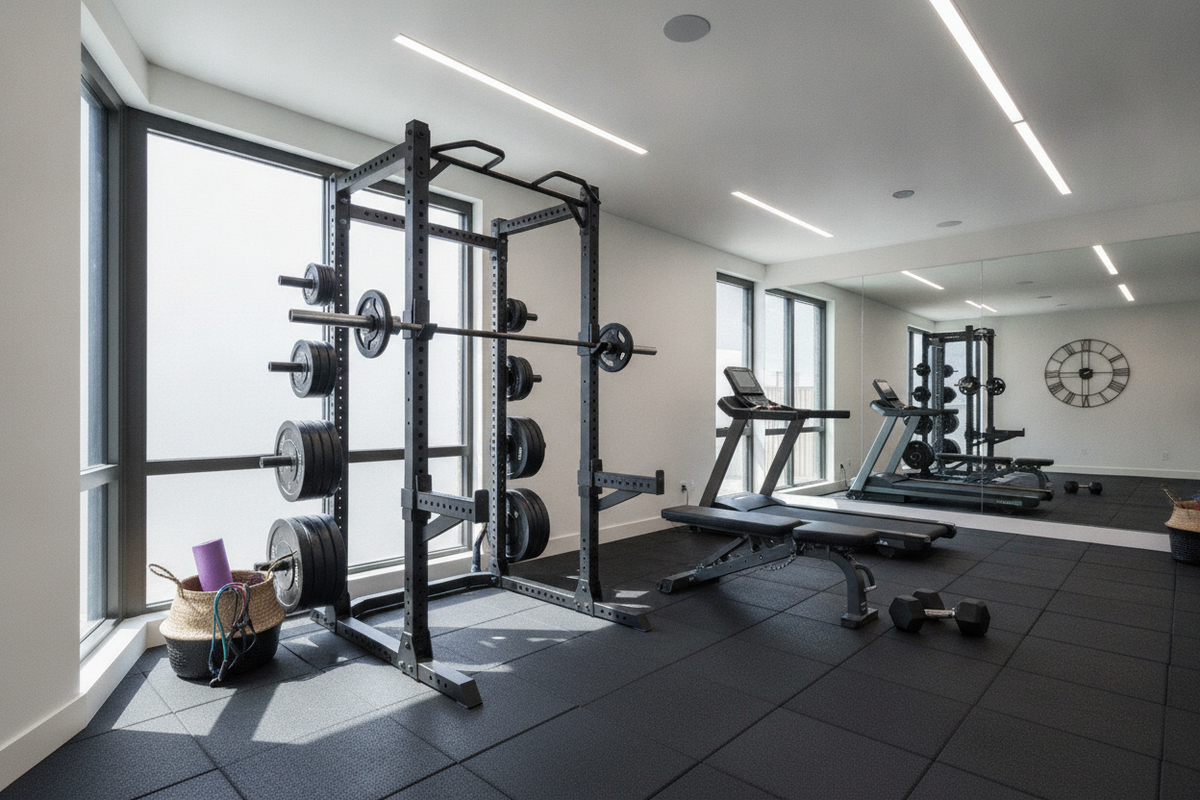
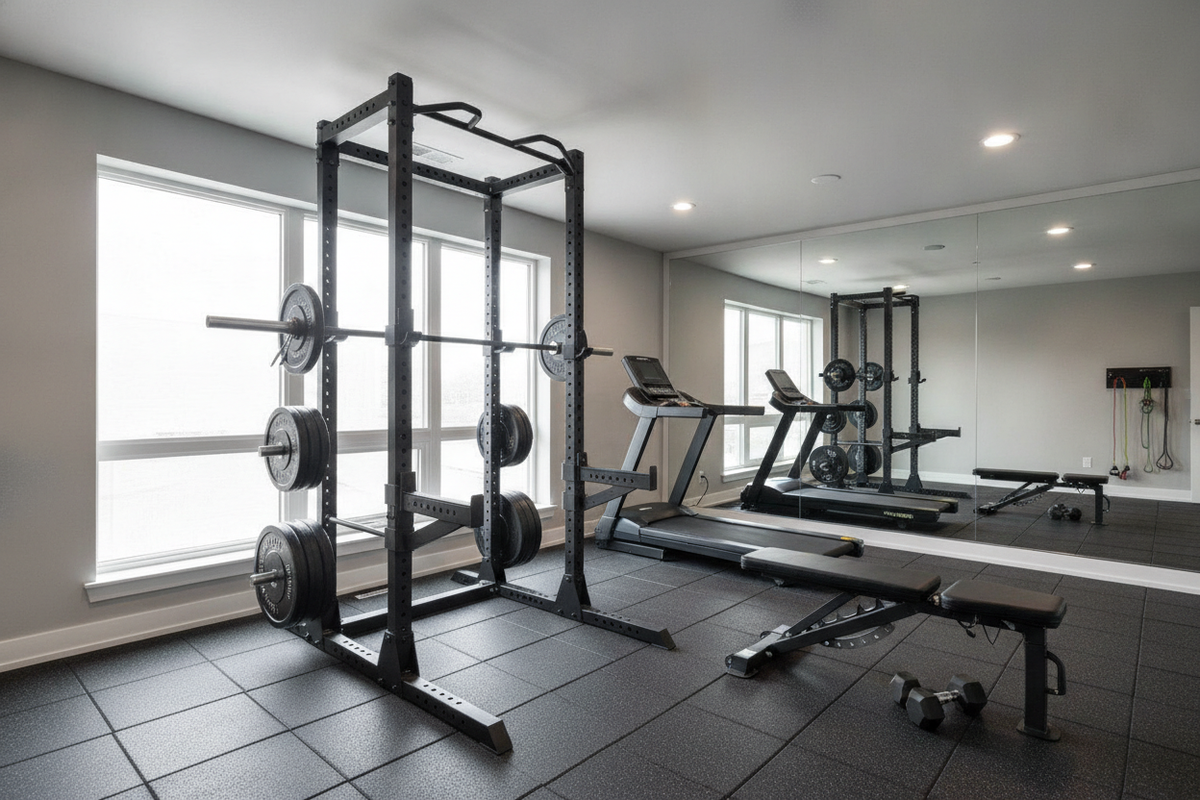
When organizing a home strength space, staging wide-coverage protective flooring preserves concrete and hardwood subfloors against point-load fractures from weight plates and iron dumbbells. For larger training areas that accommodate power racks, barbells, and dynamic warm-ups, utilizing a dedicated exercise collection provides broad subfloor coverage and seamless room layout.
For heavy deadlift and squat zones where point-load impacts are concentrated, choosing a specialized exercise product provides the durable footprint needed to secure racks, catch barbell plates, and maintain a quiet, stable lifting environment.
Summary: Building Lasting Systemic Strength at Home
Developing systemic strength requires focusing on multi-joint compound exercises that demand coordinated full-body output. While the deadlift stands out as the single best exercise for overall strength due to its massive posterior chain recruitment and axial stabilization demands, pairing it with squats, overhead presses, and pulls creates a complete strength foundation. By pairing sensible progressive programming with a stable, high-density home floor setup, lifters can build dependable, full-body power safely and consistently.