Best Exercise for Lower Glutes: Lengthened-State Mechanics, Routine Design, and Home Floor Staging
Targeting the inferior region of the gluteus maximus—often called the lower glute or glute-ham tie-in area—requires an understanding of joint angles, mechanical tension, and stability. While the gluteus maximus functions as a unified muscular unit, its lower anatomical fibers align along specific line-of-pull angles that experience peak recruitment during deep hip flexion. Selecting the best exercise for lower glutes involves prioritizing movements that load the hips under a deep stretch while providing a stable training base.
Understanding Lower Glute Biomechanics: Anatomy and Movement Vectors
The gluteus maximus originates along the posterior iliac crest, sacrum, and coccyx, inserting into both the iliotibial tract and the gluteal tuberosity of the femur. The inferior or lower fibers originate closer to the sacrum and coccyx, inserting directly onto the femur. Because of this anatomical orientation, these lower fibers act primarily as powerful hip extensors from positions of deep hip flexion.
When the hip bends beyond ninety degrees of flexion—such as at the bottom of a deep lunge, split squat, or Romanian deadlift—the lower gluteal fibers are placed in a lengthened state. Mechanical tension applied at long muscle lengths provides a strong stimulus for hypertrophy. To maximize this mechanical advantage, lifters benefit from reviewing targeted under-glute training principles that emphasize controlling the eccentric descent and establishing full depth without losing pelvic alignment.
Top Movement Blueprints: The Best Exercise Candidates for Lower Glutes
Determining the single most effective lower glute movement often depends on an individual's biomechanics, mobility, and balance. However, movements that emphasize extreme hip flexion while maintaining forward torso inclination consistently rank among the most effective options.
Unilateral vs. Bilateral Loading for Lower Buttock Development
Unilateral exercises offer distinct advantages for the lower glutes by allowing greater active range of motion at the hip joint while reducing spinal compression. Key unilateral movements include:
- Bulgarian Split Squats: By elevating the rear foot and allowing the torso to lean forward at roughly a forty-five-degree angle, the working hip achieves deep flexion. Pushing through the front midfoot and heel keeps continuous tension on the lower glute fiber line.
- Deficit Reverse Lunges: Stepping backward off an elevated platform increases the working hip's range of motion, stretching the inferior glute fibers further at the bottom position before driving back upward.
- Single-Leg Romanian Deadlifts (RDLs): Hinged single-leg patterns challenge hip stability and isolate the posterior hip capsule, placing intense stretch-mediated tension on the glute-ham boundary.
Compound Squat and Hinge Variations for Maximum Stretch Tension
Bilateral compound movements allow for greater absolute loading, which complements the focused stretch of unilateral work:
- Deep Barbell and Dumbbell Squats: Squatting below parallel with an intentional forward torso angle shifts emphasis toward hip extension rather than pure quadriceps drive, recruiting the lower gluteus maximus at the turnover point.
- Stiff-Leg Romanian Deadlifts: Maintaining a high hip position with soft knee bend forces the pelvis into deep anterior rotation relative to the femur, creating substantial tension across the lower glute and upper hamstring complex.
- Cable and Dumbbell Step-Ups: Utilizing a box height that positions the thigh slightly above parallel forces the lower glute to initiate extension from a deeply lengthened posture.
Designing a Balanced Lower Glute Training Routine
An effective program balances heavy lengthened-position loading with adequate recovery, pairing primary compound lifts with targeted unilateral accessories. Combining these exercises with comprehensive glute workout strategies ensures that both the upper shelf and lower tie-in regions develop harmoniously.
Weekly Frequency and Volume Guidelines
Structuring training across two dedicated lower-body sessions per week generally yields steady progression while allowing connective tissue to adapt:
- Primary Session (Heavy Lengthened Focus): Begin with a foundational compound movement such as deep squats or Romanian deadlifts, followed by loaded Bulgarian split squats and high-box step-ups.
- Secondary Session (Hypertrophy and Unilateral Focus): Incorporate deficit reverse lunges, single-leg RDLs, and lighter tempo-focused hip extension variations.
- Set and Rep Allocation: Performing three to four working sets per exercise within a moderate repetition range allows for controlled tempos, deliberate pauses in the lengthened position, and progressive resistance over time.
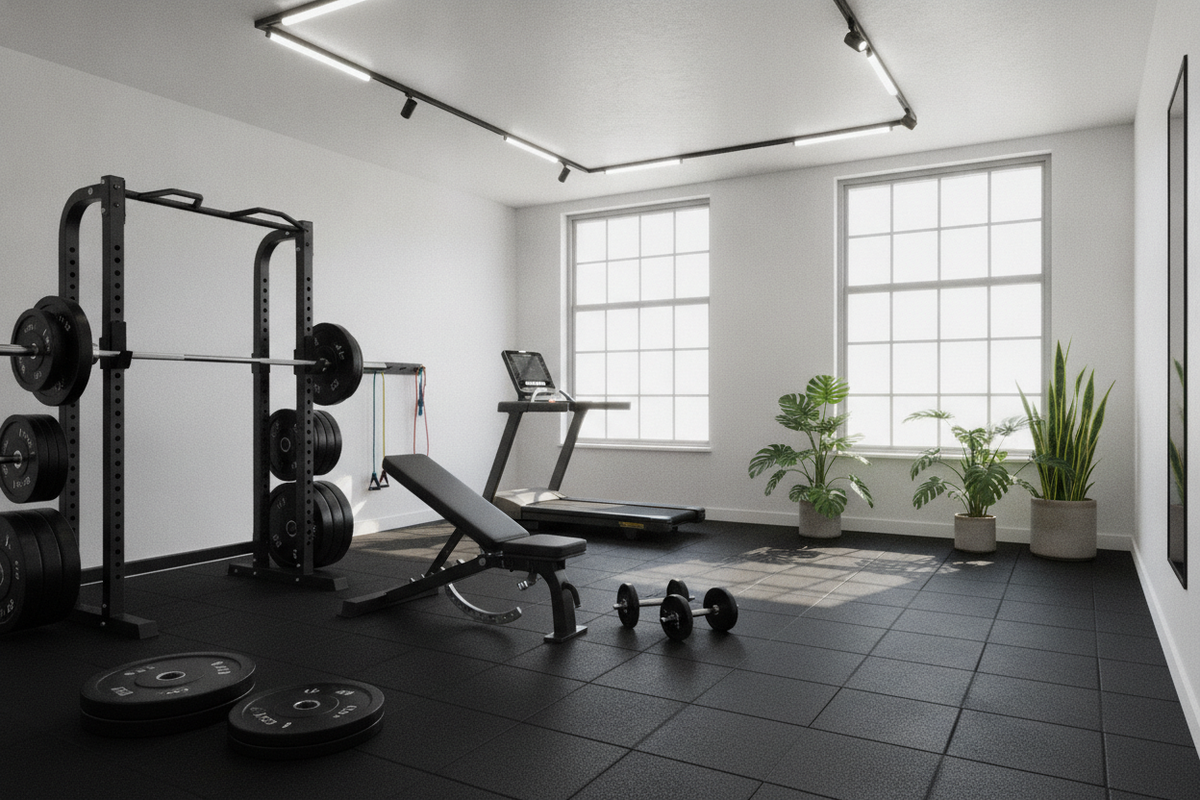
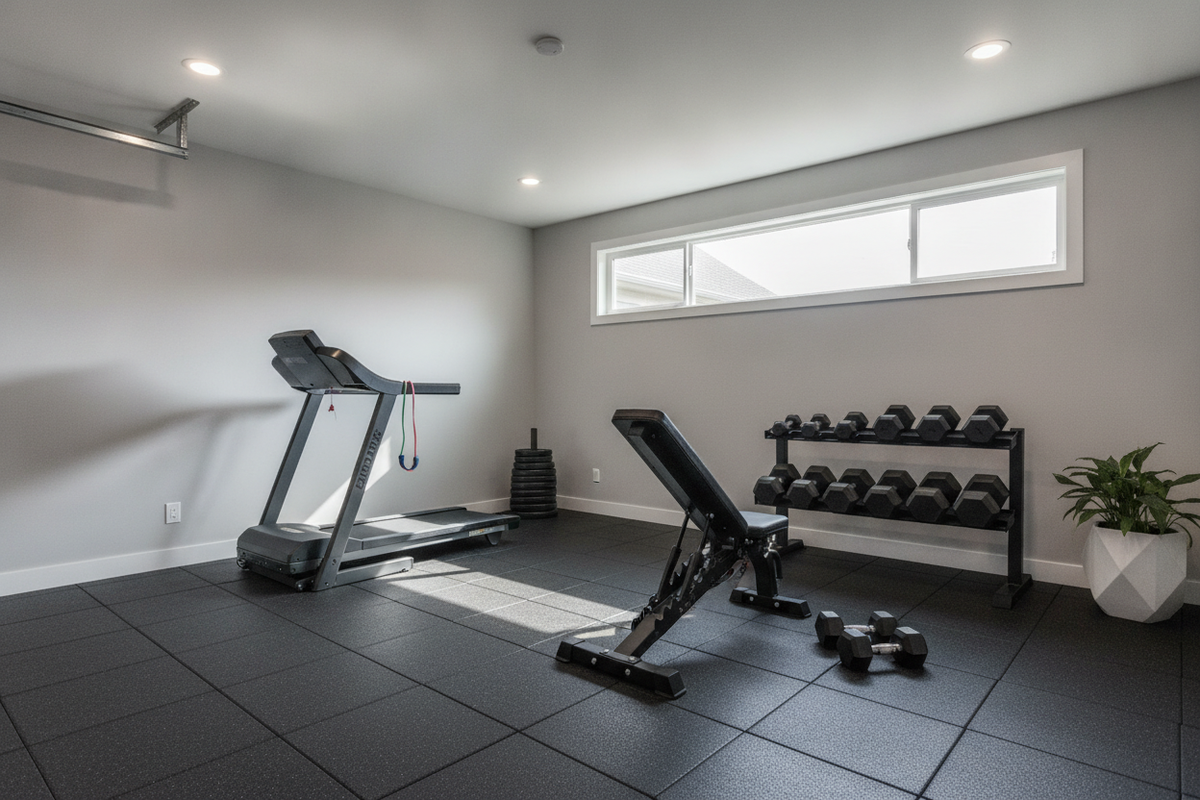
Home Gym Staging: Flooring Stability, Traction, and Subfloor Protection
Executing demanding lower glute exercises requires an uncompromising, stable foundation. Dynamic lunges, deep split squats, and heavy deadlifts place substantial point loads onto residential subfloors while demanding reliable grip from footwear.
Investing in resilient exercise mats helps establish a firm surface that prevents foot slippage during deep lunges. A textured, non-skid surface allows lifters to drive through the heel and lateral foot without fear of mat shifting, ensuring optimal force transfer into the hip extensors.
For lifters performing dynamic lunges or multi-station supersets, large exercise mat setups offer seamless floor coverage. Expansive surface areas protect hardwood, tile, or concrete subfloors from heavy dumbbell rests and dropped kettlebells, all while absorbing mechanical vibration throughout strenuous workouts.
Equipment Layout and Mat Maintenance for Dedicated Glute Workouts
Creating a functional training station requires careful spatial planning:
- Bench and Box Positioning: Place flat benches or plyometric boxes directly atop your protective matting to ensure they do not slide backward during heavy split squats.
- Weight Staging: Position adjustable dumbbells and weight plates near your lifting perimeter, keeping the primary exercise corridor clear for uninhibited movement paths.
- Surface Maintenance: Regularly wipe down high-density workout mats with mild detergent to remove sweat and dust, preserving the surface traction required for heavy single-leg stability.
For dedicated home strength stations, setting up a spacious home gym flooring mat delivers the structural density and dimensional footprint necessary to accommodate heavy benches, free weights, and dynamic lower-body movements within a single unified workout zone.