Best Exercise for Legs and Buttocks: Movement Vectors, Routine Architecture, and Home Gym Floor Staging
Biomechanical Foundations of Lower-Body Training
Developing functional strength, muscular balance, and structural definition across the lower body requires an understanding of how major muscle groups coordinate during compound movement patterns. The quadriceps, hamstrings, and gluteal complex do not operate in isolation. Instead, they function as an integrated kinetic chain during knee flexion, knee extension, hip flexion, and hip extension. When seeking the best exercise for legs and buttocks, prioritizing movements that distribute load across multiple joints delivers balanced muscular recruitment and joint stability.
Lower-body movements fall along distinct force vectors: axial loading, anteroposterior hip hinging, and unilateral stabilization. Axial patterns, such as squats, place compressive downward forces through the hips and knees, challenging the quadriceps and gluteus maximus through a deep range of flexion. Anteroposterior movements, such as hip thrusts and deadlifts, emphasize horizontal and diagonal hip extension, shifting demand toward the posterior chain. Consulting a dedicated exercise legs buttocks guide can offer deeper perspective on muscle recruitment mechanics across varied resistance setups.
Relying on a single exercise rarely develops both the anterior and posterior compartments equally. A comprehensive regimen pairs knee-dominant squats with hip-dominant hinges and split-stance stabilization to build full lower-body symmetry.
Top Compound Movements for Legs and Glutes
Compound exercises recruit substantial muscle mass, stimulating neuromuscular adaptation and strength development. Understanding the mechanical advantages of each core lift allows home athletes to tailor their routines effectively:
- Squat Variations: Goblet squats, front squats, and barbell back squats demand simultaneous knee and hip extension. Deep squatting places the gluteus maximus under high tension at the bottom of the movement while placing significant demand on the quadriceps during ascent. Maintaining an upright torso, grounded heels, and tracking knees over toes ensures balanced load distribution.
- Romanian Deadlifts (RDLs): Hinges focus on horizontal hip displacement while keeping knee flexion minimal. This movement loads the hamstrings and glutes through an extended stretch, developing the posterior chain without excessive shear forces on the knee joint.
- Barbell and Banded Hip Thrusts: By positioning the torso horizontally against a bench, hip thrusts generate peak tension at full hip extension when the gluteal muscles are shortened. This eliminates the spinal loading of standing lifts while maximizing targeted glute engagement.
For detailed form cues and progressive variations, review exercise legs buttocks guide to refine lifting technique and avoid compensatory lower-back strain.
Unilateral and Dynamic Patterns for Balance and Tone
While bilateral lifts build foundational capacity, unilateral exercises are essential for identifying strength discrepancies between limbs, enhancing pelvic stability, and activating the gluteus medius and minimus. Incorporating single-leg variations creates functional carryover to everyday movement and athletic performance.
Bulgarian split squats stand out as one of the best exercises for legs and bum because elevating the rear foot deepens the active hip flexion of the working leg. This places the lead glute and quadricep under immense eccentric stretch while requiring continuous lateral balance. Walking lunges and reverse lunges provide dynamic deceleration, training the quadriceps during the descent and calling on the glutes and hamstrings to propel the body forward or backward.
Lateral lunges and step-ups expand training into the frontal plane. Side-to-side movements recruit the abductors and adductors, reinforcing hip joint stability and sculpting the outer contours of the hips and thighs. Because single-leg exercises minimize axial spine compression, they offer high muscular tension with manageable systemic fatigue.
Programming Frameworks for Home Lower-Body Workouts
Structuring an effective home lower-body routine requires balancing exercise selection, training volume, and progressive overload. Home fitness enthusiasts can organize their training into dedicated lower-body days or incorporate them into full-body splits across the training week.
A well-rounded session typically begins with a multi-joint bilateral lift (such as a squat or deadlift variation) performed for moderate repetitions with adequate rest to prioritize force output. This is followed by a unilateral movement (like a split squat or step-up) to challenge local muscular endurance and stability. Sessions conclude with targeted hip extension or floor-based movements, such as banded glute bridges or lateral band walks, to achieve high-volume burnout without overloading the lower back.
Equipping your space with items from a dedicated exercise collection ensures that floor-based hip bridges, stretches, and warm-ups are completed on a clean, supportive surface that protects the spine, tailbone, and wrists.
Home Gym Floor Staging and Environmental Protection
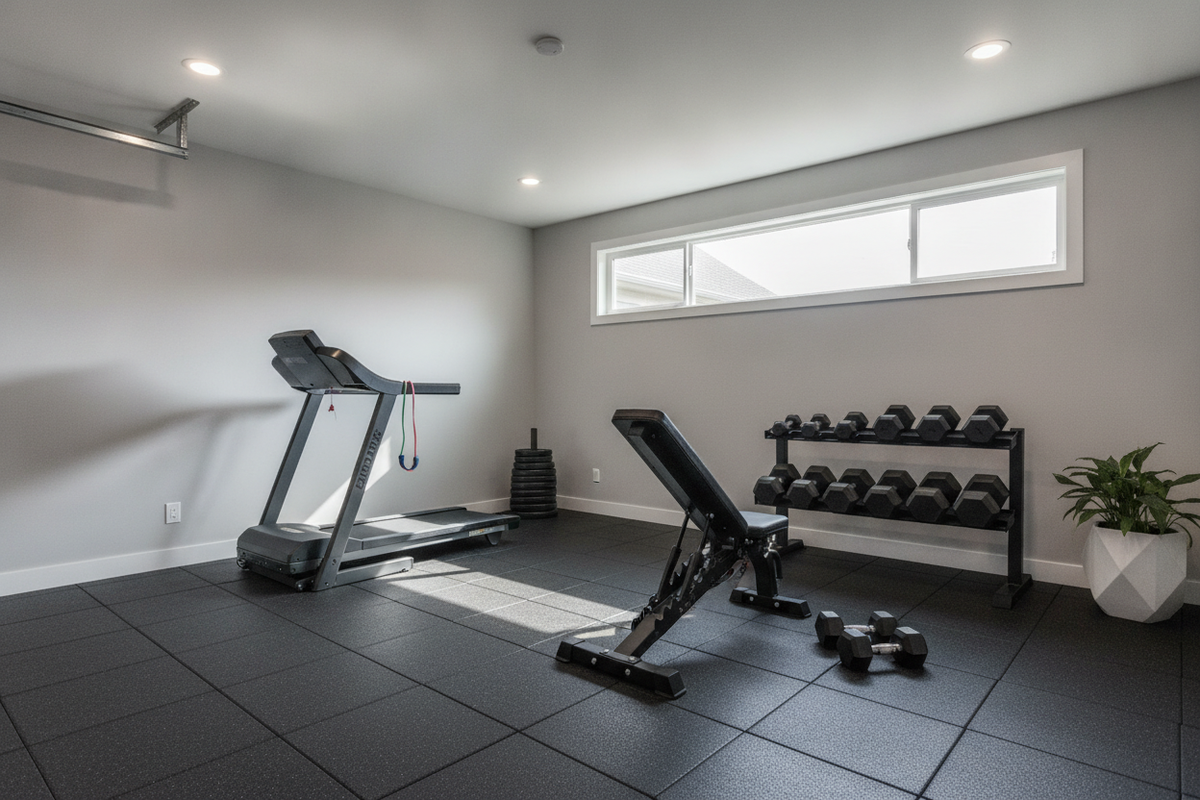
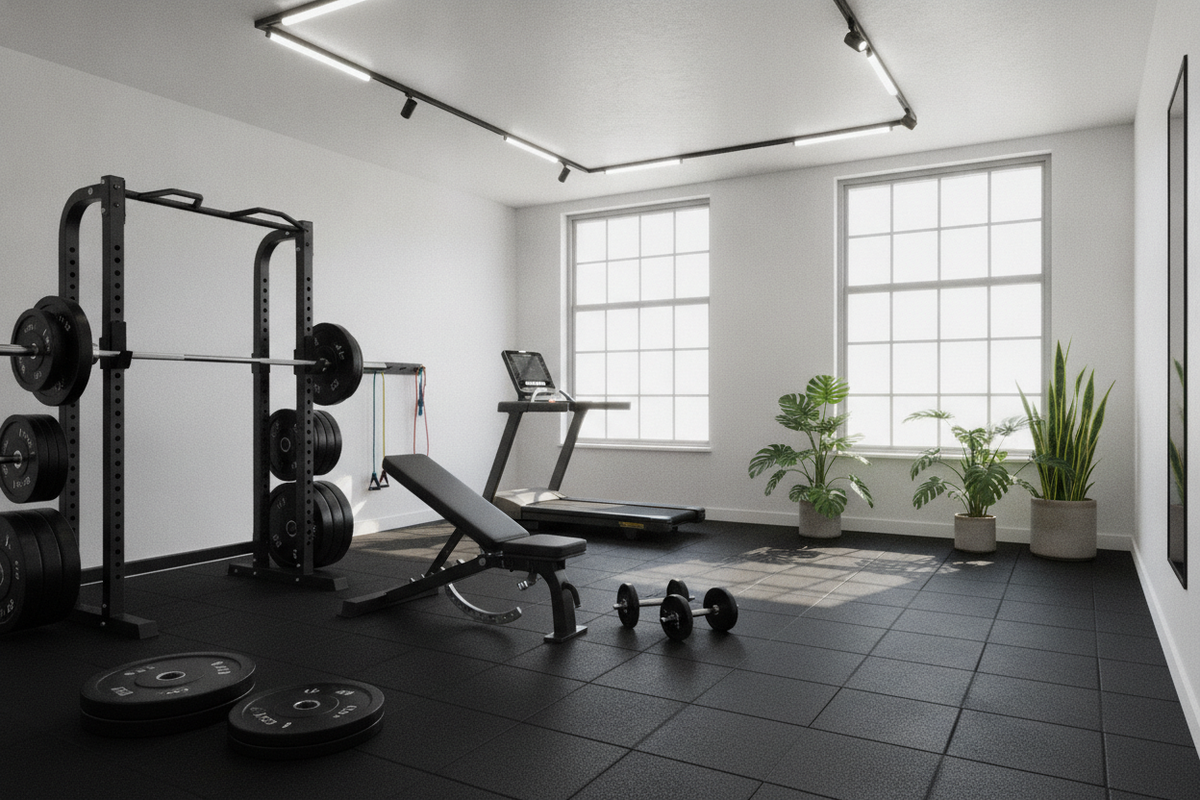
Lower-body training generates significant friction, ground reaction forces, and localized pressure. Whether executing heavy wide-stance squats, dynamic jumping lunges, or setting down loaded dumbbells after an RDL set, training on hard, unyielding floors can cause joint discomfort and damage residential subflooring.
A high-density large exercise mat provides a non-slip foundation that prevents footwear from sliding during deep lunges or wide-stance lifts. Secure footing is critical for maintaining optimal knee tracking and spinal alignment under load. Furthermore, dense matting cushions the feet and ankles against repetitive impact during dynamic bounding or plyometric squat jumps.
For comprehensive home gym setups, integrating a dedicated exercise product helps absorb mechanical vibration, dampen equipment noise, and protect hardwood or tile flooring from dropped free weights and kettlebells. Keeping the floor surface clean with regular wipe-downs prevents sweat accumulation and preserves traction for consistent, long-term training sessions.