Best Cardio for Lifters: Low-Interference Conditioning and Home Gym Setup
Integrating cardiovascular work into a strength-focused program often feels like a delicate balancing act. Many lifters worry that too much endurance work will deplete muscle mass, impair power output, or compromise joint recovery. However, avoiding aerobic conditioning altogether can limit your work capacity between heavy working sets and slow down general recovery. Finding the best cardio for lifters is about selecting low-interference modalities that promote blood flow and conditioning without generating excessive structural fatigue.
Understanding the Cardio Balance for Strength Trainees
Cardiovascular conditioning serves a fundamental purpose for strength athletes: it expands the aerobic base, enabling faster heart-rate recovery during rest periods and supporting stamina through high-volume training sessions. The primary challenge for any lifter is avoiding the concurrent training interference effect, where heavy training adaptations compete with endurance-induced metabolic stress.
When selecting the best cardio for weight lifting, the main objective is minimizing eccentric muscle damage. Exercises with heavy eccentric loading, such as extended outdoor road running, cause microscopic muscle tears that require extensive repair resources. By contrast, low-impact or concentric-dominant activities stimulate cardiovascular adaptations while allowing your leg musculature to recover for squats, deadlifts, and presses. Trainees looking to build a structured strength routine can review our comprehensive weight lifting guide to understand how training volume and recovery intersect.
Top Cardio Modalities That Preserve Muscle and Strength
The best cardio for weight lifters emphasizes joint-friendly movement patterns, predictable resistance curves, and minimal impact shock. Several conditioning options fit seamlessly alongside serious barbell and machine work:
- Incline Treadmill Walking: Walking at a steep incline elevates heart rate into a sustainable aerobic zone without the repetitive pounding of running. It places minimal shearing stress on the knees and preserves lower-back freshness.
- Sled Pushing and Pulling: Weighted sleds provide concentric-only resistance. Because there is no eccentric phase, pushing or dragging a sled develops strong work capacity and leg endurance with virtually no residual soreness.
- Stationary Cycling and Fan Bikes: Upright or fan bikes allow you to perform steady-state aerobic base work or brief sprint intervals without ground impact forces.
- Low-Impact Rowing: Ergometers engage the posterior chain, upper back, and core, reinforcing pulling mechanics while delivering smooth cardiovascular conditioning.
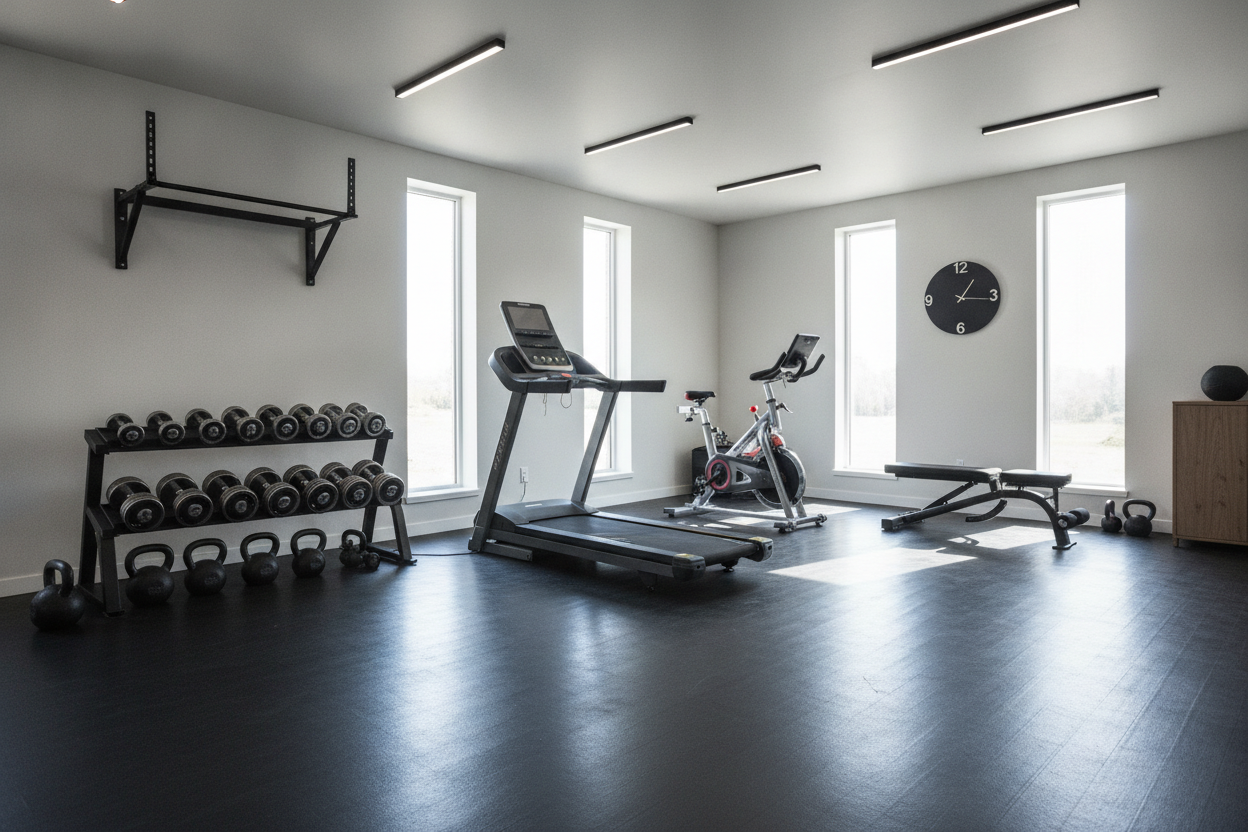
For home gym owners equipping their space, combining these conditioning tools with dedicated equipment from a curated weight lifting collection creates a well-rounded setup capable of handling both heavy loading and conditioning blocks.
Structuring Cardio Around Lifting Sessions
Timing and frequency play a major role when planning the best cardio for weight training. Even the most joint-friendly modality can interfere with lifting if placed immediately before a heavy session.
Consider the following scheduling approaches based on your weekly routine:
- Dedicated Conditioning Days: Performing 30 to 45 minutes of steady-state aerobic work on non-lifting days keeps workouts focused and prevents training fatigue from stacking within a single session.
- Post-Lifting Finishers: If you must train on the same day, place short conditioning blocks (10 to 20 minutes) at the end of your weight session so your strength and neurological drive remain fresh for heavy lifts.
- Low-Intensity Daily Movement: Accumulating casual steps throughout the day offers passive aerobic conditioning and gentle active recovery without tapping into your recovery reserves.
If you are training in a smaller environment or an apartment, reviewing a compact space weight training guide can help you organize equipment for smooth transitions between conditioning drills and lifting sets.
Home Gym Layout: Pairing Heavy Weights with Cardio Zones
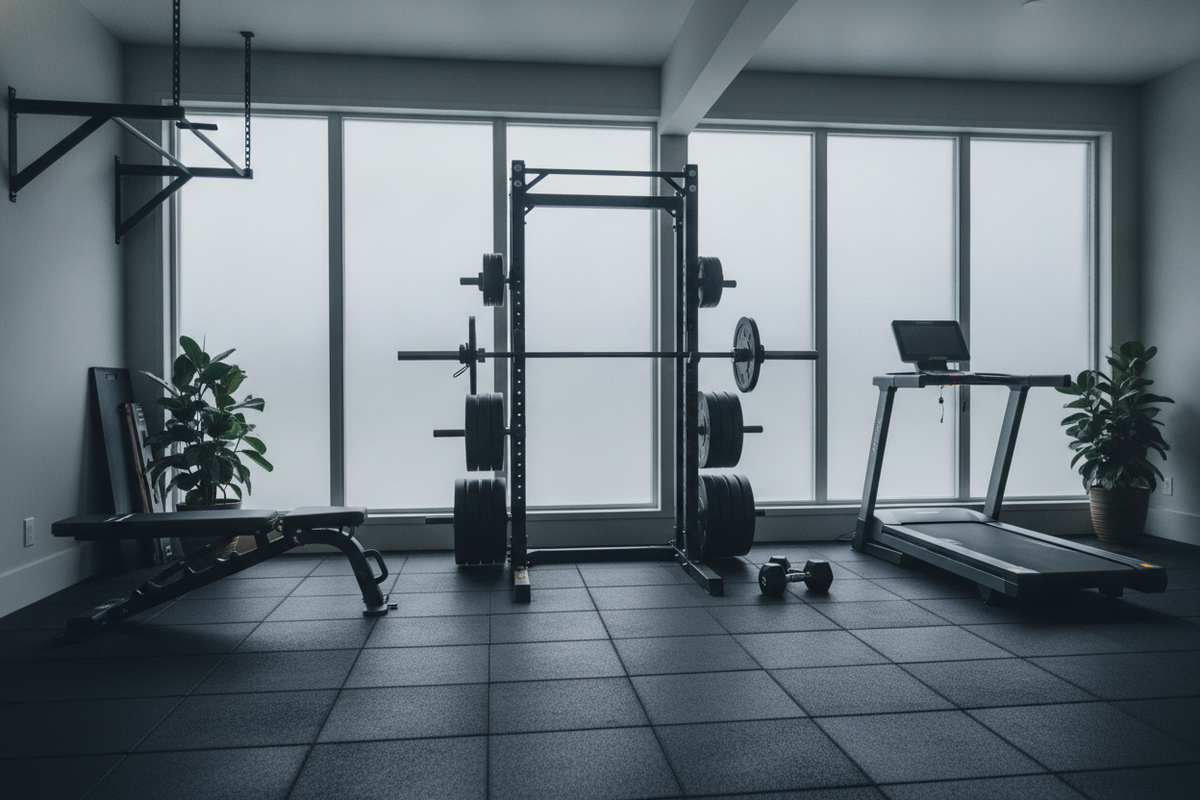
A hybrid training space requires thoughtful zoning to accommodate heavy barbell drops alongside dynamic conditioning gear like jump ropes, sleds, and stationary bikes. Organizing your floor plan prevents clutter, protects your subflooring, and provides clear operational boundaries.
When mapping out your training zone, install high-density protective rubber flooring across both lifting and conditioning stations. High-density rubber mats absorb vibration, distribute equipment loads evenly, and provide reliable traction during high-sweat conditioning sessions. Pairing your main lifting rack with gear from a versatile strength training collection allows you to keep bands, collars, and conditioning accessories neatly stowed off the floor.
Flooring Maintenance and Gear Care in Dual-Purpose Spaces
Dual-purpose home gyms experience increased moisture and surface friction due to the combination of heavy footwork and sweat from conditioning. Proper floor maintenance ensures the durability and grip of your workout surface over time:
- Regular Surface Cleaning: Wipe down rubber flooring with a pH-neutral cleaner to remove perspiration, chalk residue, and dust without degrading the rubber compound.
- Moisture Prevention: Ensure the subfloor beneath your mats remains dry. If mats are placed over concrete or tile, check seams occasionally to prevent trapped moisture.
- Traction Management: Keep high-traffic cardio zones clear of loose chalk and debris to maintain consistent slip resistance during dynamic movements.
Designing Your Personalized Hybrid Training Schedule
Building a successful hybrid routine requires balancing progressive overload with sustainable conditioning. Start by identifying your primary goal: if absolute strength is your main priority, keep cardio modalities non-eccentric and limit high-intensity intervals to brief durations. If body composition and conditioning are the focus, gradually build aerobic volume over several weeks.
Lifters looking to evaluate automated or digitized resistance options can read our smart weight lifting guide to explore how modern training tech integrates into strength and conditioning protocols. By selecting low-impact modalities, structuring sessions smartly, and outfitting your gym floor with supportive mats, you can cultivate cardiovascular fitness while continuing to build strength.