Bench Press Machine Types: The Definitive Equipment Guide
Walking onto the gym floor can feel overwhelming, especially when you are stared down by five distinct pieces of equipment that all promise to blast your pecs. You know you need to press to grow, but the variety of bench press machine types available today goes far beyond the standard barbell setup.
Choosing the wrong machine isn't just about wasting time; it's about mismatching your equipment to your anatomical needs and training goals. Whether you are working around an injury or trying to isolate the clavicular head of the pec, understanding the mechanics of these machines is non-negotiable.
Quick Summary: The Core Categories
If you are in a rush, here is the breakdown of the primary machines you will encounter and their specific utility:
- Selectorized (Pin-Loaded) Machines: Best for beginners and drop sets; offers constant tension with a fixed path of motion.
- Plate-Loaded Iso-Lateral Machines: Often known by the brand Hammer Strength; allows unilateral movement to fix muscle imbalances.
- The Smith Machine: A barbell on guide rods; excellent for heavy loading with added stability but restricts natural joint arc.
- Cable Chest Press: Provides continuous tension at peak contraction; superior for hypertrophy but harder to overload heavily.
- Vertical vs. Horizontal Models: Vertical presses save space and are easier to mount; horizontal presses mimic the lying bench press gravity curve more closely.
The Smith Machine: Stability Meets Heavy Loading
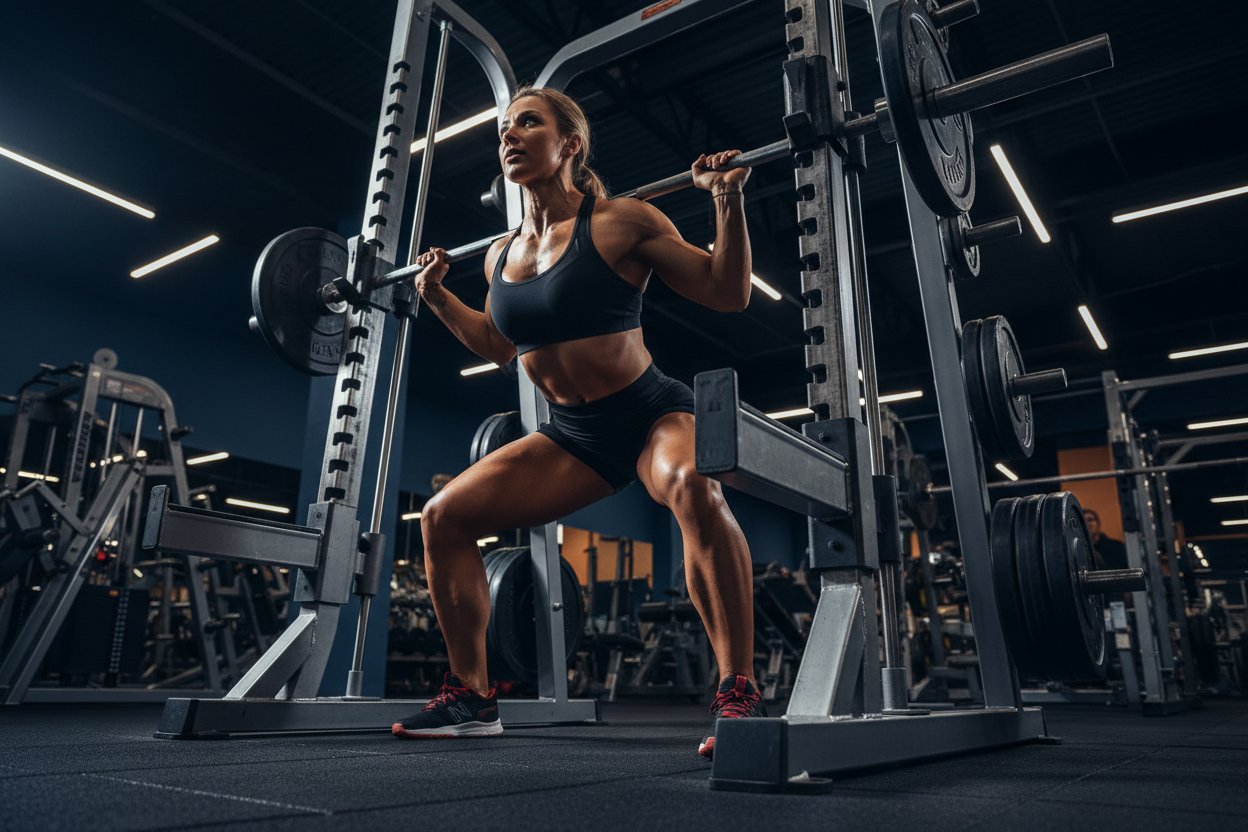
The Smith Machine is often the first stop for anyone moving away from free weights. It features a barbell fixed within steel rails, allowing only vertical (or slightly angled) movement.
Because the machine balances the weight for you, you can focus entirely on the push. However, this is a double-edged sword. The fixed path forces your shoulders to move in a straight line, which isn't how your joints naturally rotate. If you use this for different chest press machines, ensure you align your bench perfectly so the bar lands on the lower chest, not the neck, to avoid impingement.
Plate-Loaded Iso-Lateral Machines (Hammer Strength)
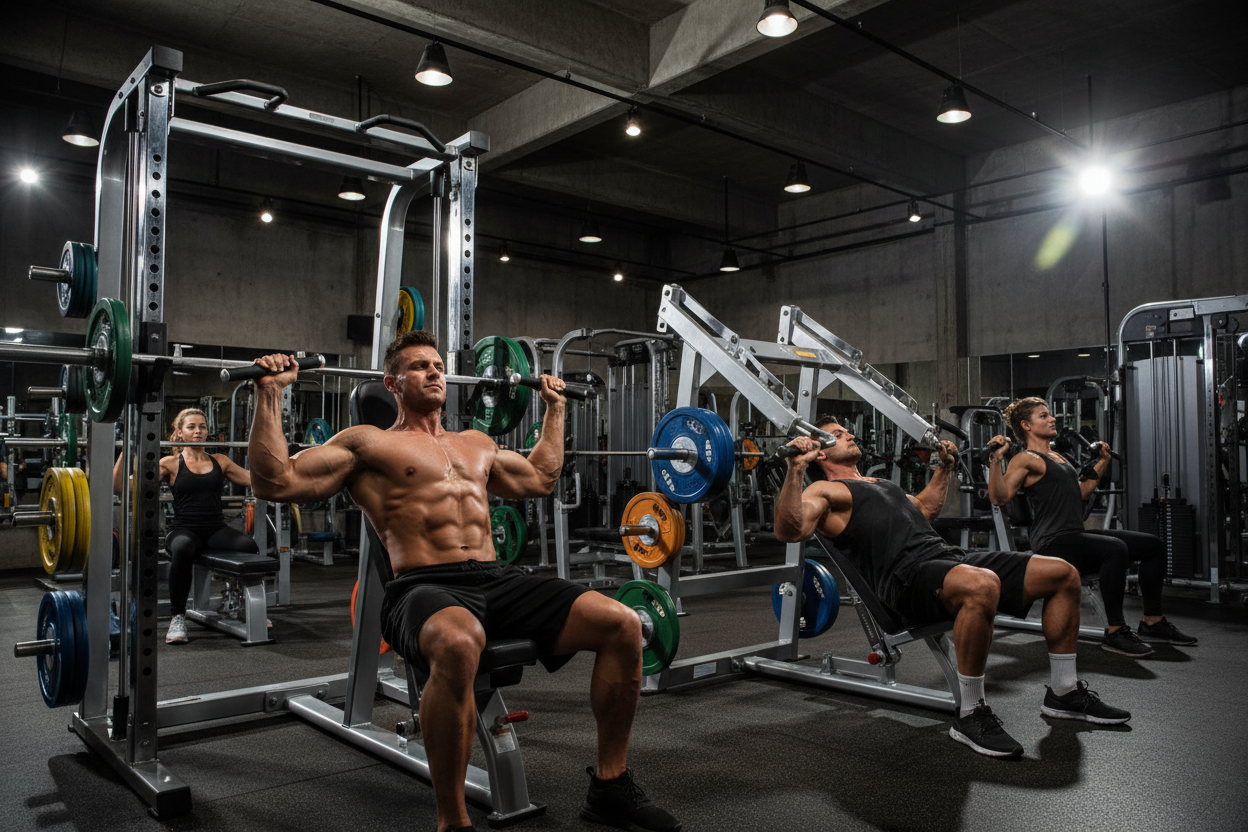
Walk into any serious bodybuilding gym, and you will see these heavy-duty stations. Unlike the Smith machine, these types of chest press machine units usually offer a converging motion. As you press out, your hands come closer together.
Why Convergence Matters
Your pectoral muscles function to bring your arms across your body (adduction). A straight bar doesn't allow this fully. Converging machines mimic natural adduction, leading to a harder peak contraction. Furthermore, the "Iso-Lateral" aspect means each arm works independently. If your right side is stronger than your left, the machine won't let you compensate. You have to push the weight honestly with both sides.
Selectorized (Pin-Loaded) Chest Press
These are the machines where you simply move a pin to select the weight stack. They are incredibly popular in commercial gyms for one reason: convenience. But there is a mechanical advantage here, too.
Different types of bench press machines using cables or cams (the kidney-shaped wheel the cable wraps around) can manipulate the resistance curve. In a free-weight bench press, the lockout is easy. On a well-designed selectorized machine, the tension remains constant from the bottom of the rep all the way to the lockout. This keeps the muscle under tension longer, which is a key driver for hypertrophy.
Vertical vs. Horizontal Pressing Stations
You will often find different types of bench press machines oriented either vertically (seated upright) or horizontally (lying down).
The Vertical Press: This is generally easier to get in and out of. However, gravity is acting on the weight stack, not your arms directly. The cable system transfers that force. The main drawback? It's easier to cheat by lifting your butt off the seat and turning the movement into a decline press.
The Horizontal Press: This mimics the standard bench press. It usually feels more "natural" to lifters transitioning from barbells, but it takes up significantly more floor space and can be awkward to adjust while lying down.
My Training Log: Real Talk
I want to be honest about the reality of using these machines, specifically the selectorized vertical press found in most 24-hour gym chains. The glossy brochures talk about "smooth ergonomics," but my experience is often different.
I remember distinctively training at a crowded commercial gym on a Monday night. I hopped on an older model chest press machine. I was aiming for a slow, 3-second negative (eccentric) phase. But because the guide rods hadn't been greased in months, the weight stack didn't lower smoothly. It stuttered. I could feel this gritty, "chunk-chunk-chunk" vibration traveling through the handles and right into my elbows.
It completely ruined the mind-muscle connection because I was bracing for the friction rather than focusing on the stretch. That's the stuff specs don't tell you: always check the maintenance of the machine. If the guide rods are dry or rusty, stick to plate-loaded equipment or free weights that day. Your joints will thank you.
Conclusion
There is no single "best" machine. The best equipment is the one that fits your biomechanics and allows you to press without pain. Use iso-lateral machines to fix imbalances, selectorized machines for metabolic stress and drop sets, and the Smith machine when you need to overload safely without a spotter. Rotate through these types of bench press machines to keep your training stimulus fresh.
Frequently Asked Questions
Can chest press machines replace the barbell bench press?
For hypertrophy (muscle growth), yes. Machines can actually be superior for isolation because they provide more stability, allowing you to push closer to failure safely. However, for raw functional strength and stabilizer muscle development, the free-weight barbell bench press is still king.
Which machine is safest for shoulder injuries?
Generally, a neutral-grip (palms facing each other) selectorized press or a converging plate-loaded machine is safest. These allow for a more natural shoulder rotation compared to the fixed straight-bar path of a Smith machine.
How do I know if the seat height is correct?
When you sit down and grab the handles, your hands should be roughly in line with your mid-chest (nipple line). If the handles are level with your shoulders, the seat is too low, and you risk shoulder impingement. If the handles are near your lower ribs, the seat is too high, and you'll turn it into a tricep-dominant movement.