Beginners Exercise Routine: Why You Should Start Barefoot
I have watched dozens of new clients lace up thick, heavily cushioned running shoes in their living rooms, ready to finally tackle a beginners exercise routine. Ten minutes later, their ankles are wobbling during squats, their knees ache, and they feel incredibly uncoordinated. The culprit isn't their fitness level—it is their footwear. When you are starting workouts, those plush foam soles act like sensory blindfolds for your nervous system.
Going barefoot is the fastest way I know to build core stability from the ground up. It forces your body to rely on its own mechanics rather than artificial support. Before you grab a single dumbbell, taking off your shoes will completely change how you move.
Quick Takeaways
- Training barefoot awakens mechanoreceptors in your feet, instantly improving balance.
- Ditching shoes forces your core to engage naturally during standing movements.
- A proper routine exercise for beginners should prioritize stability over heavy weights.
- Transitioning to barefoot training requires a supportive, non-slip floor surface to protect joints.
Why Your Shoes Are Ruining Your First Workout
Think about trying to type on your phone while wearing thick winter mittens. That is exactly what happens to your feet when you wear modern running shoes during a starting out workout. The bottom of your foot contains thousands of nerve endings designed to read the ground, adjust your center of gravity, and fire up the muscles in your legs and core. When you bury those nerves under two inches of squishy foam, your brain loses its connection to the floor.
This creates artificial instability. I have tested this with countless clients. They struggle to balance on one leg while wearing shoes, but the moment they take them off, they nail the movement. For those starting out workout programs, this artificial wobble leads to frustration and poor form. Your knees cave inward, your lower back overcompensates, and you end up sore in all the wrong places. If you want to build a solid foundation, you need to feel the ground beneath you.
The Mechanics of a Barefoot Beginners Exercise Routine
Working out for beginners is largely about teaching your nervous system how to control your body in space. When your bare feet touch the floor, the sensory feedback travels up your kinetic chain. Your brain instantly knows exactly where your weight is shifted. If you lean too far forward during a squat, your toes grip the floor to pull you back. This automatic correction is completely impossible in thick shoes.
This direct contact also naturally aligns your joints. Without an elevated heel pitching your weight forward, your pelvis settles into a neutral position. A neutral pelvis means your core has to do its actual job—stabilizing your spine. However, working out on bare hardwood or concrete can be brutal on unconditioned joints. I always have my clients roll out a large exercise mat for home gym use. This creates a dense, supportive surface that takes the edge off your joints without muting that vital sensory feedback from your feet.
Activating the Tripod Foot Foundation
Before you do a single repetition, you need to understand the tripod foot. Any good exercise routine for beginners relies on this fundamental concept. Imagine three points of contact on the bottom of your foot: the center of your heel, the base of your big toe, and the base of your little toe.
When you stand barefoot, actively press all three points into the floor. You will immediately feel the arch of your foot lift and the muscles in your calves and glutes fire up. This tripod creates a stable, rooted base. If you lose contact with your big toe during a lunge, your knee will cave inward. Mastering this three-point connection is the secret to bulletproofing your lower body against injury.
Best Starter Workouts to Perform Without Footwear
The best starter workouts focus heavily on bodyweight control. I usually start clients with a simple circuit: glute bridges, bodyweight squats, and reverse lunges. During a glute bridge, driving your bare heels into the floor isolates the hamstrings and glutes far better than sliding around in socks or shoes.
For squats, the barefoot advantage is massive. You can actively grip the floor with your toes, preventing the dreaded lower back rounding at the bottom of the movement. If you want to sequence these movements properly, I highly recommend checking out a structured workout routine at home for beginners that actually feels good. It will give you the exact rep ranges—usually 3 sets of 10 to 12 reps—to build endurance safely when you start workout routine habits.
When testing setups for the workouts beginners need, I have found that space matters. A standard 24-inch wide yoga mat is often too narrow, forcing you to step off the edge during wide-stance squats. I personally test and recommend laying down at least a 6x4ft yoga mat exercise mat. It provides a generous 24-square-foot footprint for practicing bodyweight movements in a living room without feeling cramped. One honest downside to barefoot training on mats, though: your feet will sweat directly onto the surface, so you will absolutely need to wipe it down with a mild soap solution after every session to prevent odors.
How to Workout Beginner Style: Transitioning to Resistance
Figuring out how to workout beginner style isn't about rushing to grab the heaviest dumbbells you can find. It is about earning the right to add resistance. By spending your first four to six weeks mastering barefoot bodyweight stability, you are thickening your tendons and strengthening the stabilizing muscles around your knees and ankles.
Once you can perform 15 flawless, barefoot bodyweight squats with a perfect tripod foot, you are ready for external weights. I usually introduce a single 10-pound or 15-pound kettlebell for goblet squats. Because your foot-to-floor connection is already rock solid, that added weight will transfer directly into the target muscles instead of straining your joints.
Setting Up Your Barefoot Training Zone
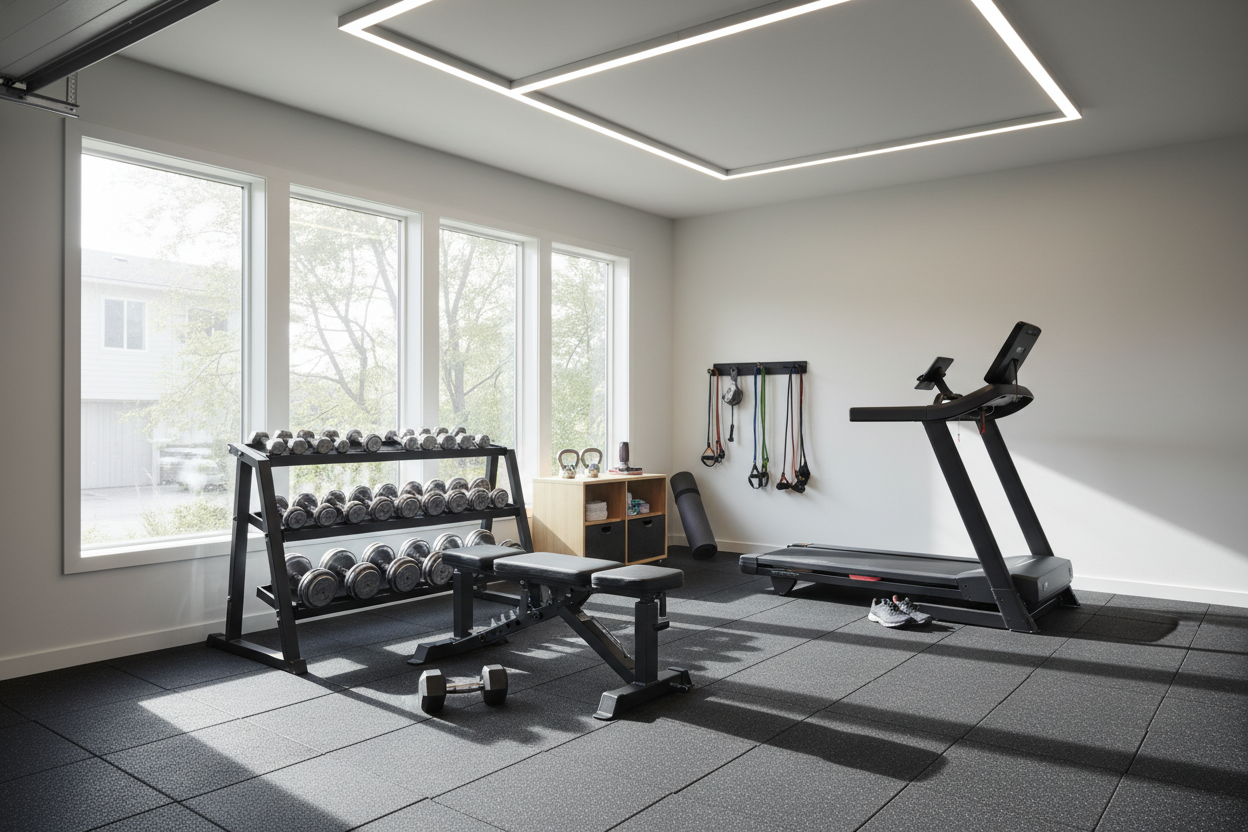
Your environment dictates your consistency. If you have to spend ten minutes clearing away coffee tables and sweeping up dog hair before you can train, you will skip your sessions. Establish a permanent, inviting workout area. Keep the floor completely free of debris—stepping on a rogue piece of gravel barefoot will derail your focus instantly.
As your confidence grows and you start incorporating lateral lunges or side planks, you will need more room. For clients ready to expand, upgrading to a 6x8ft exercise mat gym flooring setup is my go-to recommendation. It gives you 48 square feet of dedicated, joint-friendly space, transforming a corner of your home into a legitimate barefoot training zone.
FAQ
Is it safe to lift weights barefoot?
Yes, for home workouts using dumbbells or kettlebells, barefoot training is incredibly safe and promotes better form. Just be mindful of your surroundings to avoid dropping weights directly on your toes.
Will working out barefoot hurt my arches?
Initially, your foot muscles might feel sore because they are finally working. Start with 15-minute sessions to build arch strength gradually before attempting an hour-long routine.
Do I need to be completely barefoot, or are socks okay?
Standard socks are a slipping hazard on most floors and mats. If you prefer not to go completely bare, use specialized grip socks with rubberized bottoms to maintain traction.