
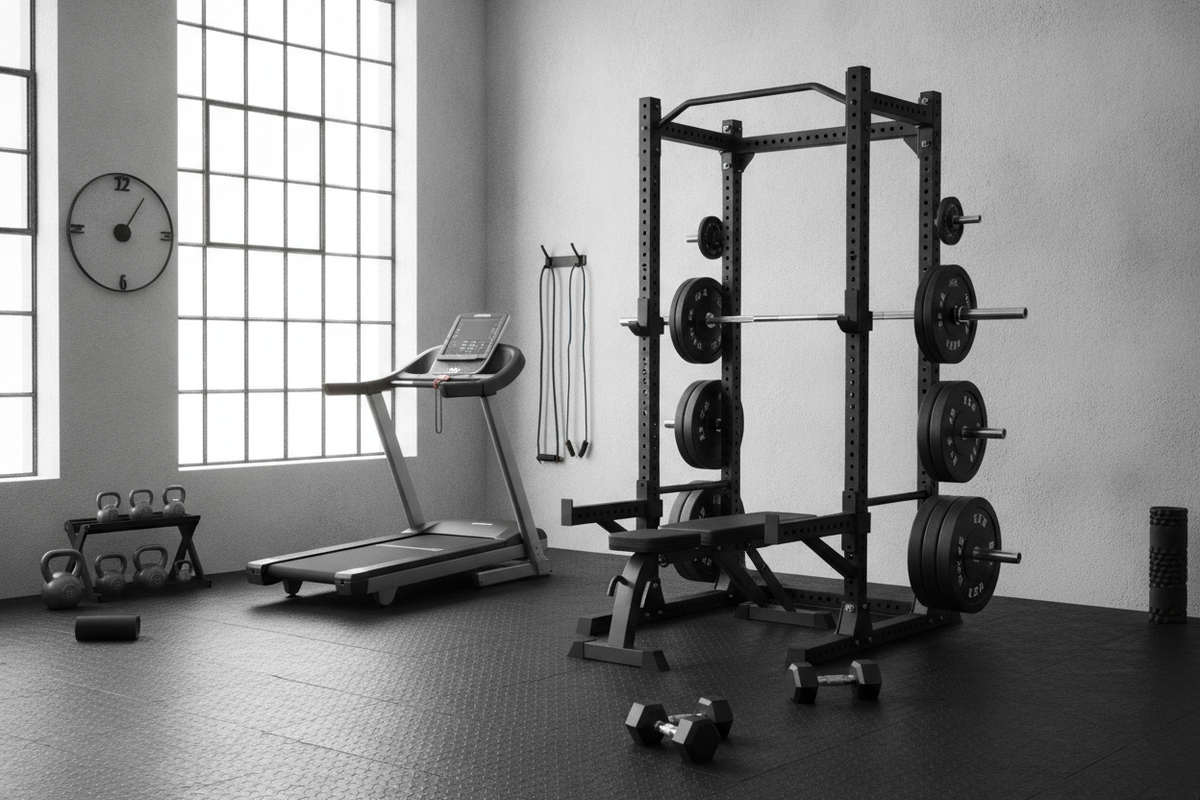
Beginner Gym Workouts Male: Core Movement Systems, Weekly Training Splits, and Station Staging
Stepping into a weight room for the first time can feel overwhelming given the sheer variety of machines, barbells, and conflicting training advice. For men starting resistance training, success does not require complicated routines or hours spent testing every piece of equipment. Instead, establishing a reliable routine centered on fundamental human movement patterns creates the clearest path forward.
A well-designed plan combines structured multi-joint exercises, steady technique refinement, and a properly organized training space. Whether training in a commercial facility or building a dedicated setup at home, understanding movement mechanics and station organization ensures steady, sustainable momentum.
Foundational Principles of Beginner Gym Training for Men
Prioritizing Compound Movements Over Isolation
Compound exercises recruit multiple joints and large muscle groups simultaneously. Movements such as squats, presses, rows, and deadlifts build whole-body coordination and functional strength far more efficiently than single-joint isolation exercises. For those seeking a comprehensive blueprint on early development, reviewing a beginner exercise plan guide helps clarify how multi-joint lifts form the core of early athletic gains.
While isolation exercises like biceps curls or lateral raises have a place in structured bodybuilding programs, beginners gain the most noticeable foundation by mastering lifts that require trunk stability, balance, and synchronized muscle activation.
Understanding Progressive Overload and Movement Quality
Progressive overload is the gradual increase of physical stress placed on the body during training. While progressive overload is often associated with adding heavier weight to the bar, beginners benefit equally from other forms of progression, including:
- Performing repetitions with smoother control and tighter technical alignment.
- Shortening excessive rest intervals while maintaining consistent output.
- Increasing total work volume through an added set once mechanics are dialed in.
- Achieving a fuller, active range of motion without compensating at adjacent joints.
Prioritizing form over the amount of load lifted preserves joint integrity and builds movement habits that support long-term training consistency.
The Five Core Movement Pillars Every Male Beginner Needs
The Squat and Knee-Dominant Pattern
The squat pattern strengthens the quadriceps, glutes, and lower back while developing hip and ankle mobility. Beginners can start with goblet squats holding a single dumbbell at chest height before transitioning to front squats or standard barbell back squats. The focus remains on keeping the torso upright, tracking knees in line with the toes, and maintaining flat foot contact with the floor.
The Hip Hinge and Posterior Chain Engagement
The hip hinge is an essential movement for the hamstrings, glutes, and spinal erectors. Unlike a squat, which involves significant knee bend, a hinge focuses on pushing the hips backward while maintaining a neutral spine. Romanian deadlifts with dumbbells or kettlebells teach beginners how to load their posterior chain safely before pulling heavy barbells from the floor.
Upper Body Push and Pull Systems
Balanced upper-body training pairs pushing movements with pulling movements to maintain balanced shoulder mechanics and postural stability:
- Horizontal Push: Dumbbell bench presses and push-ups strengthen the chest, anterior shoulders, and triceps.
- Horizontal Pull: Chest-supported dumbbell rows and cable rows target the upper back, latissimus dorsi, and rear deltoids.
- Vertical Push: Standing or seated overhead dumbbell presses build shoulder strength and overhead stability.
- Vertical Pull: Lat pulldowns and assisted pull-ups develop back width and grip strength.
For men training in compact areas or crowded gym sections, consulting a beginner gym workout guide provides actionable strategies for running effective push-pull supersets within a compact footprint.
Core Bracing and Loaded Carries
Direct abdominal training extends beyond standard crunches. Developing a stable core requires resisting movement through anti-extension exercises (such as planks), anti-rotation drills (such as Pallof presses), and dynamic loaded carries like farmer walks. Carrying heavy dumbbells teaches full-body tension, grip endurance, and posture under load.
Structured Weekly Workout Frameworks for Beginners
The 3-Day Full-Body Split Framework
A three-day full-body routine performed on non-consecutive days (such as Monday, Wednesday, and Friday) is an ideal schedule for novice lifters. Each session provides whole-body stimulation while allowing full recovery days in between.
- Session A: Goblet Squat, Flat Dumbbell Bench Press, Chest-Supported Row, Plank Hold.
- Session B: Romanian Deadlift, Standing Overhead Press, Lat Pulldown, Farmer Walk.
- Session C: Bulgarian Split Squat, Incline Dumbbell Press, Single-Arm Dumbbell Row, Side Plank.
The 4-Day Upper/Lower Split Alternative
For men who prefer shorter, more frequent training sessions, an upper/lower split divides the week into two upper-body days and two lower-body days (such as Monday/Tuesday and Thursday/Friday). This allows greater exercise variety per muscle group while maintaining adequate rest between targeted sessions.
Lifting Station Setup, Room Protection, and Floor Staging
Creating a Stable Traction Surface for Heavy Lifts
Lifting shoes and bare feet both require a firm, slip-resistant surface to transfer force efficiently during standing lifts. Setting up a dedicated training perimeter from an exercise gym collection provides a defined workout zone that keeps equipment contained and ensures dependable underfoot traction.
Subfloor Protection and Dumbbell Drop Zones
Dropping heavy free weights onto unprotected concrete, hardwood, or tile can damage flooring and degrade equipment over time. Placing high-density protection, such as an exercise gym workout product, under weight benches and dumbbell racks buffers surface impact, reduces ambient vibration, and creates a clean perimeter for floor-based movements.
Gym Mat Hygiene and Maintenance Routines
Maintaining a clean workout space preserves material durability and supports everyday hygiene. Wipe down mats and rubber surfaces after heavy training sessions with a mild soap-and-water solution or neutral gym cleaner. Avoid abrasive chemicals that can break down textured surface coatings.
Execution Protocols: Warm-Ups, Recovery, and Progression Tracking
Dynamic Warm-Up Sequencing on Padded Surfaces
A comprehensive workout begins with five to ten minutes of dynamic mobility work on a padded surface before touching weights. Essential warm-up movements include:
- Cat-cow stretches to mobilize the thoracic and lumbar spine.
- Hip 90/90 rotations to prepare the hip capsules for squatting and hinging.
- World's greatest stretch to open hips, ankles, and thoracic rotation.
- Glute bridges and bodyweight squats to prime lower-body motor patterns.
Managing Training Fatigue and Weekly Rest Days
Muscle adaptation and strength development happen during rest periods when the body repairs muscle tissue. Beginners should aim for consistent sleep habits, proper hydration, and adequate protein intake while scheduling at least two to three non-lifting days each week. Tracking weights, sets, and repetitions in a simple notebook or mobile log provides concrete feedback on your long-term consistency and progress.


