Back Workout Machine Names Decoded: What to Know Before You Lift
Walking into a commercial facility or planning your ultimate garage setup can feel overwhelming when you don't know the exact terminology. If you've ever struggled to search for the right equipment because you didn't know the back workout machine names, you are not alone. Building a thick, wide back requires the right tools, but finding them starts with knowing what to type into the search bar.
Whether you are outfitting a basement gym or just trying to navigate your local health club with confidence, this guide breaks down the essential equipment. We will decode the terminology, explain what each piece does, and help you decide which machines are actually worth your floor space and budget.
Key Takeaways
- Lat Pulldown Machine: Essential for vertical pulling, targeting the latissimus dorsi to build back width.
- Seated Cable Row: The go-to horizontal pull station for mid-back thickness and rhomboid development.
- Chest-Supported Row: Isolates the back muscles by removing lower back momentum.
- Hyperextension (Roman Chair): The primary lower back isolation machine for erector spinae strength.
- T-Bar Row Station: A heavy-duty lever machine perfect for building overall back mass.
Decoding the Most Popular Equipment
Lat Pulldown & Seated Row Stations
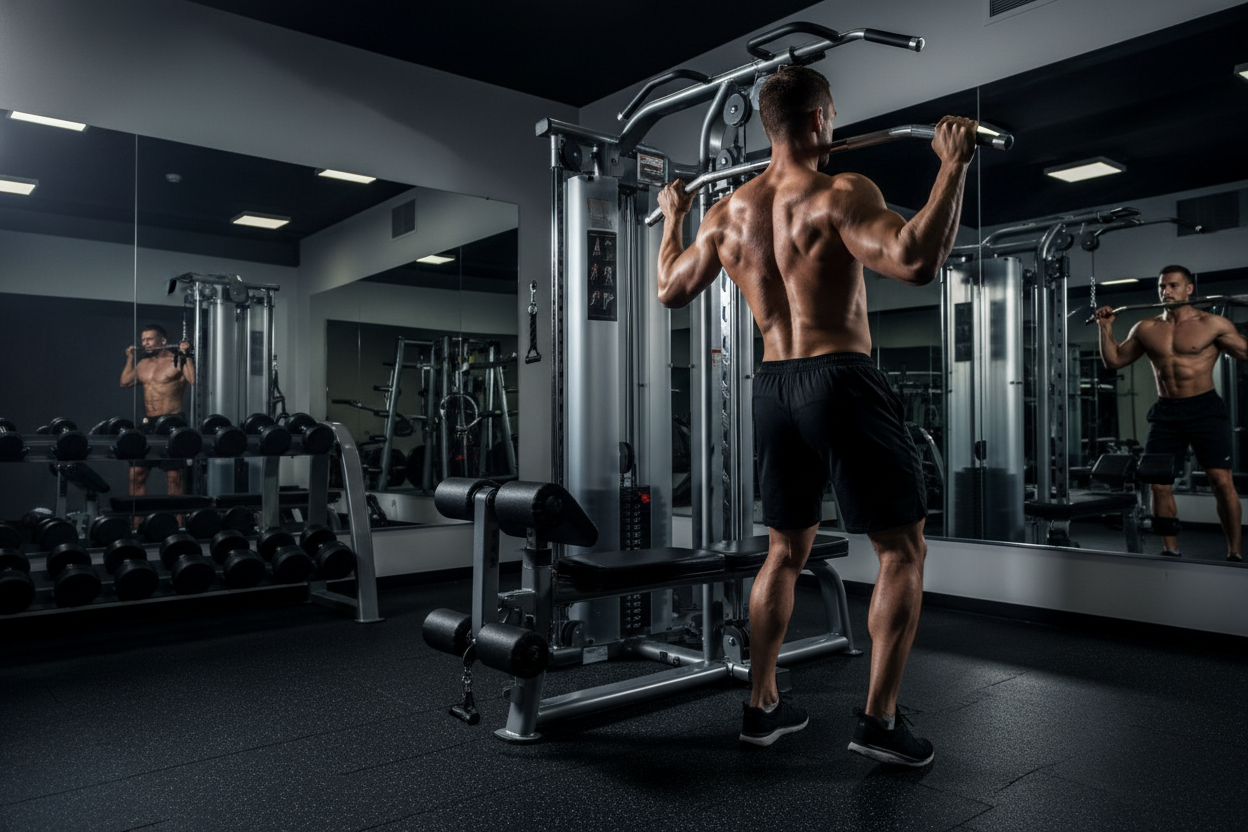
When most people ask for a specific back machine name, they are usually picturing a lat pulldown or a seated row. These are the cornerstones of any back training program. A dedicated lat pulldown features a high pulley system with adjustable thigh pads, while the seated row utilizes a low pulley with footplates. For home gym owners, a combo machine that offers both high and low pulleys is the ultimate space-saver, allowing you to hit multiple gym back machine names in one footprint.
The T-Bar Row & Chest-Supported Row
If you want to move heavy weight safely, the T-Bar row is legendary. Often referred to by its generic back exercise machine name—the lever row—this piece of equipment allows for deep, heavy pulls. The chest-supported row variant takes this a step further by placing a pad against your sternum. This completely removes the lower back from the equation, ensuring your lats, rhomboids, and traps do all the heavy lifting.
Targeting the Lumbar: Lower Back Focus
45-Degree Hyperextension vs. Roman Chair
A frequent question we get is regarding the exact lower back machine gym name. Most often, people are looking for the 45-degree hyperextension or the Roman Chair. While they look similar, a 45-degree hyperextension holds your body at an angle, making it highly accessible for beginners. The Roman Chair holds your legs horizontally, requiring more core stabilization. Both are phenomenal for bulletproofing the erector spinae and preventing lower back injuries.
Planning Your Home Gym Space
Footprint & Multi-Use Considerations
Knowing various back machines gym names is only half the battle; fitting them into a North American garage or basement is the real challenge. Dedicated back machines have massive footprints. A standalone lat pulldown can easily take up a 4x5 foot area and requires at least 85 inches of ceiling clearance. If space is tight, look for rack-attached pulley systems or functional trainers that consolidate multiple movements into one versatile footprint.
From Our Gym: Honest Take
When I first outfitted my two-car garage gym, I made the mistake of buying a standalone plate-loaded T-Bar row. While I loved the heavy, raw feel of the movement, it ate up way too much floor space for a piece of equipment that only did one thing. I eventually sold it and invested in a high/low cable tower combo.
The transition was a game-changer. At 6'1", I needed a machine with a lat pulldown seat that sat low enough to give me a full stretch at the top of the movement—something many budget home machines fail to provide. The dual guide rods on my current setup offer commercial-grade smoothness, and the heavy-duty aluminum pulleys haven't squeaked once after a year of heavy use in a humid environment. My advice? If you have limited space, prioritize a high/low cable system over single-use leverage machines.
Frequently Asked Questions
What is the best back machine for a home gym?
A high/low cable combo machine (often combining a lat pulldown and seated row) provides the best value and versatility. It allows you to perform vertical pulls, horizontal pulls, and even arm isolation work within a single footprint.
How much space do I need for a lat pulldown machine?
Plan for a minimum footprint of 4 feet wide by 5 feet deep. Crucially, check your ceiling height—most quality lat pulldowns require at least 82 to 85 inches of vertical clearance to accommodate the weight stack and high pulley.
What is the lower back machine gym name?
The most common machines for the lower back are the 45-degree hyperextension bench, the Roman Chair, and the reverse hyper machine. For home gyms, a folding 45-degree hyperextension is usually the most practical and space-efficient choice.