At Home Printable Workouts: Building Screen-Free Routines
It happens to almost every client I train. They set up their living room for a quick session, pull up a routine on their phone, and 45 minutes later, they realize they spent more time scrolling through notifications than actually lifting weights. The smartphone is a massive barrier to fitness consistency. When I started forcing my online clients to use at home printable workouts, their completion rates skyrocketed. Physical paper removes the digital noise and keeps you grounded in the physical space of your living room gym.
- Quick Takeaways:
- Paper routines eliminate the 5-minute rest periods caused by social media distractions.
- Physical tracking allows you to log reps and weights instantly without unlocking a screen.
- Taping a workout sheet to your wall creates a permanent visual cue that builds habit consistency.
- Laminated sheets with dry-erase markers work great, but standard paper handles sweat much better.
The Hidden Cost of Phone-Based Fitness Apps
I have watched clients attempt a simple 3x10 goblet squat routine, only to have their phone screen lock mid-set. They drop the 35-pound dumbbell, take off their sweaty glove, use facial recognition to unlock the device, and suddenly see an urgent email. Their 60-second rest period easily stretches into four minutes. By the time they pick the weight back up, their heart rate has dropped, and the muscular pump is gone.
Fitness apps are incredibly useful for programming, but executing that programming through a glowing distraction machine is fundamentally flawed. Every notification is a potential derailment. Even if you use a 'Do Not Disturb' mode, the temptation to check a text message between sets of lunges is often too strong to resist.
When you rely on a screen, you also deal with battery anxiety, awkward viewing angles, and the constant need to interact with a device when your hands are covered in chalk or sweat. Your training environment should be a sanctuary. Bringing a smartphone into that space introduces the exact stress and multitasking you are trying to sweat out.
Why At Home Printable Workouts Build Better Habits
There is a specific psychology behind physical visual cues. When you leave a printed home workout printable on your coffee table or taped to your garage wall, it acts as a silent, persistent reminder. You cannot swipe it away like a digital notification. It stares at you, demanding action.
Using physical paper also shifts your mindset from passive consumption to active participation. You are not just following a video instructor who is moving at their own pace. Instead, you dictate the flow. This control allows you to benefit from slower tempos. You can pause, focus on the mind-muscle connection during a 4-second eccentric bicep curl, and breathe without feeling rushed by a progress bar.
Writing down your completed reps with a physical pen creates a micro-commitment. When you physically cross out a completed set of 12 push-ups, your brain registers that accomplishment far more deeply than tapping a digital checkbox. Over the years, I have tested dozens of tracking methods. The clients who use paper consistently push closer to muscular failure because they are deeply focused on the physical task, not the digital interface.
Setting Up Your Screen-Free Workout Zone
To make paper routines work, you need to organize your physical space. You cannot just throw a piece of paper on a cluttered floor and expect a great session. First, identify a dedicated 6x6 foot area in your home. This is the minimum space required for most bodyweight and adjustable dumbbell routines.
Next, figure out your line of sight. If you are doing standing exercises like overhead presses or kettlebell swings, tape your printed routine to the wall at eye level. Use blue painter's tape so you do not ruin your drywall. This keeps your head up and your posture aligned while you check your next set.
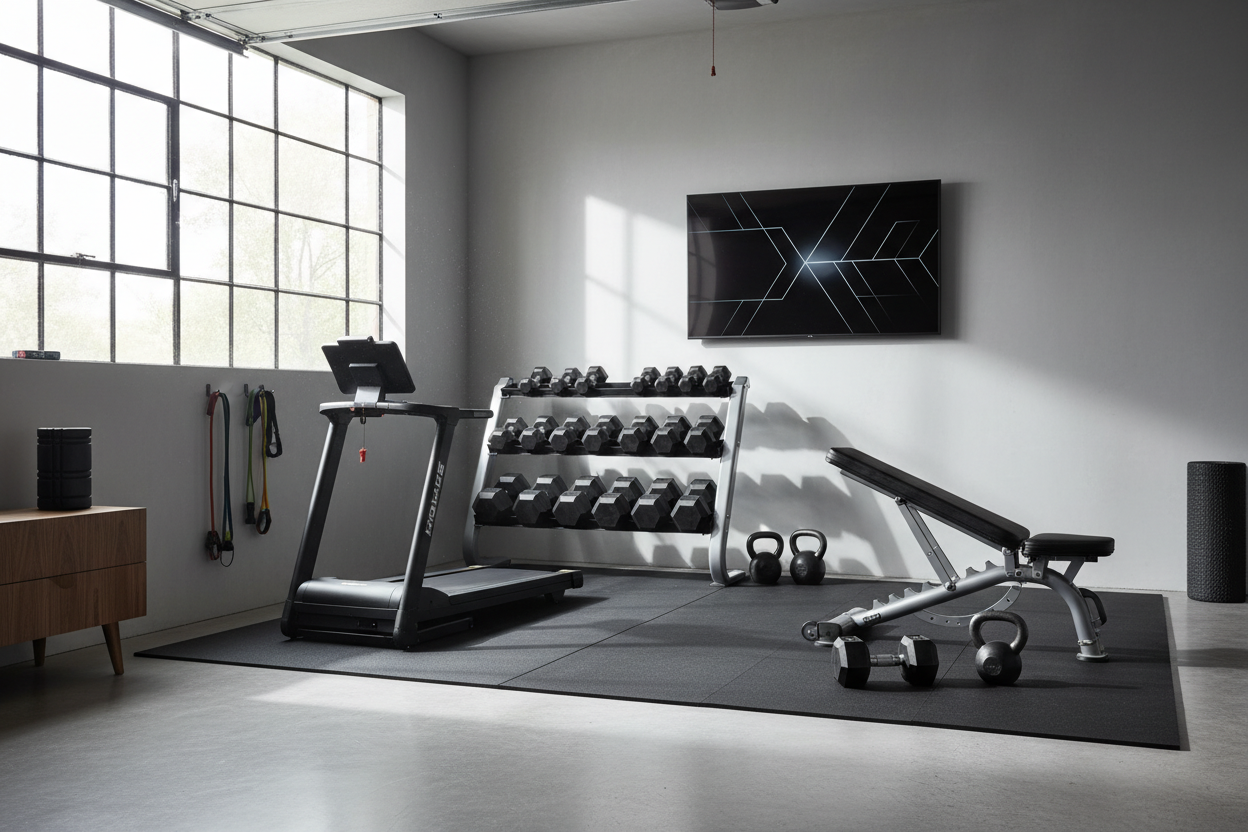
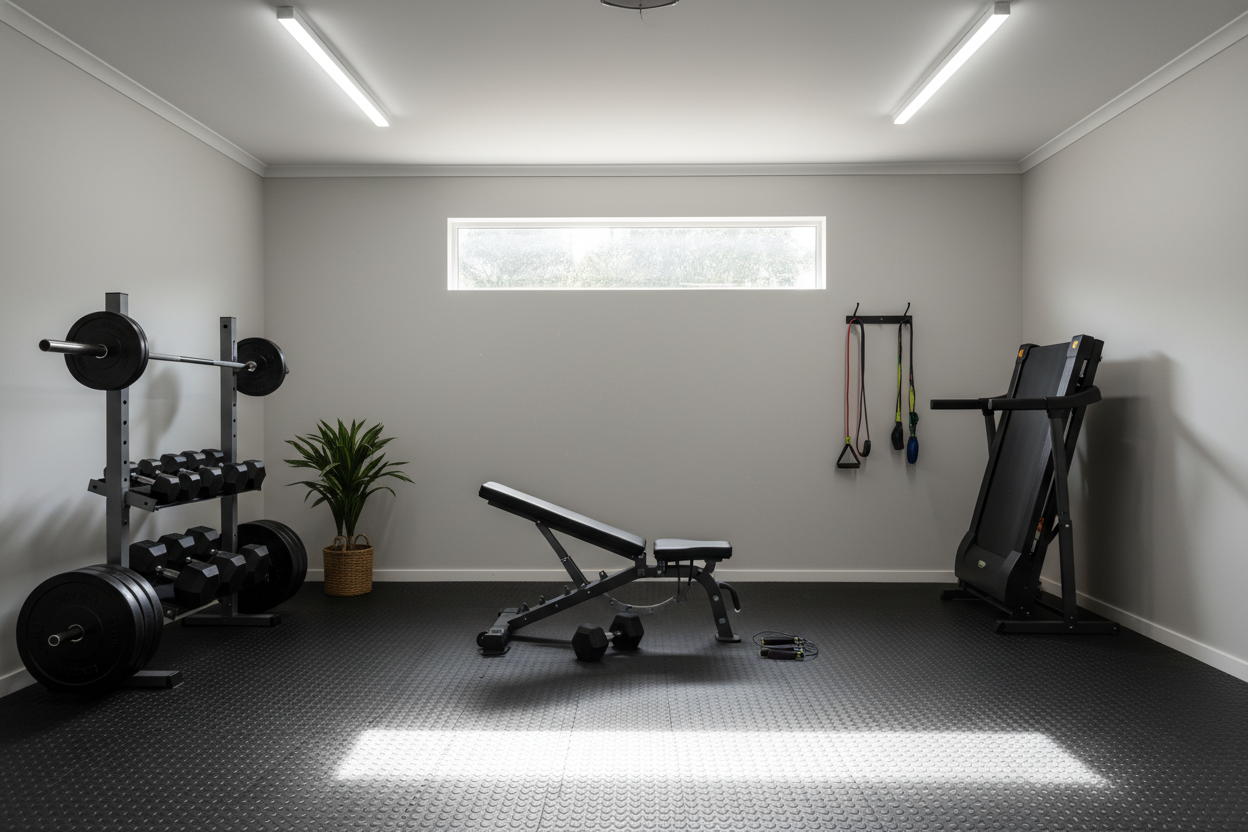
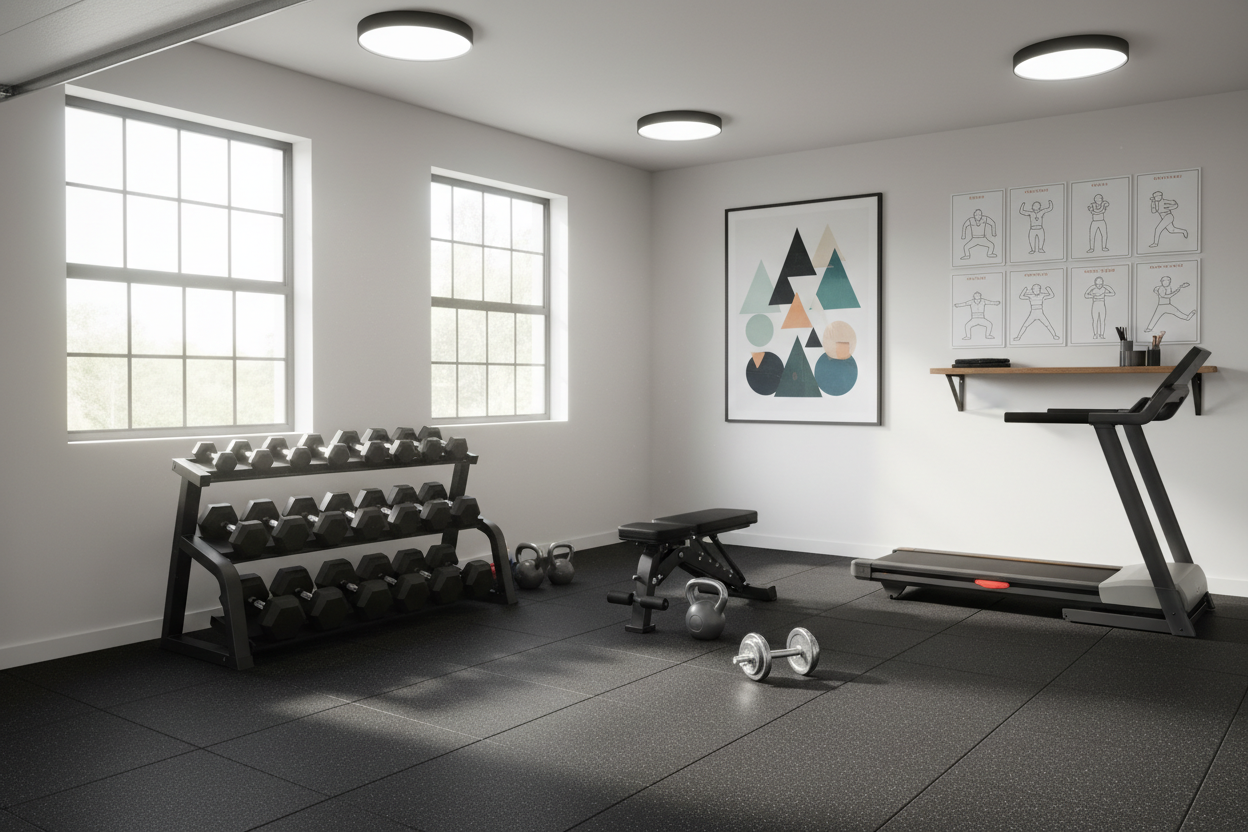
To truly define this distraction-free boundary, I always recommend clients lay down a large exercise mat for home gym use. The moment you step barefoot onto that textured surface, your brain recognizes that it is time to work. Leave your phone completely outside the perimeter of the mat.
Preparing Your Base for Floor Exercises
Wall-taping works for standing movements, but what happens when you transition to the floor for mountain climbers, planks, or hollow-body holds? You do not want to strain your neck looking up at the wall.
For floor blocks, you need your paper right in front of you. This is where having a high-quality 6x8ft exercise mat becomes incredibly useful. You can place your printed sheets at the top edge of the mat, well out of the way of your sweaty hands and feet, but perfectly within your downward line of sight.
I used to try propping my phone up against a water bottle for floor routines, and it would inevitably slide down. A piece of paper lies flat. You can glance at it mid-plank, see that you have 15 seconds left, and keep your cervical spine in a safe, neutral position.
Structuring Your Printable Home Exercises
Not all printable home exercises are created equal. A massive wall of text will just confuse you mid-workout. A good physical routine sheet needs structure, white space, and clear directives.
Divide your sheet into three clear sections: warm-up, main working blocks, and cool-down. For the main blocks, use a grid format. You need columns for the exercise name, target sets (usually 3 to 4), target reps (like 8-12), and the recommended rest period (e.g., 90s). Leave a blank column next to each exercise to physically write down the weight you used and the reps you actually achieved.
I personally tested a system where I laminated my workout sheets and used dry-erase markers to save paper. It sounded brilliant in theory. In practice, it was a mess. One heavy drop of sweat during a set of burpees, and my entire tracking history for the day smeared into a black puddle. Standard printer paper and a cheap ballpoint pen are infinitely more reliable.
Integrating Dedicated Mobility Sheets
Many people skip the cool-down because once the heavy lifting is over, they grab their phone and walk away. To prevent this, print a separate, dedicated sheet for your recovery flow.
Having a visual breakdown of hip mobility exercises right next to your dumbbell routine ensures you actually do them. List out movements like the 90/90 stretch, pigeon pose, and couch stretch with specific hold times (e.g., 2 minutes per side). When the recovery is part of the physical checklist, you are far less likely to abandon it.
The 30-Day Paper Tracker Challenge
If you want to build unbreakable consistency, pair your daily workout sheets with a printed 30-day calendar. Stick it to your fridge or your bathroom mirror. Every time you finish a screen-free routine, take a thick red marker and draw a massive 'X' over that day.
This analog tracking method delivers a highly satisfying dopamine hit. After a week, you will see a chain of red X's forming. The desire to not break that physical chain is a powerful motivator. Print your sheets, leave the phone in another room, and watch your focus and fitness improve simultaneously.
Frequently Asked Questions
How do I track my rest times without a phone?
Buy a cheap digital stopwatch or use a basic analog wall clock with a second hand. A dedicated timer keeps you honest about your 60-second rest periods without exposing you to text messages.
What if I don't know how to perform an exercise on the sheet?
Review the printable routine before you start your session. If there is a movement you are unfamiliar with, look up a quick tutorial video on your computer beforehand, practice the form, and then enter your screen-free zone.
How often should I print new workout sheets?
I recommend following the same routine for 4 to 6 weeks to apply progressive overload. You can print multiple copies of the same sheet to track your strength increases over the month, then switch to a new program.