Are You Overcomplicating Your chest and upper body workout?
I spent years following the 'more is better' philosophy. I’d walk into my garage, hit flat bench, incline bench, decline bench, and then spend another 40 minutes on three different types of cable flies. By the time I finished my chest and upper body workout, my joints felt like they’d been through a meat grinder, but my actual muscle growth had stalled harder than a rusted barbell sleeve.
The truth is, most of us are doing way too much junk volume. You don't need eight different angles to build a shelf-like chest. You need high-intensity, heavy-load movements that actually force your central nervous system to adapt. If you're tired of spending two hours in the gym only to see your bench press plateau for the third month in a row, it's time to strip things back to the basics.
- Quality over Quantity: Four heavy lifts beat ten mediocre ones every time.
- Balance is Key: For every push, you need a heavy pull to keep your shoulders healthy.
- Equipment Stability: You cannot build a house on sand; do not lift heavy on a wobbly bench.
- Progressive Overload: If you aren't adding weight or reps, you aren't growing.
Why 8 Different Pressing Angles Is a Waste of Time
Commercial gym culture has lied to us. They want you to believe you need a specialized machine for your 'upper inner pec' and another for your 'lower outer sweep.' In reality, your chest is basically two muscle heads. If you are hitting a heavy horizontal press and an incline press, you have covered 95% of your growth potential. The rest is just fatigue masquerading as progress.
When I cut my volume in half, my strength actually started moving again. I stopped doing sets of 15 'just to feel the burn' and started focusing on sets of 5 to 8 with weights that actually felt heavy. Junk volume does not just waste time; it eats into your recovery. If you are constantly sore but never getting stronger, you are just spinning your wheels.
The 4 Pillars of a Real Upper Body Session
A solid upper body workout chest routine does not need to be complicated, but it does need to be balanced. I used to ignore my back until my shoulders started rounding forward like a caveman. It was not a good look, and it definitely was not a strong one. You have to Stop Treating Your upper body and back workout Like a Chest Day if you want long-term progress.
The goal is to hit a heavy horizontal press, a heavy horizontal pull, a vertical press, and a vertical pull. This 1:1 ratio of pushing to pulling ensures that your rotator cuffs don't scream at you every time you try to put on a t-shirt. It also builds a much thicker, more complete physique than the 'chest and bi's' approach ever will.
A Heavy Horizontal Press (Pick Your Weapon)
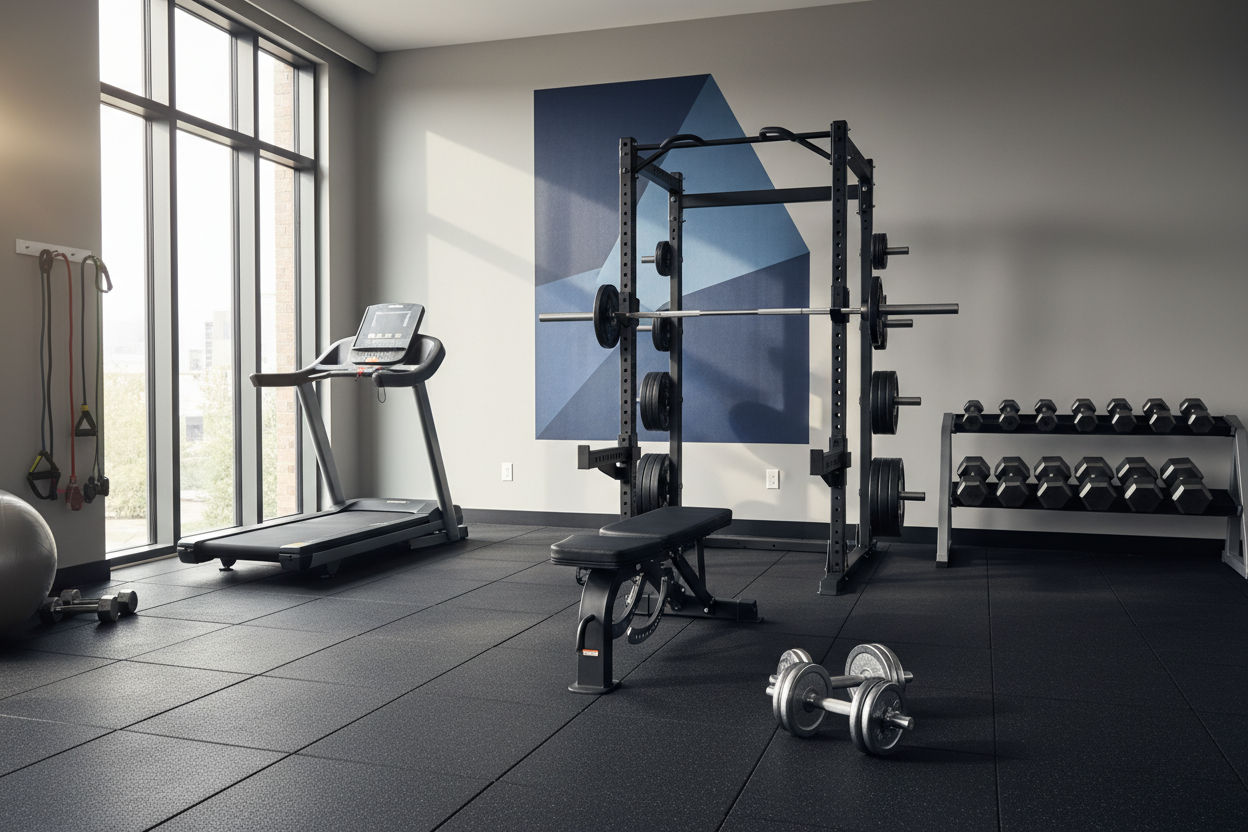
This is the centerpiece of your routine. If you have a solid power rack and a barbell, the classic bench press is hard to beat for pure loading potential. However, if you are training alone without a spotter, heavy dumbbells are often a safer bet and offer a better range of motion. I personally prefer dumbbells because they allow for a more natural hand path, which is easier on my cranky elbows.
If you are really limited on gear, do not sleep on weighted push-ups. Throwing a 45-lb plate on your back or using a weighted vest can be incredibly effective. The key is the load. Whether it is a 300-lb barbell or 100-lb dumbbells, you need to be pushing near your limit to see real hypertrophy in the chest and shoulders.
The Antagonist Pull (Don't Skip This)
For every set of benching, you owe your body a set of rows. This is not just for 'balance'—it is for performance. A strong, thick back provides the stable platform you need to press heavy weights. Think of your back as the foundation of a crane. If the foundation is weak, the crane cannot lift the heavy stuff without tipping over.
I am a huge fan of Pendlay rows or heavy one-arm dumbbell rows here. You want something where you can move significant weight. Avoid the 'lat pulldown only' trap. While vertical pulling is great, horizontal rowing is what builds the thickness that makes your chest look even bigger from the side.
Floor Space and Setup: Keep It Simple
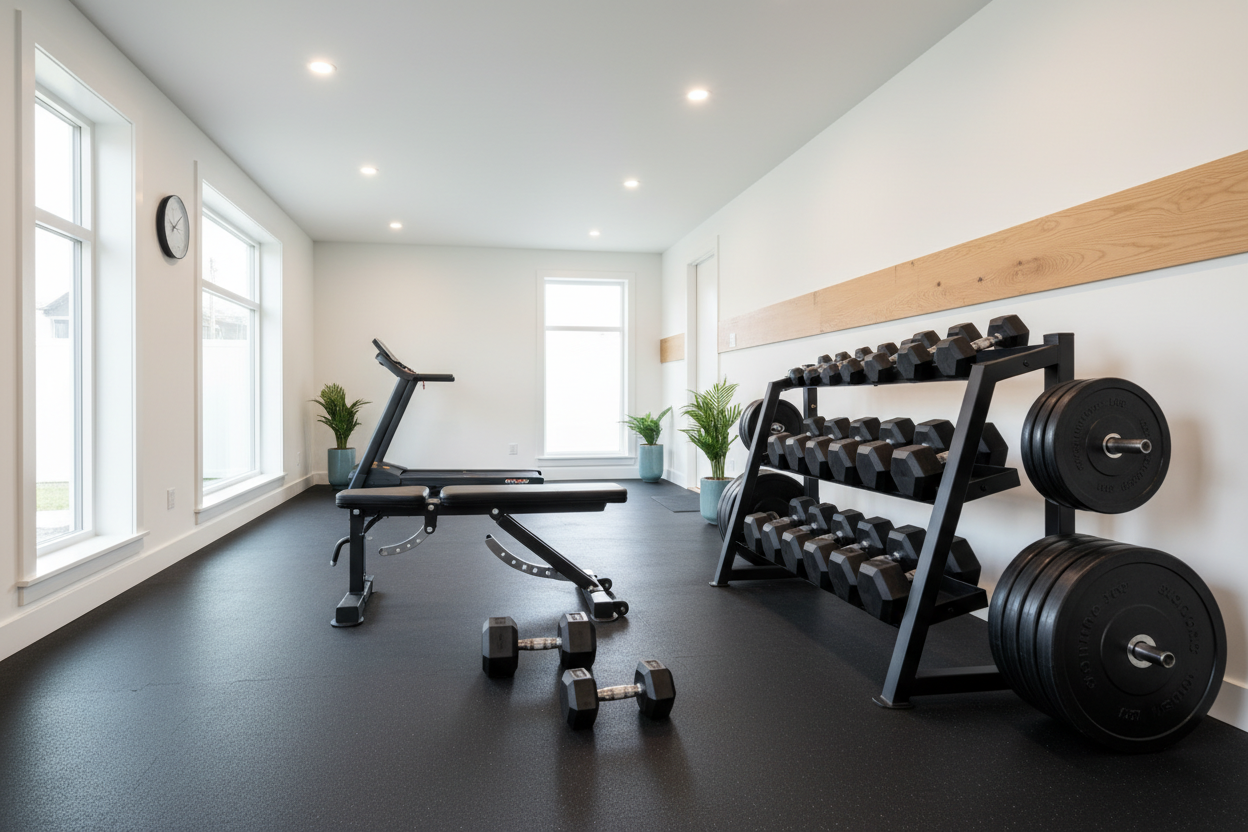
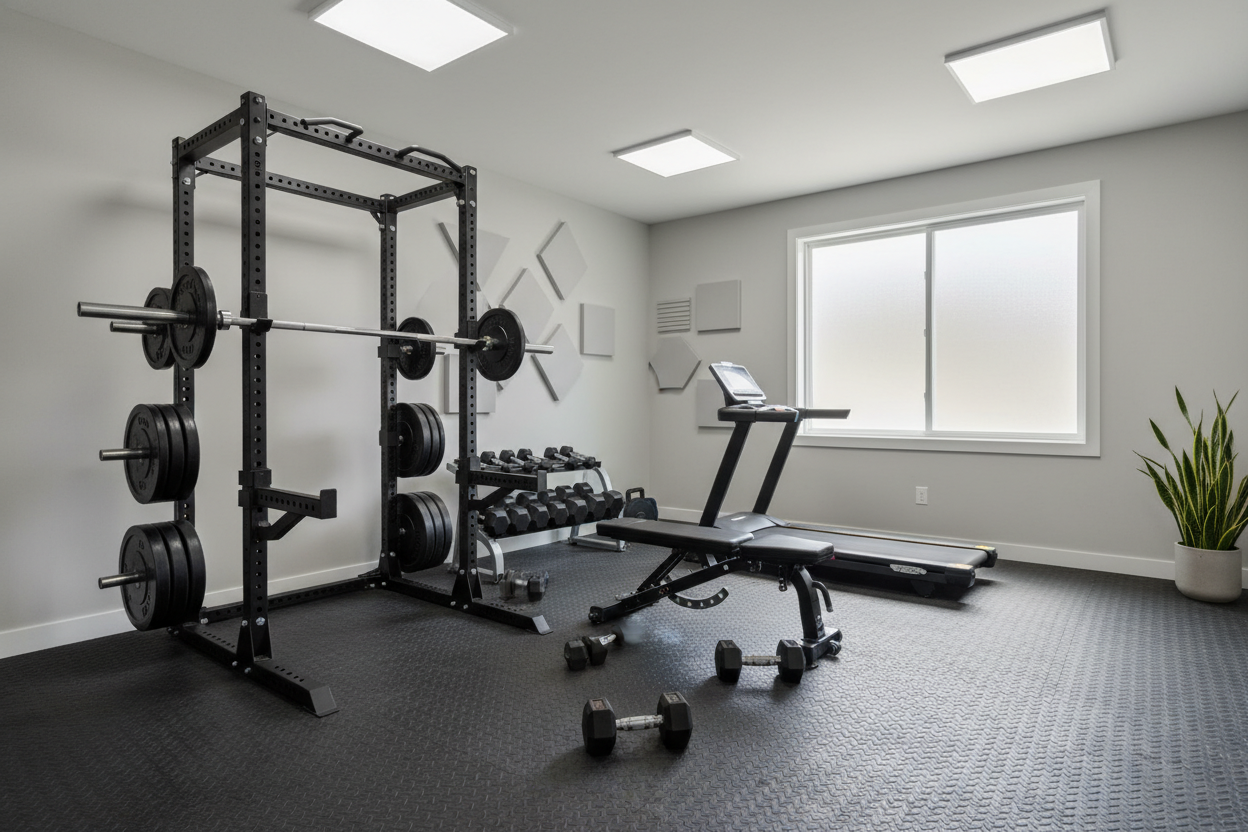
Setting up for a heavy session does not require a 2,000-square-foot facility. In my 400-square-foot garage, space is a premium. You need a layout that allows you to transition from a heavy bench press to a row without tripping over plates. I have found that a dedicated lifting area is essential for maintaining focus and safety.
I highly recommend laying down a high-quality 6X8Ft Exercise Mat Yoga Mat Gym Flooring For Home Workout before you start dragging heavy iron around. It protects your subfloor from dropped dumbbells and gives you a non-slip surface for your bench. There is nothing worse than having your feet slide out from under you during a max-effort rep because you are lifting on dusty concrete.
The Minimalist Workout Breakdown
Here is the exact routine I use when I am short on time but want maximum results. We are focusing on four main movements with a focus on progressive overload. If you can do more reps than the target range, add weight next time. No exceptions.
- Flat Bench or DB Press: 3 sets of 6-8 reps. (Rest 3 minutes)
- Seal Rows or DB Rows: 3 sets of 8-10 reps. (Rest 2 minutes)
- Incline DB Press: 2 sets of 10-12 reps. (Rest 90 seconds)
- Pull-Ups or Lat Pulldowns: 2 sets to failure. (Rest 90 seconds)
This whole session should take you about 45 minutes if you stay off your phone. It is intense, it is heavy, and it hits everything you need for a thick upper body. For more variations and specialized training blocks, check out our Workout Hub to see how this fits into a full-week split.
FAQ
Do I need to do incline bench to grow my upper chest?
It helps, but it is not a requirement. A heavy flat press hits the whole pec. If you have the time, adding two sets of incline work at the end of your session is plenty of stimulus for the 'upper' fibers.
Can I do this workout every day?
Absolutely not. Your muscles grow while you sleep, not while you are lifting. Give yourself at least 48 hours between these sessions. Twice a week is the sweet spot for most natural lifters.
What if I only have a pair of 50-lb dumbbells?
You will eventually outgrow them for low-rep strength work. To keep growing, you will need to increase the difficulty by slowing down the tempo (4 seconds down, 1 second pause) or increasing the total reps until you can invest in heavier gear.