Are There Actually Any Sports That Build Muscle?
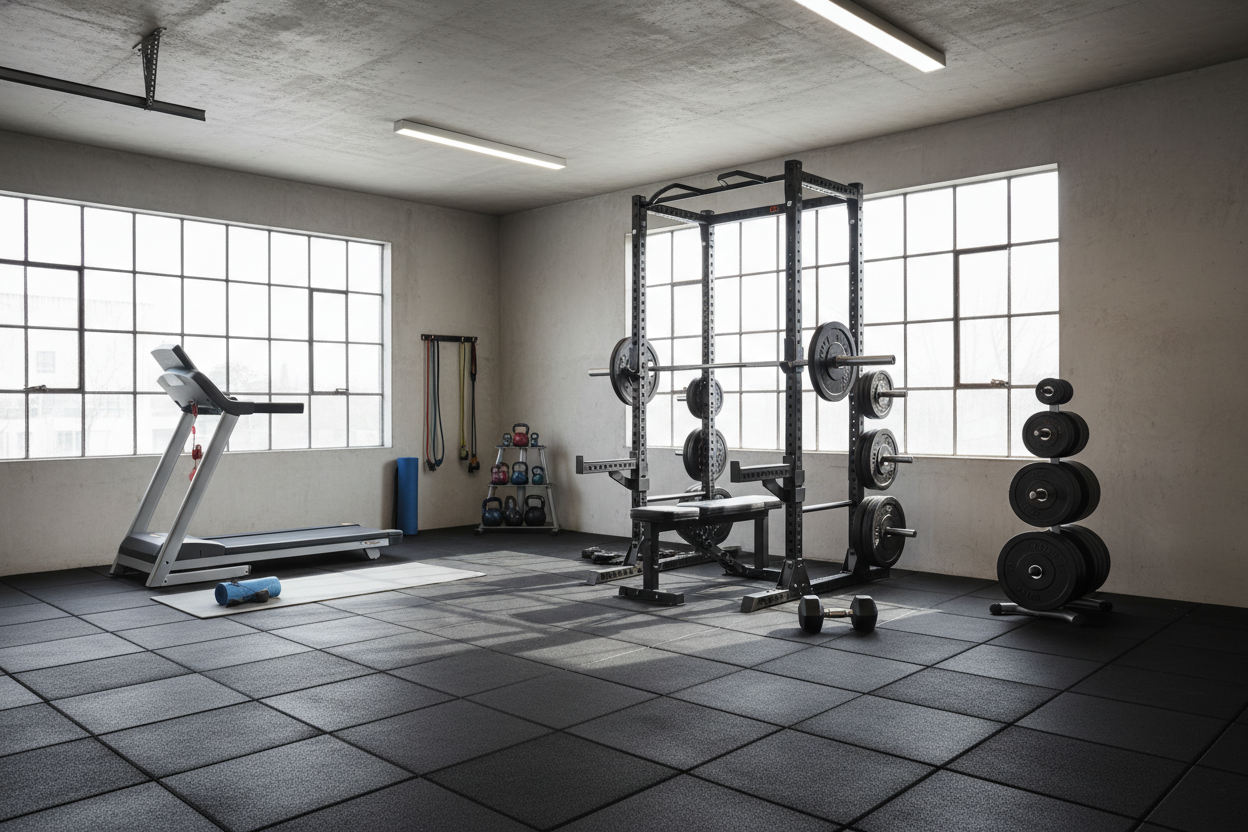
I was watching a group of guys play competitive ultimate frisbee at the park last weekend. They were sprinting, jumping, and diving for an hour straight. They were clearly 'fit,' but from a hypertrophy perspective, they were invisible. It made me look at my own power rack and wonder: are there actually any sports that build muscle, or is the barbell the only path to looking like you actually lift?
Most people confuse being 'active' with being 'anabolic.' You can sweat through your shirt and burn 800 calories in a soccer match, but that doesn't mean your biceps are going to grow an inch. If you want to know which sports to build muscle, you have to look at the mechanics of the movement, not just the heart rate monitor.
- Mechanical Tension: Most sports lack the heavy eccentric load needed for growth.
- The 'Big Three' Exceptions: Gymnastics, Wrestling, and Sprinting are the gold standards.
- The Pro Athlete Illusion: NFL players are jacked because of the weight room, not just the field.
- Eccentric Loading: Swimming and rowing use many muscles but lack the 'stretch' phase for maximum hypertrophy.
The Difference Between Burning Calories and Building Mass
The harsh truth is that most recreational sports are essentially disguised cardio. Playing pickup basketball or running 5Ks will make you a lean, mean, aerobic machine, but it won't make you huge. Why? Because muscle growth requires mechanical tension and progressive overload.
When you play most sports, you are dealing with cardiovascular fatigue long before you hit muscular failure. Your lungs give out before your quads do. To trigger hypertrophy, you need to subject the muscle fibers to enough tension to cause micro-tears. Most sports that involve running are actually catabolic—they eat away at your gains to make you more efficient at moving your body weight over distances.
What Sport Uses the Most Muscles? (And Why That's the Wrong Question)
If you ask a trainer what sport uses the most muscles, they'll usually point to swimming or rowing. On paper, they're right. Swimming engages your lats, delts, core, and legs simultaneously. But here's the catch: water provides no eccentric resistance. There is no 'negative' phase to a swimming stroke.
Without eccentric damage, you aren't forcing the muscle to adapt and grow in size. You'll get a great 'pump' and incredible endurance, but you won't build the dense mass you'd get from a heavy set of rows. The same goes for rowing. It's a fantastic tool for conditioning, but it's not what sport builds the most muscle in the long run. If you want mass, you need resistance that fights back.
The Heavy Hitters: 3 Sports That Build Muscle Mass
If you're dead set on stepping off the lifting platform and into an arena, there are three sports that build muscle mass effectively. First up: Gymnastics. Look at any high-level ring specialist. Their bicep and shoulder development is insane. This comes from extreme time under tension and the fact that gymnasts naturally utilize exercises to build muscle mass by working through deep, loaded ranges of motion on the rings and floor.
Second is Sprinting or Track Cycling. These athletes are all about explosive power and fast-twitch fiber activation. A 100m sprinter's hamstrings look like they were carved out of granite because they are essentially performing high-velocity, maximal-effort leg curls with every stride. Finally, there's Wrestling or Grappling. This is brutal isometric holds against human resistance. Fighting a 200-lb man who doesn't want to be moved is the ultimate form of 'odd object' training.
The 'Incidental Hypertrophy' Trap of Pro Athletes
Don't fall for the trap of looking at an NFL linebacker or an Olympic sprinter and assuming the sport gave them that physique. These guys are jacked because they spend four days a week in a high-performance weight room. Their sport is the expression of their power, but the gym is the factory where that power is built.
When people ask what sport builds the most muscle, they often point to football players. But if those guys stopped squatting 500 pounds and only practiced drills, their muscle mass would wither within a season. The 'incidental' muscle you see on pro athletes is the result of a calculated, heavy strength program designed to keep them from breaking on the field.
How to Mix Athletic Training Into Your Home Gym Setup
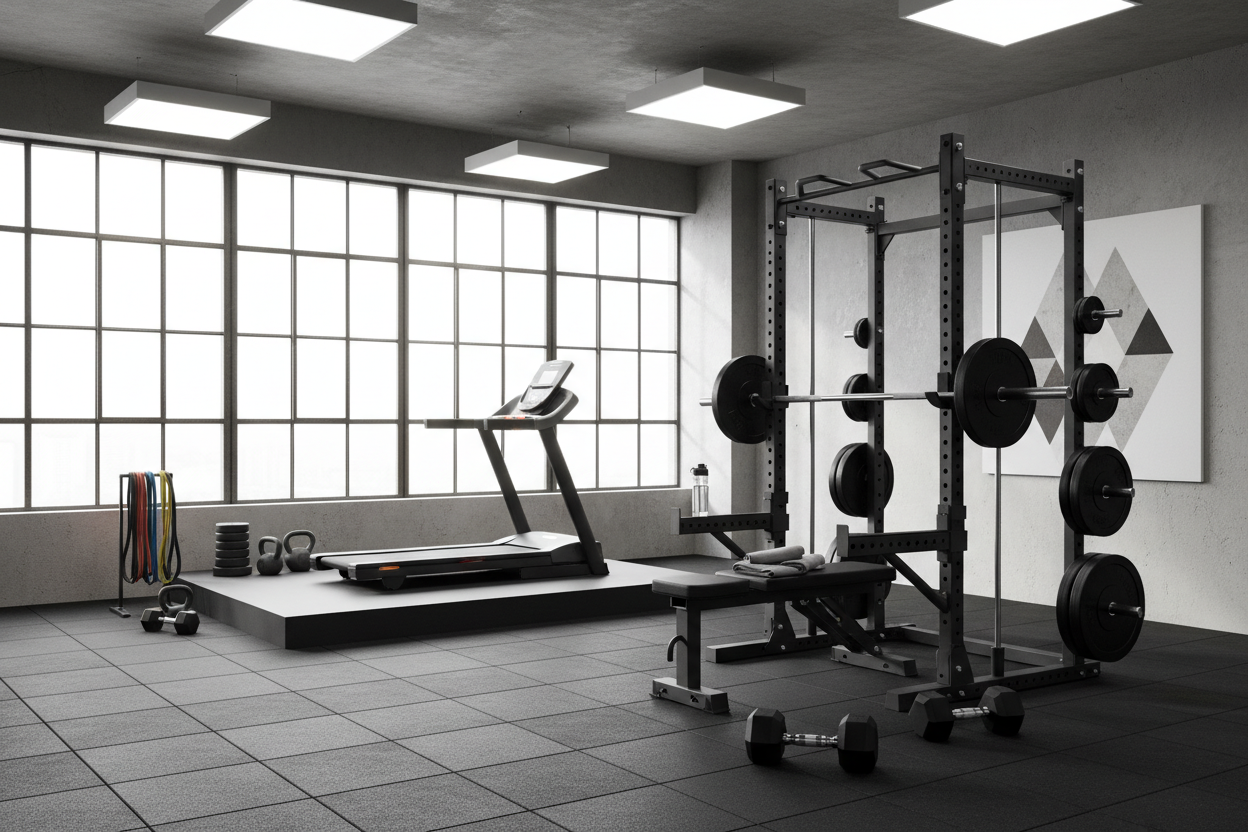
You don't have to quit the gym to become an athlete. You can integrate sport-specific movements into your garage routine. I like to start my sessions with explosive floor work or plyometrics. If you're doing this at home, don't do it on bare concrete—get some extra wide 7 feet exercise mats so you have room to move without smashing your joints or sliding into your rack.
I also recommend ditching the barbell once a week for a 1-arm exercise to build muscle mass. Unilateral training mimics the alternating limb mechanics of sprinting and throwing. It forces your core to stabilize against rotational forces, which is exactly what happens in real-world sports. It bridges the gap between 'gym strong' and 'athletic mass.'
My Personal Experience with 'Sport Gains'
A few years ago, I decided to take a break from heavy lifting and joined a competitive Brazilian Jiu-Jitsu gym. I thought the 'functional' movement would keep my size. I was wrong. Within three months, I lost 12 pounds, mostly from my chest and quads. While my 'gas tank' was huge and my grip strength was terrifying, I looked smaller in a t-shirt. I learned the hard way that while grappling is one of the best sports to build muscle through isometric tension, it still can't replace the pure mechanical load of a barbell. Now, I keep the mats for conditioning and the rack for mass.
FAQ
Does swimming build muscle?
It builds endurance and a lean look, but rarely significant mass. The lack of eccentric loading (the 'down' part of a lift) means it won't trigger the same hypertrophy as weights.
Can you get big just by playing sports?
Unless you are a gymnast or a high-level wrestler, it's very difficult. Most sports are too aerobic. You need the controlled tension of resistance training to truly grow.
What is the most muscular sport?
If we are talking about pure muscle mass without outside weightlifting, Gymnastics and Wrestling take the crown due to constant high-tension demands.