For good shoulder workouts dumbbells are all you really need
I remember spending nearly six hundred bucks on a fancy wall-mounted cable station just to realize my shoulders grew more from a beat-up pair of 25-pound hex dumbbells. We get caught up in the gear arms race, scrolling through rack attachments when the solution is usually sitting on the floor gathering dust. For good shoulder workouts dumbbells are the only tool that actually matters once you stop lifting like a textbook and start lifting for tension.
- Posture Shift: Letting your shoulders slump forward isolates the deltoid by disabling the traps.
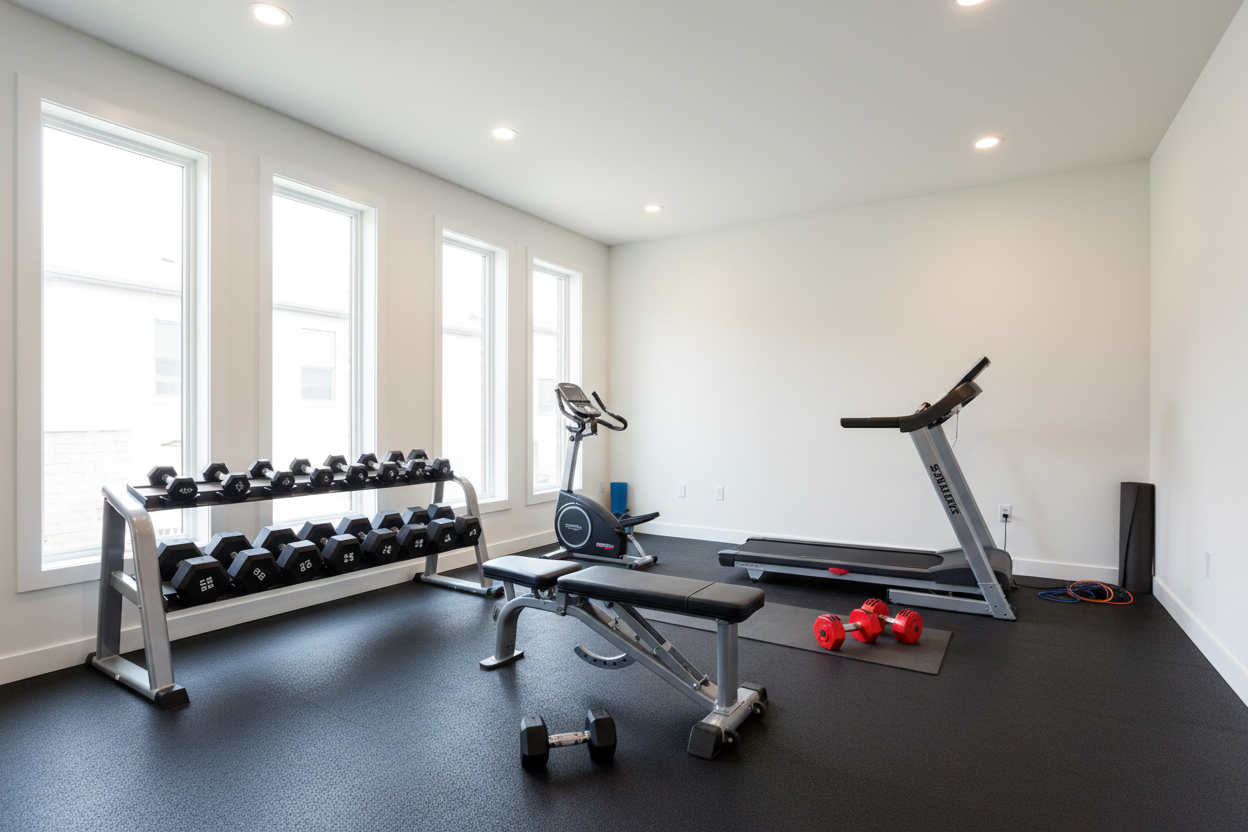
- Equipment Minimum: You only need one adjustable bench and a modest set of weights.
- Rear Delt Secret: A rounded thoracic spine is mandatory for actual rear delt hypertrophy.
- Efficiency: These techniques make 15-pound weights feel like 40s, saving your joints and your wallet.
The Trap of 'Perfect Posture' in Shoulder Training
Every trainer tells you the same thing: chest up, shoulders back, spine neutral. That is great advice if you want to Build A Stronger Chest With Dumbbell And Free Weight Workouts or move a heavy deadlift without snapping a disc. But when it comes to free weights shoulder exercises, that 'perfect' posture is exactly what is keeping your delts small.
When you pin your shoulder blades back and down, you create a stable platform for your traps and rhomboids to take over the movement. Your body is smart; it wants to use the biggest muscles available to move the weight. If you stay upright and rigid, your traps will happily steal the load from your lateral delts every single time. To get those capped shoulders, you have to intentionally break the rules of 'good' posture.
The 'Dead-Scapula' Technique for Lateral Raises
The 'Dead-Scapula' method is a bit of a mind-trip the first time you try it. Stand up and let your arms hang. Now, instead of pulling your shoulders back, let them slump forward slightly. Think 'sad gorilla.' This position physically creates more distance between the origin and insertion of the lateral delt while putting the traps in a mechanically disadvantaged state.
Grab your weights and raise them out to the sides while maintaining that slight slump. Keep your pinkies slightly higher than your thumbs. You will notice immediately that you can't use nearly as much weight as you usually do. If you have Got Light Weights? Try this shoulder workout with dumbbells using this technique and you will see that a 10-pounder feels like a lead brick by the tenth rep. This is pure shoulder exercises weight isolation.
Why Rear Delts Demand a Rounded Back
Most rear delt flies look like a row variation because people are obsessed with squeezing their shoulder blades together. If your shoulder blades are moving toward each other, you are training your mid-back, not your shoulders. To fix this, you need to stabilize your torso and isolate the glenohumeral joint.
I recommend grabbing a Gxmmat Adjustable Weight Bench and setting it to a 30 or 45-degree incline. Lay chest-down, but instead of keeping a flat back, intentionally round your upper back over the top of the bench. Let your arms hang straight down. When you perform the fly, keep your arms slightly in front of your body. This 'slumped' position prevents the rhomboids from firing, forcing the tiny rear delt to do 100 percent of the work. This is the secret to effective shoulder workouts with free weights.
Building the 'Slumped' Shoulder Weights Workout
You don't need a 20-exercise circuit. You need three movements performed with surgical precision. Start with heavy partial swings—grab weights about 20% heavier than your normal lateral raise and just swing them in the bottom third of the range of motion for 15 reps to wake up the nerves.
Follow that with 3 sets of 12 'Dead-Scapula' laterals. Keep the tempo slow. Finally, hit the chest-supported rounded-back rear delt flies for 4 sets of 20 reps. This shoulder weights workout focuses on high-volume metabolic stress. Because you are using the 'slump' technique, the risk to your rotator cuffs is actually lower than traditional heavy overhead pressing because the load stays strictly on the muscle belly.
Ditch the Cables: Why Dumbbells Reign Supreme Here
I love a good cable machine for constant tension, but dumbbells offer something cables can't: total freedom of joint alignment. Everyone's shoulder socket is shaped slightly differently. Fixed paths on Weight Lifting Machines can often lead to that 'clicking' or 'pinching' feeling because they don't account for your specific carrying angle.
With dumbbells, you can rotate your wrists and adjust your arm path by millimeters to find the 'sweet spot' where the muscle fires without joint pain. Once you master the leverage of your own limbs, you realize that shoulder workouts free weights style are superior for building a frame that looks wide even in a heavy hoodie. You don't need a gym membership; you just need to stop being so stiff.
Personal Experience: The 50-Pound Ego Trap
For years, I refused to do lateral raises with anything less than the 50-pounders. I thought I was a beast. In reality, my traps were doing 80% of the work, and my neck was constantly stiff. I finally swallowed my pride, grabbed the 15s, and tried the dead-scapula slump. The pump was so intense I couldn't wash my own hair after the workout. My delts grew more in three months of 'light' training than they had in three years of heavy ego lifting. Don't make my mistake—tension is king, not the number on the side of the bell.
FAQ
Is it safe to lift with a rounded back?
For heavy compounds like squats or deadlifts, absolutely not. But for light isolation work like rear delt flies where your torso is supported by a bench, rounding the thoracic spine is a safe and effective way to inhibit the mid-back muscles.
Can I build big shoulders without overhead pressing?
Yes. While the overhead press is great for overall strength, many lifters find that lateral and rear delt isolation does more for the actual 'aesthetic' width of the shoulder than pressing ever could.
How often should I do this routine?
The lateral and rear delts recover quickly. You can run this dumbbell-only routine twice a week, provided you aren't experiencing any joint lingering soreness. Frequency is usually better than total daily volume for shoulders.