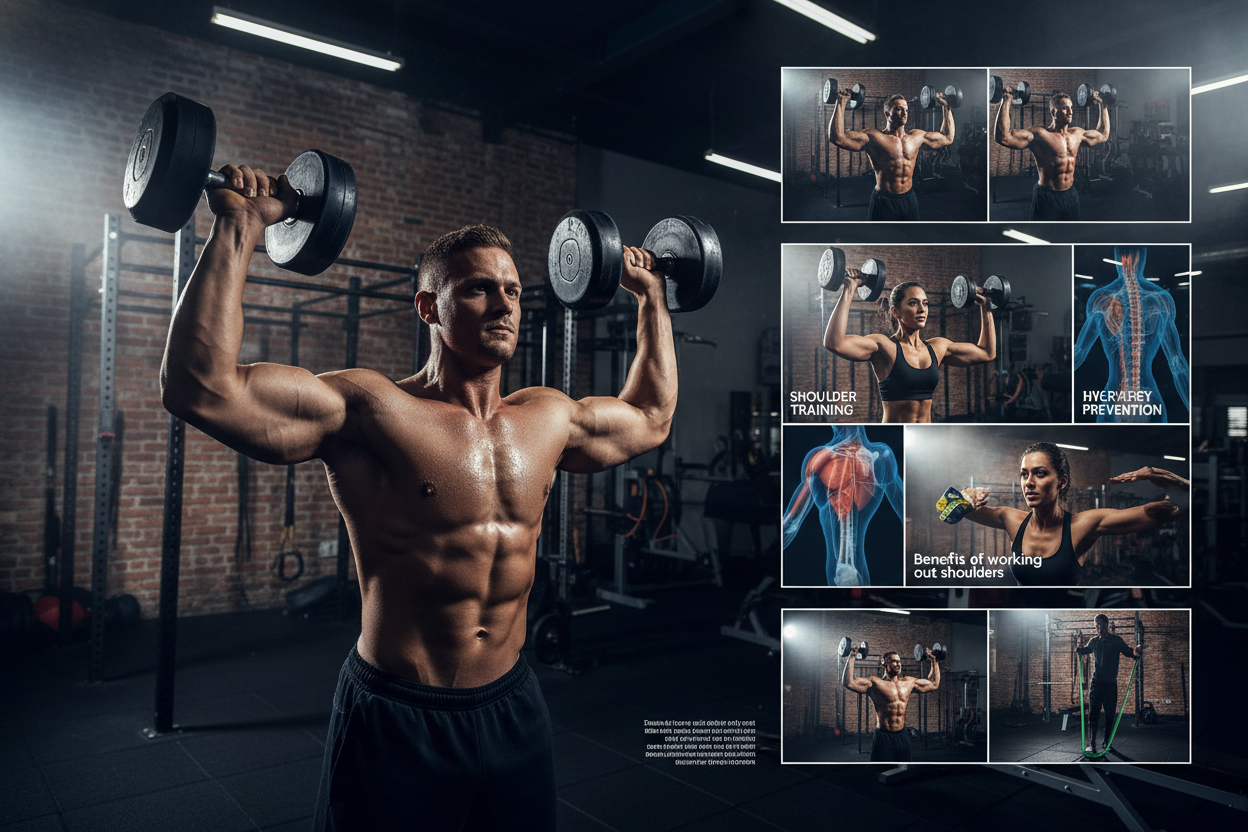
Are Shoulders Important to Workout? The Honest Truth
You walk into the gym on Monday, and the bench press stations are full. The squat racks have a line. But the overhead press rack? Often empty. It makes you wonder: are shoulders important to workout, or are they just an aesthetic bonus for bodybuilders?
Here is the reality. Your shoulders are the pivot point for almost every upper body movement you do. If you neglect them, you aren't just missing out on the "V-taper" look; you are actively capping your strength potential on other lifts and inviting nagging injuries that can keep you out of the gym for months.
Key Takeaways: Why You Can't Skip Shoulder Day
If you are looking for the short answer, here is why shoulder training is non-negotiable:
- Injury Prevention: Strong deltoids protect the vulnerable rotator cuff and glenohumeral joint.
- Compound Lift Support: Your bench press and pull-up strength rely heavily on shoulder stability.
- Aesthetic Balance: Well-developed shoulders create the illusion of a smaller waist (the V-taper).
- Functional Mobility: Daily tasks, from putting luggage overhead to carrying groceries, require delt strength.
The Mechanics: It’s More Than Just Looking Broad
To understand the benefits of working out shoulders, you have to look at the anatomy. The shoulder joint is a ball-and-socket mechanism with an incredible range of motion. Because it moves so freely, it is inherently unstable.
When you train your shoulders, you aren't just pumping up the muscle. You are building a layer of armor around that unstable joint. If the muscles surrounding the capsule are weak, the burden falls on your ligaments and tendons. That is usually when tears and impingements happen.
The "Three-Head" Approach
Many lifters make the mistake of only doing overhead presses. This overdevelops the front (anterior) delt, which is already hammered during chest exercises. For healthy shoulders, you need to target all three heads:
- Anterior (Front): Pushing power (Bench press, overhead press).
- Medial (Side): Width and capped look (Lateral raises).
- Posterior (Rear): Posture and joint health (Face pulls, reverse flyes).
Shoulders Are the Foundation of Your Bench Press
This might sound counterintuitive, but if you want a bigger chest, you need stronger shoulders. During a heavy bench press, your shoulders act as stabilizers. If they wobble or fatigue before your pecs do, the lift fails.
I often see lifters plateau on chest day not because their pecs are weak, but because their anterior delts can't handle the load at the bottom of the movement. Strengthening the shoulder girdle provides a solid platform to push from.
The Aesthetic Argument: The V-Taper
Beyond performance, the visual impact is undeniable. Broad shoulders are the primary driver of the "V-taper" physique. By widening the upper body, your waist appears narrower by comparison.
This is particularly important if you have a naturally blocky waist or wider hips. You cannot shrink your hip bone structure, but you can widen your shoulder width through medial delt hypertrophy (growth), changing your overall silhouette.
My Training Log: Real Talk
I used to think shoulder training was just overhead pressing. I chased numbers on the military press and ignored everything else. It worked for a while, until my bench press started stalling and my left shoulder started clicking every time I reached for a seatbelt.
The turning point wasn't a heavier weight; it was a lighter one. I started incorporating high-volume face pulls and rear-delt flyes. I remember the specific sensation of doing face pulls with a tricep rope—the rough nylon grazing my ears and the intense, cramping burn deep in the back of the shoulder, totally different from the "pump" you get in your biceps.
It wasn't glorious. I was using the lightest plate on the stack. But within six weeks, that annoying click in my shoulder disappeared. More importantly, my bench press, which had been stuck at 225 lbs for ages, suddenly felt stable. I wasn't fighting the bar path anymore because my rear delts were finally doing their job of stabilizing the joint. If you are ignoring your rear delts, you are training on a cracked foundation.
Conclusion
So, are shoulders important to workout? Absolutely. They are the link between your torso and your arms. Weak shoulders mean a weak bench, poor posture, and a high risk of injury. Treat them with the same respect you give your chest and back, and your numbers on every other lift will go up.
Frequently Asked Questions
How often should I train my shoulders?
For most lifters, training shoulders twice a week is optimal. Since the front delts get worked on chest day, you might dedicate one session to heavy overhead pressing and another session to lighter, high-repetition isolation work for the side and rear delts.
Can I just do bench press for my shoulders?
No. While the bench press heavily recruits the front deltoid, it neglects the side and rear heads. Relying solely on bench pressing can lead to muscular imbalances, rolling your shoulders forward (bad posture) and increasing the risk of rotator cuff injuries.
What if my shoulders hurt when I press overhead?
If you feel sharp pain (not muscle burn), stop immediately. This is often due to poor mobility or impingement. Try switching to a neutral grip (palms facing each other) using dumbbells or a Swiss bar, which opens up the shoulder joint and reduces compression.