Are Fast Reps Ruining Your upper body hypertrophy exercises?
I spent years staring at my power rack, wondering why my physique looked exactly the same despite adding another 20 pounds to my bench press. I was obsessed with the numbers on the plates, ignoring the fact that I was basically using gravity and momentum to do half the work for me. If you are chasing upper body hypertrophy exercises that actually move the needle, it is time to stop treating your reps like a race to the finish line.
- Slow eccentrics (3-4 seconds) trigger more muscle fiber damage than heavy, fast reps.
- You can get more growth out of a 30lb dumbbell than a 50lb one by controlling the descent.
- Stability is the foundation of tension; if your feet are sliding, your muscles aren't growing.
- Mechanical tension is the primary driver for a successful upper body hypertrophy program.
Are You Lifting for Ego or for Muscle?
Let's be real: nobody is watching you in your garage. There is no crowd to impress with a bouncy, 225-pound bench press that looks more like a trampoline act than a chest workout. Moving weight from point A to point B is a skill for powerlifters, but if you want to look like you actually lift, you need to prioritize tension over tonnage.
The difference between training for raw strength and training for upper body hypertrophy comes down to how long you can make that muscle suffer. Muscle growth doesn't care about the number stamped on the side of your iron; it cares about how much time it spends under load. When you rush the rep, you're literally stealing gains from yourself. You're letting gravity take the weight down, which is the exact phase where the most growth happens.
The Science of a Slower Upper Hypertrophy Workout
The lowering phase, or the eccentric portion of a lift, is where the magic happens. This is where your muscle fibers are stretched under load, causing the micro-tears that signal your body to build back bigger and stronger. If you just drop the weight, you're skipping the most productive part of the set.
In a typical upper hypertrophy workout, I'd rather see you take a 30-pound dumbbell and lower it for a slow, agonizing 4-second count than watch you manhandle a 50-pounder with zero control. By slowing down, you eliminate momentum and force the muscle to stay engaged through the entire range of motion. It’s significantly harder, and it’s why most people avoid it. Before you start adding more plates, check out this fluff-free upper body workout guide to make sure your basic mechanics aren't the thing holding you back.
4 upper body hypertrophy exercises to Try on 'Slow Mode'
Ready to actually feel your muscles working? Try these four staples with a strict 4-second eccentric phase. First, the Dumbbell Bench Press. Instead of just pressing, think about pulling the weights down to your chest, resisting the weight every inch of the way. You should feel a massive stretch in your pecs at the bottom. This approach makes even a standard routine feel like an intense factory-style chest workout.
Second, the Barbell Row. Most guys 'row' by yanking the bar and letting it crash back down. Stop that. Pull to your gut, hold for a second, and take 3 seconds to return to the floor. Third, the Overhead Press—don't let the bar drop onto your collarbone. Finally, Pull-ups. If you can't lower yourself slowly for 5 reps, you have no business trying to do 15 fast ones. The physical sensation should be a deep, burning ache, not a sharp joint pain. If your joints hurt, the weight is too heavy for your control.
A Stable Base Matters More Than You Think
When you slow down your reps, stability becomes your biggest bottleneck. If you're doing a heavy eccentric row and your sneakers are sliding on dusty concrete, your body will naturally 'downshift' the power output to keep you from falling. You lose the tension required for upper body growth because your brain is worried about you slipping.
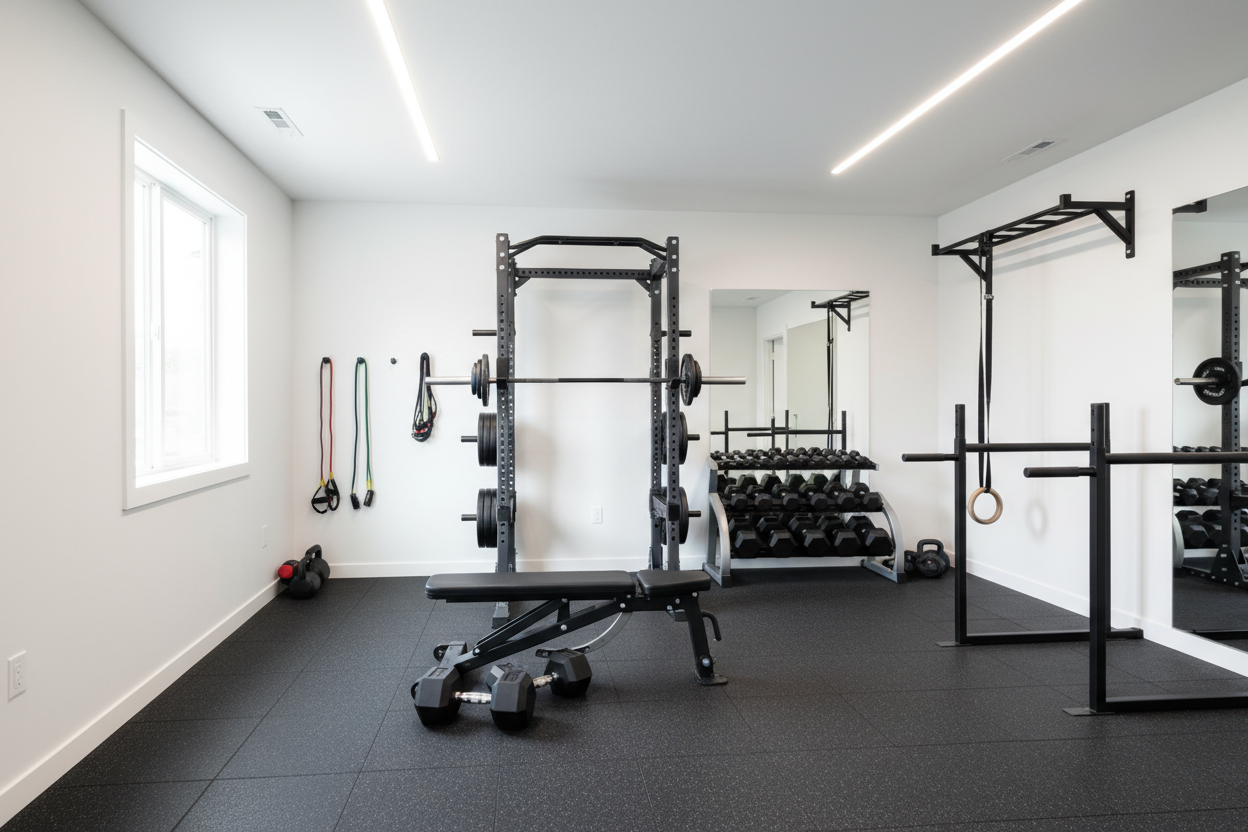
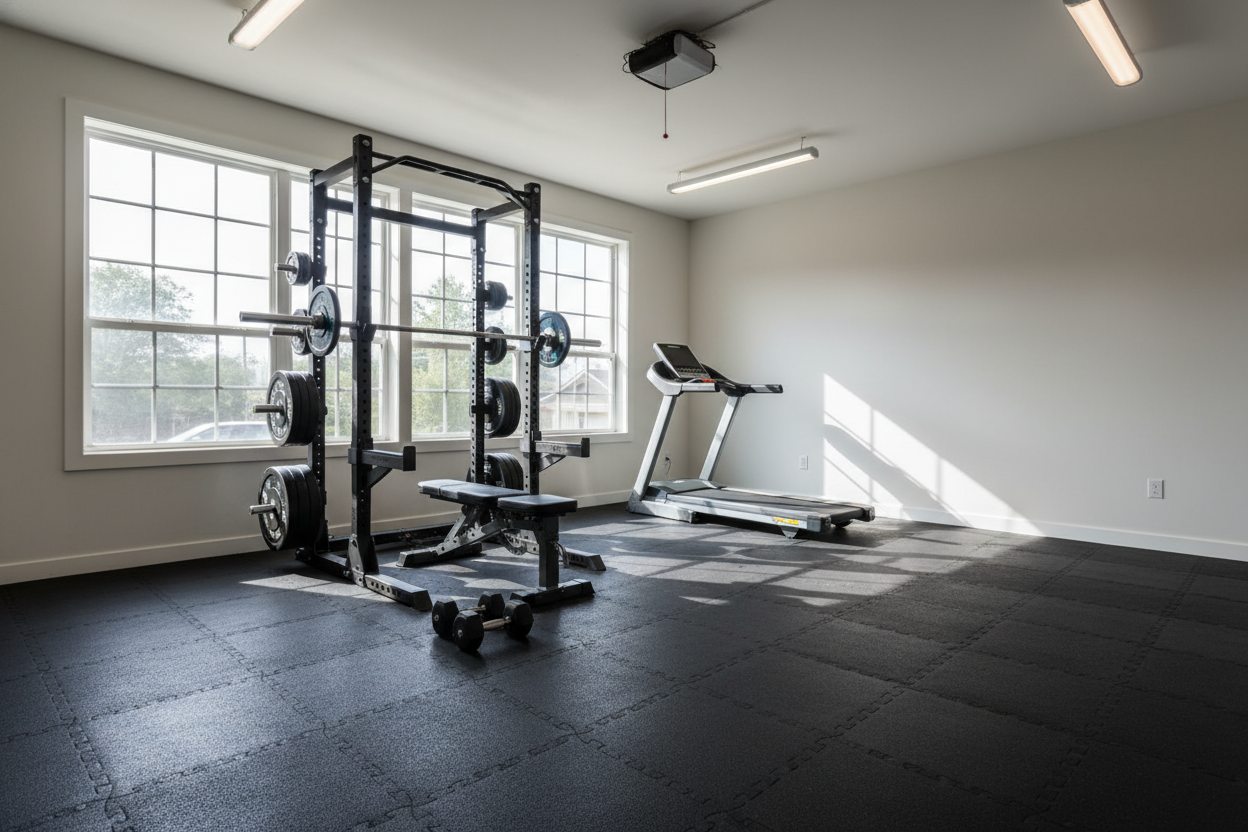
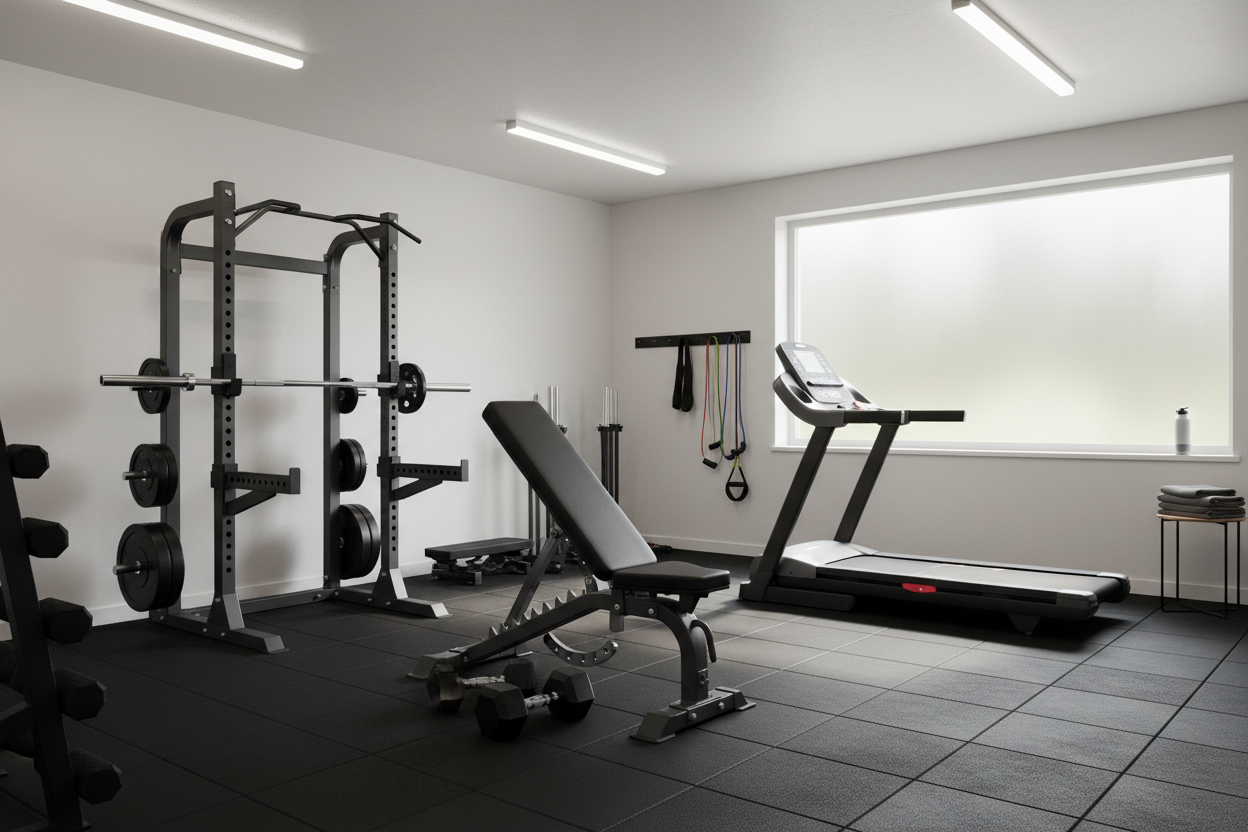
I realized this the hard way when I was trying to do slow-tempo overhead presses on a slick floor. I couldn't focus on my shoulders because my calves were screaming trying to keep me upright. Investing in durable gym flooring for home workout setups isn't just about protecting your concrete; it's about giving your feet the grip they need to let your upper body do its job. Grounding yourself allows you to put 100% of your focus into the eccentric stretch.
Building Your Weekly upper body hypertrophy program
Don't try to make every single rep of every single workout a slow-motion grind. That's a recipe for burnout. Instead, weave this into your upper body hypertrophy program by picking two 'primary' lifts per session to focus on tempo. Aim for 3 sets of 8-10 reps with a 4-second negative. You will likely have to drop your usual working weights by 20-30%.
This method works best for hypertrophy because it maximizes mechanical tension without requiring the massive central nervous system fatigue of max-effort lifting. While you're busy refining your upper body, remember to keep your proportions in check. You can't just be a floating torso. Using a dedicated lower body strength machine on your off days ensures you don't end up with the 'lightbulb' physique while chasing that upper hypertrophy.
Personal Experience: The Roll of Shame
I once tried to apply this 4-second eccentric rule to a 275-pound bench press without a spotter. I got about three inches down, realized my triceps were absolutely fried from the previous slow sets, and the bar just kept coming. I had to perform the 'roll of shame' across my ribs in a quiet garage at 6 AM. It was a humbling reminder: drop the ego and the weight before you increase the time under tension. Start light, or you'll end up wearing the barbell like a tie.
FAQ
Do I need heavy weights for hypertrophy?
Not necessarily. While you need enough weight to challenge the muscle, 60-70% of your max is more than enough when you are using 3-4 second eccentrics. Tension is the goal, not the number on the plate.
How many days a week should I train for upper body growth?
Two to three times a week is the sweet spot. This allows for enough volume to trigger growth while giving your central nervous system time to recover from the intense eccentric loading.
Will slow reps make me more sore?
Absolutely. Eccentric training is the primary cause of Delayed Onset Muscle Soreness (DOMS). Start with just one or two slow-tempo exercises per workout so you aren't completely sidelined for the rest of the week.