Are Dumbbell Shoulder Rotation Exercises Worth Doing Anymore?
I remember the first time my shoulder started sounding like a bowl of Rice Krispies. Every time I hit the bottom of a bench press, it was a rhythmic click-pop-ouch that made me want to sell my rack and take up competitive walking. I spent weeks scrolling through forums and watching rehab specialists until I realized I was making the same mistake everyone else makes: I was treating dumbbell shoulder rotation exercises like a heavy accessory lift instead of the precision work they actually are.
Most people treat their rotator cuff like their biceps. They grab a 20-pounder, stand in front of the mirror, and start flailing their forearm back and forth. All that does is irritate the bursa and make your physical therapist's car payment. If you want to keep your shoulders from grinding into dust, you have to stop lifting with your ego and start lifting with mechanics.
Quick Takeaways
- Weight selection should be humble—most people need 5 to 10 lbs max.
- Side-lying positions are superior to standing because they align gravity with the muscle's line of pull.
- Internal rotation is the missing link for most lifters who only focus on the 'show' muscles.
- Perform these as finishers to avoid pre-fatiguing your stabilizers before heavy sets.
Why Your Rotator Cuffs Hate The Way You Lift
The rotator cuff is a group of four tiny muscles, not a primary mover. When you try to load a shoulder rotation with dumbbell movements using heavy weight, your larger muscles like the deltoids and lats take over. You aren't actually strengthening the stabilizers; you're just teaching your body to compensate. This is where the 'impingement' nightmare starts.
I’ve seen guys in my local gym trying to power through external rotations with 30-pound dumbbells. Their torso is twisting, their elbow is flaring, and their shoulder blade is sliding all over the place. That's not training; that's a recipe for a labrum tear. These muscles respond to high-tension, low-weight control. You want to feel a deep, dull burn, not a sharp pinch. If you can't hold the end-range for a full second, the weight is too heavy.
Nailing Your Shoulder Rotation With a Dumbbell
To do this right, forget standing up. When you stand and rotate your arm, gravity is pulling the weight straight down toward your feet, not against the rotation of your shoulder. To get actual tension, you need to be side-lying. Lay on a bench or the floor on your side, tuck a rolled-up towel between your elbow and your ribs, and keep that elbow pinned like it's glued there.
The range of motion is smaller than you think. You’re moving the dumbbell from your belly button up toward the ceiling in a controlled arc. I prefer using an adjustable bench set to a slight incline if the floor feels too restrictive. The goal is to keep the shoulder blade retracted and depressed. If your shoulder starts rolling forward at the top of the movement, you've gone too far. Stay in the 'safe zone' where you feel the back of the shoulder working, not the front pinching.
The Forgotten Dumbbell Shoulder Internal Rotation
Everyone talks about external rotation because they want to 'open up' the chest, but dumbbell shoulder internal rotation is just as vital for joint Centration. If you’re a heavy presser, your internal rotators are often overworked but functionally weak. They are tight from all those reps but lack the eccentric control to stabilize the humeral head during a heavy dumbbell chest and shoulder routine.
To hit internal rotation with a dumbbell, you lay on the side you are training. Your arm is tucked under you, elbow bent at 90 degrees, and you rotate the weight from the floor up toward your stomach. It feels awkward at first, and you’ll realize very quickly that your range of motion is probably garbage. That’s fine. Improving this control is what keeps your shoulder from 'diving' forward when you’re grinding out that last rep of an incline press.
Programming This Into Your Heavy Push Days
Stop doing your cuff work as a warm-up. I know, every 'fitness influencer' tells you to do it first, but why would you fatigue the very muscles meant to keep your shoulder in the socket right before you try to bench 225? It makes no sense. I treat these as a strict, controlled finisher. After the heavy compounds and the hypertrophy work are done, I spend 5 minutes on the floor doing rotations.
I remember when I fixed my joint pain with these safe dumbbell shoulder exercises by moving them to the end of my Friday push sessions. Within three weeks, the 'AC joint clicking' that had haunted me for a year virtually disappeared. It wasn't magic; it was just giving the stabilizers the attention they needed without compromising my main lifts. Aim for 2-3 sets of 15-20 reps. If it feels easy, slow down the tempo rather than reaching for a heavier bell.
Creating a Stable Base for Floor Rotations
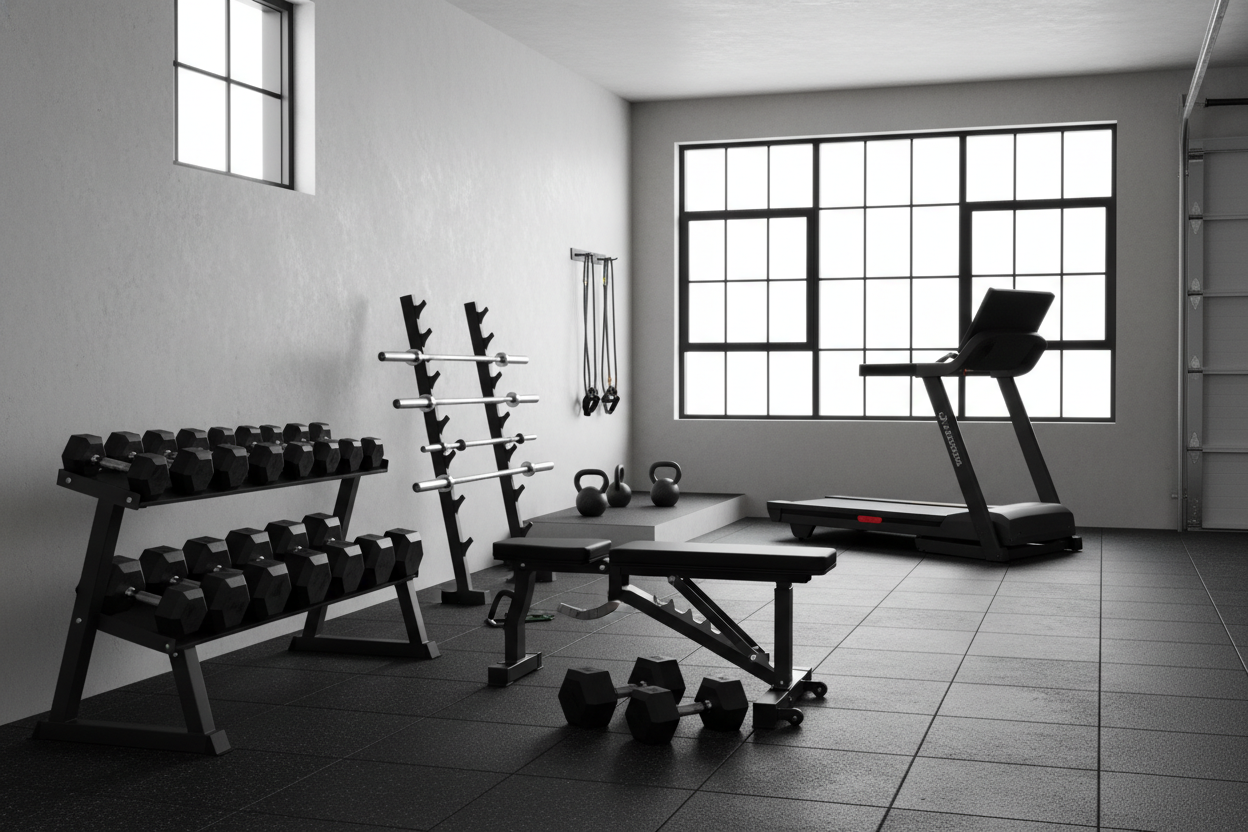
If you're training in a garage, you probably don't have the luxury of a plush commercial gym carpet. Side-lying rotations on bare concrete are a special kind of hell for your hips and elbows. You need a surface that doesn't slide and provides enough cushion so you aren't thinking about your bruised hip bone while trying to focus on your infraspinatus.
I usually roll out a large yoga mat with barefoot 6x12 because it covers enough real estate that I can transition from side-lying rotations to planks or stretches without touching the cold garage floor. A thick, high-density mat is a legitimate piece of equipment here; if you're uncomfortable, you'll rush the set. And rushing is the fastest way to turn a rehab movement into a pre-hab disaster.
FAQ
Do I really need dumbbells, or are bands better?
Bands are great for high-volume blood flow, but dumbbells provide a consistent resistance curve that is easier to track. If you want to actually measure progress, stick with the iron.
How heavy should I go?
If you're using more than 15 lbs, you're probably cheating. Most of my clients stay between 5 and 8 lbs for years. The rotator cuff doesn't need to be 'bulky'; it needs to be functional.
How often should I do these?
Twice a week is plenty. Overworking these tiny muscles can lead to tendonitis just as easily as ignoring them can. Treat them with respect, not obsession.