Apartment Complex Gym Workout: Mastering Limited Equipment
I have walked into dozens of residential fitness centers with clients, and the scene is almost always identical. You open the glass door to find a squeaky treadmill, a wobbly bench, and a rack of dumbbells that mysteriously stops at 50 pounds. If you are used to a massive commercial facility with endless squat racks, figuring out an apartment complex gym workout can feel incredibly frustrating. But after years of training clients in these exact 400-square-foot rooms, I can tell you that you do not need a heavy barbell to build serious muscle.
The secret is shifting your mindset. You cannot train here the same way you train at a mega-gym. We have to adapt by manipulating tension, tempo, and exercise selection to make light weights feel brutally heavy.
Quick Takeaways
- Tempo and time under tension replace heavy weight when dumbbells are limited.
- A single functional cable tower is your most versatile tool for full-body training.
- Unilateral (single-arm or single-leg) movements are mandatory for lower body growth.
- Supersets save time and increase intensity in shared, cramped spaces.
Why Your Apartment Complex Gym Workout Needs a Different Approach
Most standard fitness programs are built around the big three barbell lifts: squats, deadlifts, and bench presses. When you shift to apartment gym workouts, that entire methodology goes out the window. You simply cannot progressively overload a standard back squat when your heaviest weights are 50-pound dumbbells.
If you try to force a traditional powerlifting routine into an apartment gym workout, you will plateau fast. Instead, we have to adopt a minimalist machine adaptation approach. This means changing how we view resistance. Instead of just adding more physical plates to a bar, we add more muscular tension. We manipulate leverage, reduce rest periods, and use pre-exhaustion techniques to force the muscle to work harder with less load.
Evaluating the Standard Apartment Gym Setup
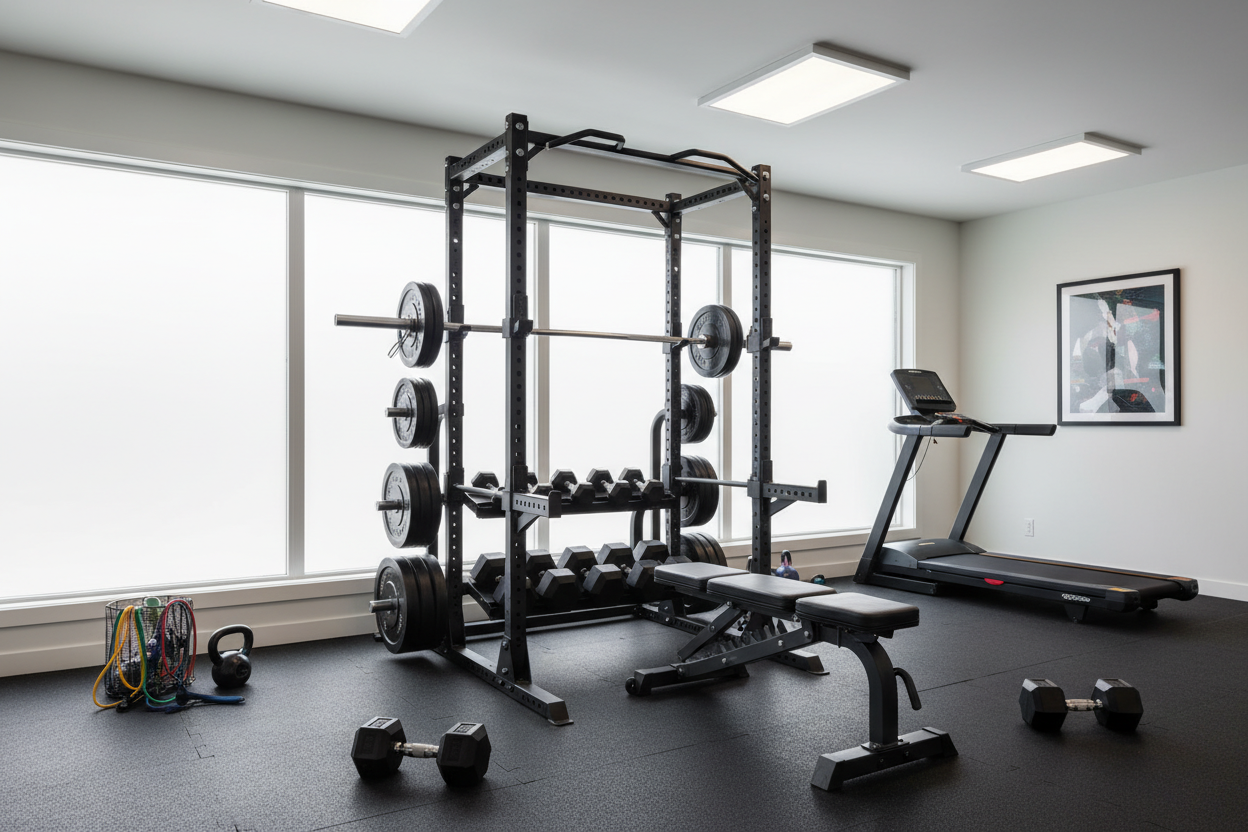
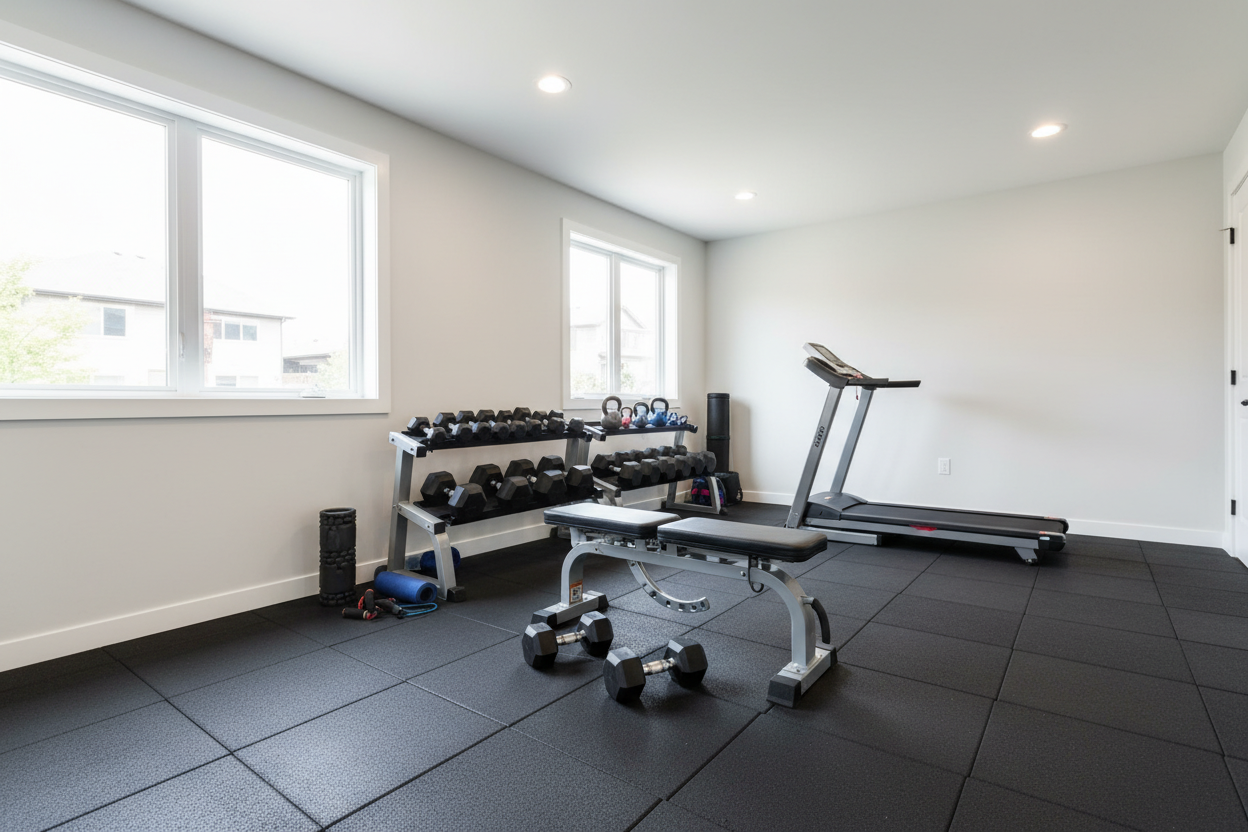
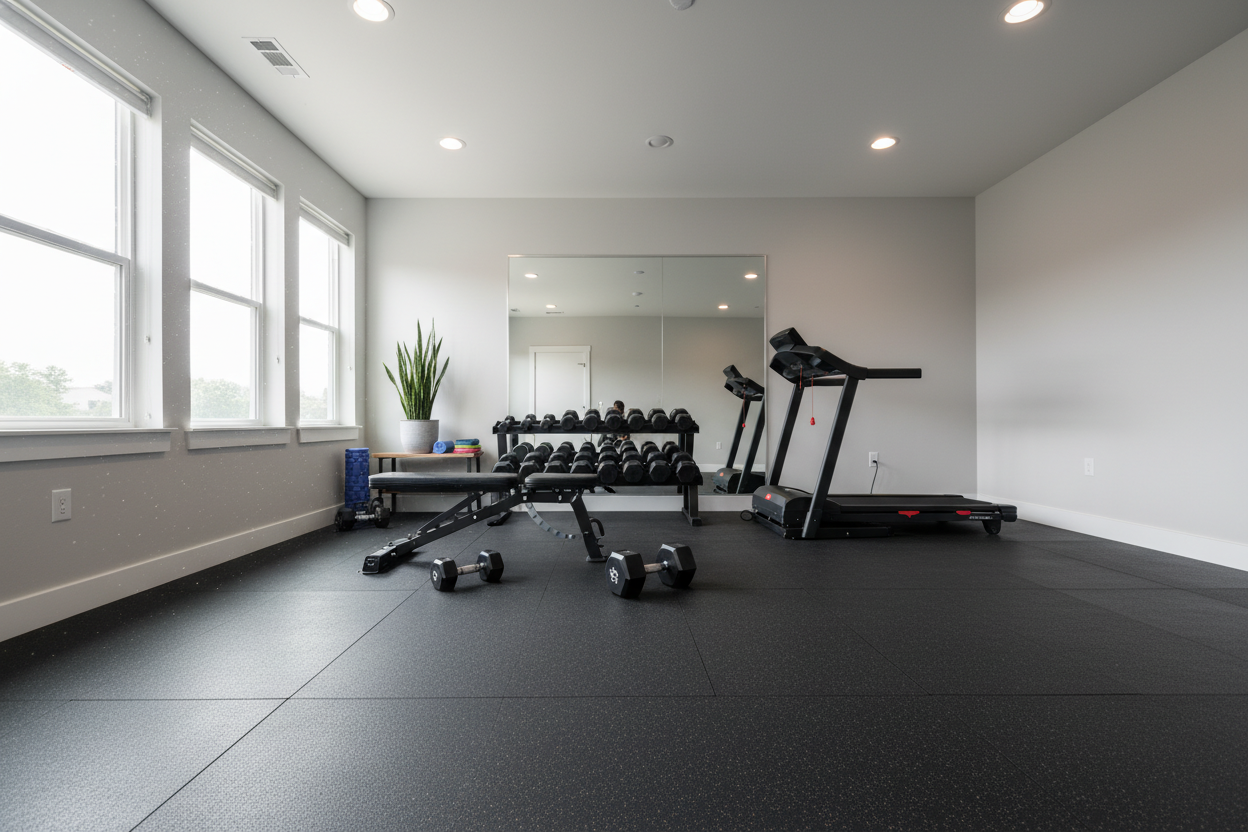
Before we build your routine, let us take a realistic look at what you actually have to work with. The typical residential fitness room usually occupies about 500 to 800 square feet. You will almost always find a basic dual-pulley cable tower, an adjustable bench, and a dumbbell rack ranging from 5 to 50 pounds.
Occasionally, you might score a Smith machine or a leg press, but we cannot rely on those being available or functional. The secret to a successful session is identifying the hidden potential in that basic cable tower and the limited floor space. The cable machine provides constant tension throughout the entire range of motion, which is something even free weights cannot offer.
Do not write off the light dumbbells, either. A 30-pound dumbbell feels incredibly heavy if you lift it with a strict four-second eccentric (lowering) phase. I once trained a client exclusively with 40-pound dumbbells for six months, and by utilizing pause reps, he gained more chest mass than he did bench pressing 225 pounds at a commercial gym.
Maximizing the Dumbbell Rack and Cable Machine
To make lighter weights feel heavier, you need to master mechanical tension. When performing any apartment complex gym workout routine, your grip and your lifting tempo are your best variables.
Try adding a pause at the bottom of your dumbbell bench press. Instead of bouncing the weight off your chest, stop completely for two seconds, then press up. Suddenly, those 40-pounders feel like 60s. For the cable machine, use D-handles to perform unilateral chest flyes or single-arm lat pulldowns. This allows you to stretch the muscle across its full range of motion, maximizing hypertrophy without needing the entire weight stack.
The Apartment Complex Gym Workout Routine
Designing a comprehensive program for a residential fitness room requires strategy. You need a routine that hits every muscle group hard but uses minimal equipment so you aren't hoarding five different sets of dumbbells while your neighbor glares at you from the elliptical.
This apartment gym workout routine is split into upper and lower body days. It relies heavily on supersets—pairing two exercises back-to-back with no rest—to keep your heart rate up and exhaust the muscles quickly. You will need one adjustable bench, two sets of dumbbells, and access to the cable tower.
Upper Body: Apartment Gym Workout Bodybuilding Tactics
When it comes to apartment gym workout bodybuilding, the goal is hypertrophy. Since you lack heavy barbells, we use slow eccentrics to trigger muscle growth.
Start with a superset of incline dumbbell presses and chest-supported dumbbell rows. Set the adjustable bench to a 30-degree incline. Perform 10 to 12 reps of the press, taking a full three seconds to lower the weight on every single rep. Immediately flip over, rest your chest on the incline pad, and perform 12 reps of rows, squeezing your shoulder blades together.
Next, move to the cable tower. Perform single-arm cable lateral raises to isolate the shoulders. Keep the weight light—usually 10 to 15 pounds on the stack—and focus entirely on the squeeze at the top. Finish the upper body session with a superset of dumbbell overhead triceps extensions and alternating dumbbell bicep curls. By keeping the rest periods strictly to 60 seconds between supersets, you will achieve a massive pump using a fraction of the weight you would normally lift.
Lower Body: The Ultimate Apartment Gym Leg Workout
Leg day is notoriously difficult in residential facilities because the lower body is incredibly strong and usually requires heavy loads. To create an effective apartment gym leg workout, we have to isolate each leg to double the relative resistance.
Your primary movement is the Bulgarian split squat. Elevate your rear foot on the adjustable bench, hold your heaviest dumbbells, and drop your back knee toward the floor. Aim for 4 sets of 10 to 12 reps per leg. If you max out the 50-pound dumbbells, add a one-and-a-half rep technique: go all the way down, come halfway up, go back down, and then stand up. That counts as one rep.
Follow this with heavy dumbbell goblet squats. Hold a single heavy dumbbell vertically against your chest, keeping your torso upright to hammer the quads. Next, head to the cable tower for cable pull-throughs, which safely load the hamstrings and glutes without stressing your lower back. If you want to see how this compares to other targeted routines, check out this gym leg workout routine female guide for more lower-body strength variations.
Structuring Your Apartment Gym Workout Plan
A solid apartment gym workout plan needs to fit into your weekly schedule while allowing adequate recovery. For most residents, I recommend a four-day upper/lower split. You train Upper Body on Monday and Thursday, and Lower Body on Tuesday and Friday.
This specific workout routine for apartment gym settings keeps your sessions under 45 minutes. You get in, hit the muscles efficiently, and get out before the after-work rush hour hits the fitness center. If your building's facility is constantly packed and you are extremely short on time, you can also adapt this into a 30 minute gym workout female routine by turning your supersets into giant sets (three exercises back-to-back).
Always have a backup exercise in mind. If the cable tower is taken, swap your cable pull-throughs for dumbbell Romanian deadlifts. Flexibility is the key to surviving shared fitness spaces.
Etiquette and Space Management in Small Gyms
Let us talk about the reality of shared residential amenities. Space is tight, ventilation is usually poor, and someone is always sitting on the only bench while scrolling on their phone.
First, claim a small footprint. You do not need to spread your towel, water bottle, and three sets of dumbbells across the entire room. I always tell my clients to bring a 6x4ft yoga and exercise mat. Laying this down instantly establishes your personal workout zone for floor exercises, stretches, and dumbbell work, ensuring you have a clean, dedicated space even if the communal floor is questionable.
Second, be adaptable. If a machine is broken—a very common occurrence in unstaffed apartment gyms—do not skip the muscle group entirely. Find a dumbbell alternative and keep moving.
Conclusion: Consistency Over Commercial Equipment
At the end of the day, an apartment gym workout program is highly effective when executed with consistency, intensity, and proper technique. You do not need a massive commercial squat rack to get into the best shape of your life. By mastering tempo, embracing unilateral movements, and maximizing the basic equipment available, you can build incredible strength just an elevator ride away from your living room.
FAQ
How heavy do dumbbells need to be for an apartment gym?
For most residential gyms, dumbbells up to 50 pounds are standard. By using slow tempos and unilateral exercises, 50 pounds is more than enough to stimulate muscle growth for the vast majority of lifters.
Can I build muscle without a barbell?
Absolutely. Muscle growth requires mechanical tension, metabolic stress, and muscle damage. You can achieve all three using dumbbells, cable machines, and bodyweight exercises by pushing close to failure.
What if the apartment gym is always crowded?
Shift your schedule to off-peak hours, typically early morning or late evening. Also, rely on dumbbell complexes that require only one set of weights and minimal floor space so you aren't waiting for machines.