Ab Exercises on Floor: Stop Wasting Money on Core Machines
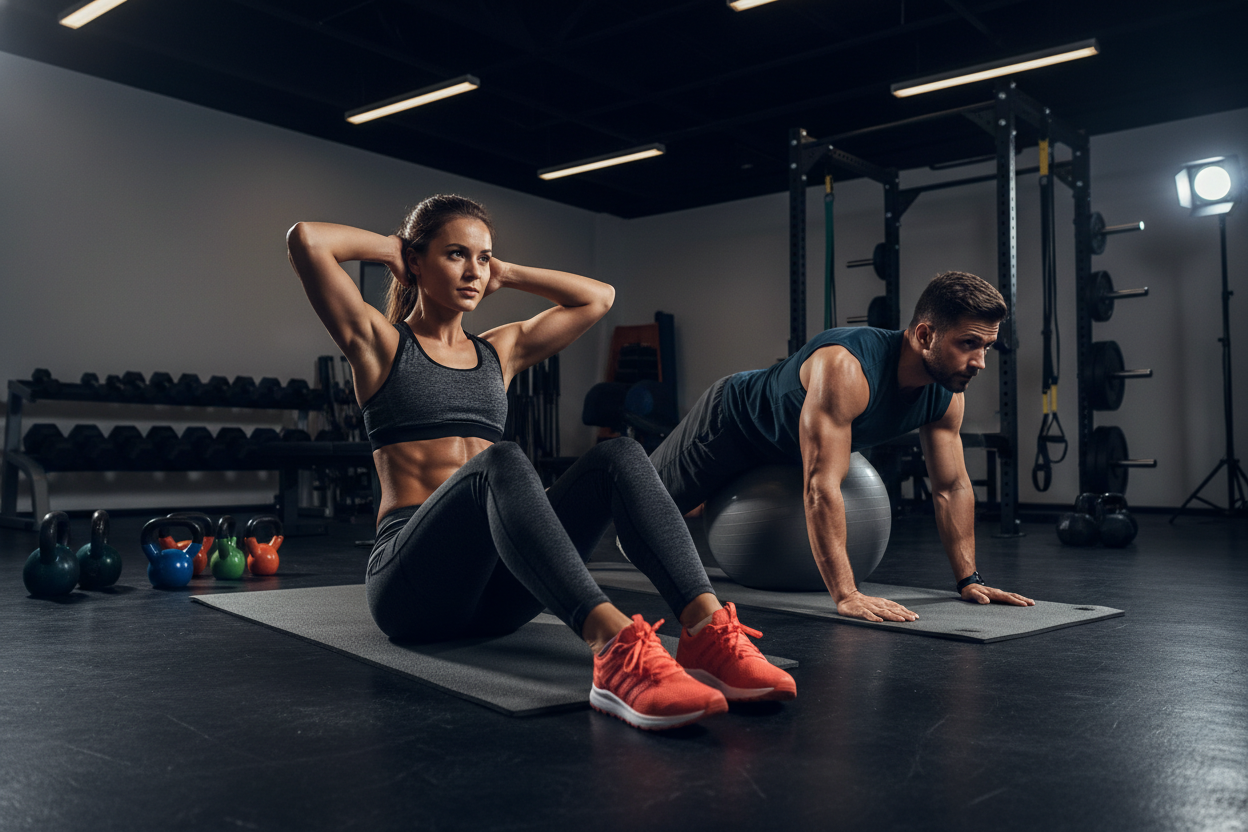
When outfitting a home gym, it is easy to fall into the trap of thinking you need a massive footprint for every muscle group. But when it comes to building a rock-solid midsection, bulky crunch machines and expensive cable towers are entirely optional. Mastering ab exercises on floor is often the most efficient, space-saving, and effective way to train your core.
Whether you are dealing with a cramped basement setup, a noisy garage gym, or strict budget constraints, prioritizing floor work can break you through your current workout plateau. This guide will show you how to maximize your core routine with minimal equipment, proving that you do not need heavy machinery to carve out a strong, functional midsection.
Key Takeaways
- An effective ab floor workout requires zero bulky equipment and less than 15 square feet of floor space.
- Properly executed floor movements target the rectus abdominis, obliques, and deep transverse abdominis simultaneously.
- Investing in a high-density exercise mat is the single most important purchase for joint and tailbone protection.
- Time under tension and strict form are far more critical than adding weight to your floor routine.
The Anatomy of a Floor-Based Routine
Building a comprehensive abs workout floor routine requires more than just endless traditional crunches. To truly replicate the resistance you might get from commercial gym equipment, you need to manipulate leverage and gravity.
Targeting the Entire Core
A well-rounded ab floor exercise program should include dynamic flexion (like V-ups or bicycle crunches), anti-extension (like hollow body holds), and rotational movements (like Russian twists). By combining these movement patterns, you engage the deep core stabilizers that protect your spine during heavy compound lifts like squats and deadlifts.
Setup and Space Planning
The beauty of an ab workout on floor is the minimal footprint. Most North American garage and basement gyms are tight on space, often dominated by a power rack and a barbell setup. You only need an area approximately 6 feet long by 3 feet wide to perform a complete core routine.
Choosing the Right Surface
Doing floor stomach exercises directly on raw concrete, thin carpet, or hard rubber stall mats is a recipe for severe tailbone discomfort. While you do not need a machine, you do need proper cushioning. Entry-level yoga mats are often too thin (usually 3mm to 5mm) and tend to stretch or bunch up. For a dedicated home gym, opt for a high-density NBR foam mat that is at least 15mm (about half an inch) thick. It provides the perfect balance of firmness for stability and cushion for your spine.
From Our Gym: Honest Take
When I first built out my garage gym, I desperately wanted a commercial Glute Ham Developer (GHD) for core work. Due to strict space limits, I skipped it and committed entirely to abs floor exercises. I quickly learned two things. First, strict hollow body holds and slow-tempo V-ups will humble you just as fast as weighted machine crunches. Second, your flooring matters immensely.
I initially tried doing my abs workout on floor directly on my 3/4-inch horse stall mats. After a week of high-rep sets, my tailbone was heavily bruised and my lower back ached. Investing $40 in a thick, high-density foam mat specifically for floor work was an absolute game-changer. You really don't need massive machines to build an elite core, but you absolutely must protect your joints to maintain consistency.
Frequently Asked Questions
Are abs floor exercises effective for building muscle?
Yes. By manipulating leverage, slowing down your tempo, and increasing time under tension, an abs floor routine can provide all the mechanical stimulus needed for muscle hypertrophy without the need for added weights.
How often should I do an ab floor workout?
For most home gym owners, training the core directly 2 to 3 times per week is ideal. Because the core recovers relatively quickly, you can easily tack a 10-minute floor routine onto the end of your standard strength training sessions.
Do I need equipment for a floor exercise for abs?
Strictly speaking, no. Bodyweight alone is highly effective. However, a thick exercise mat is highly recommended for comfort, and adding an inexpensive ab wheel can significantly enhance your routine by adding advanced anti-extension progression options.