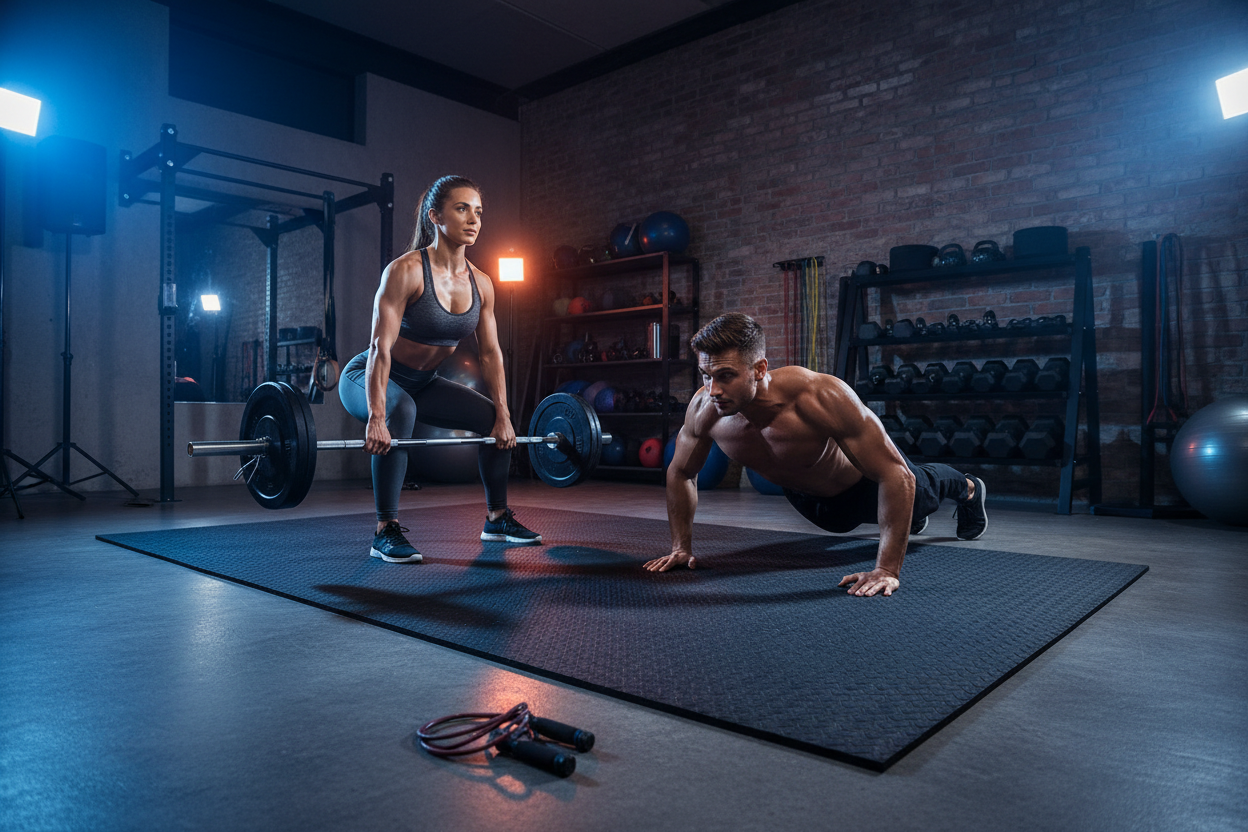
6 x 4 Gym Mat: Why It Is the Perfect Home Gym Foundation
Building a home gym is an exciting process, but it usually starts with a glaring problem: how do you protect your floors without turning your spare room into a smelly, industrial rubber factory? Whether you are dropping heavy deadlifts or just need a reliable space for HIIT circuits, your flooring dictates the safety and feel of your entire workout.
That is where the 6 x 4 gym mat comes in. It strikes the perfect balance between ample workout space and manageable dimensions for standard North American homes. In this guide, we will break down exactly what you need to look for, how to integrate it into your layout, and whether it is the right foundation for your fitness goals.
Key Takeaways
- Optimal Footprint: A 24-square-foot surface perfectly accommodates a standard power rack or a dedicated free-weight zone.
- Thickness is Crucial: Choose 3/8-inch to 1/2-inch rubber for heavy lifting, or high-density foam for bodyweight exercises.
- Material Matters: Vulcanized rubber offers the best durability and least odor compared to cheap recycled alternatives.
- Versatility: It easily transitions from a heavy-duty lifting platform to a spacious area for floor work.
Choosing the Right Specs for Your Space
Thickness and Material
Not all mats are created equal. If you are setting up a garage gym for powerlifting, a high-density rubber 4x6 workout mat at 1/2-inch to 3/4-inch thickness is non-negotiable. It absorbs the shock of dropped bumper plates and prevents concrete cracking. Conversely, if you are outfitting a basement or apartment for lighter dumbbells and stretching, an 8mm to 10mm PVC or high-density foam mat might suffice and will be much easier to move and store.
Odor and Off-Gassing
One of the biggest complaints with budget flooring—especially agricultural stall mats—is the overpowering sulfur smell. If your gym is indoors with limited ventilation, investing in a premium, low-odor 6x4 exercise mat made from virgin or vulcanized rubber will save you weeks of headaches and keep your house smelling fresh.
Space Planning: Will It Fit?
A 6-foot by 4-foot footprint is incredibly versatile. Placed horizontally, it perfectly spans the width of most standard squat racks (which typically require about 48 to 50 inches of width). Placed vertically, it provides an excellent runway for walking lunges, burpees, or kettlebell swings. If you live in an apartment, sliding this mat into a corner instantly creates a dedicated workout zone without permanently altering the room's aesthetic. Plus, it is large enough to double as an oversized 4 x 6 yoga mat when you need extra room for mobility work.
From Our Gym: Honest Take
When I first set up my garage gym, I tried piecing together cheap interlocking foam tiles. Big mistake. Within a month, they were permanently compressed and constantly sliding apart during lateral lunges. I upgraded to a single, seamless 6 x 4 gym mat made of 3/8-inch vulcanized rubber. The difference was night and day. My feet were finally planted on a high-traction surface that didn't shift, making my heavy squats feel significantly more stable. One caveat: these solid rubber mats are incredibly heavy—often weighing over 60 pounds. I highly recommend having a friend help you unroll and position it, because once it is down, it grips the floor and does not want to move.
Frequently Asked Questions
Is a 6 x 4 gym mat big enough for a home gym?
Yes, for a single workout station. It provides 24 square feet of space, which is plenty of room for a power rack, a flat bench, or a dedicated area for barbell and dumbbell exercises. If you want to expand later, you can easily place two side-by-side.
How do I clean and maintain my mat?
Keep it simple. Sweep or vacuum loose dust, and mop weekly using a mixture of warm water and a few drops of mild dish soap. Avoid harsh chemicals like bleach, which can break down the rubber and cause it to crumble over time.
Can I put this mat over carpet?
While you can, it is not ideal for heavy lifting. A solid rubber mat over plush carpet can still feel unstable under heavy loads like squats. If you must place it over carpet, placing a 3/4-inch plywood board underneath the mat will create a much safer, rigid lifting platform.